288 GTO

The race that never happened

Ferrari built the GTO around Group B’s 200-car threshold, sold that first allocation before the March 1984 reveal, and added 72 more. A longitudinal twin-turbo V8 sat beneath a familiar outline.

Market value · road

€5.9M€9.1M

Typical €7.5M · 10 sales · +104% vs ’19–’22

€2.2M€9.7M
Open Market & Price

Market value · road

€5.9M€9.1M

Typical €7.5M · 10 sales · +104% vs ’19–’22

€2.2M€9.7M
’05’26
Market history · in the terminal
Open Market & Price
Top speed
305 km/h (Ferrari claim)
Power
400 hp (twin-turbo V8)
0 to 100
4.9 s (Ferrari claim)
Drive
RWD (5-speed transaxle)
Weight
1'160 kg (RM mass convention)
Production
272 (road GTOs)
Displacement
2'855 cc (twin IHI turbos)
Body
Composite (GRP · Kevlar · aluminium)

Market & Price

The price and the proof

A terminal for one car: the model curve over the documented record, the benchmarks it is measured against, and the instruments that read it.

Records: GTO · 52471 · just over 1'500 km — €9,117,500 · Gooding Christie’s Paris · 29 Jan 2026; GTO · 52727 · single ownership — €5,855,000 · RM Sotheby’s Paris · 2026. 25 documented road sales on file · 2005–2026.

HCN:288GTOLive model
€7'306'36516.4% · 12M
€2M€5M€10M20182020202220242026CovidRate shockS&P 500
Model curve · anchored to 25 documented salesnot investment advice
The readouts · model figures against the benchmarks25 documented anchors · last sale 6 mo ago

Compound annual growth

WindowThis car*S&P 500Gold
1Y+16.4%+18.8%+21.9%
5Y+15.1%+11.4%+17.6%
10Y+14.7%+13.3%+11.8%

*Modeled price CAGR · S&P is a price index, no dividends

Deepest drawdown · model window

This car*-37.5%Jan 2015May 2016 · recovered Feb 2017
S&P 500-50.8%Oct 2007Mar 2009 · recovered Mar 2013
Gold-39.3%Sep 2011Dec 2015 · recovered Jul 2020

Forecast ladder · model quantiles

HorizonP10P50P90
+6M€6.6M€7.6M€8.8M
+12M€6.5M€7.9M€9.6M
+24M€6.5M€8.6M€11M

Median path with the 10th and 90th percentile · not investment advice

Transaction ledger · documented sales

25 of 25 recorded sales · shown in EUR · recorded currency in each record

The public record moves from $1.4025M for preserved chassis 52475 in 2014 to €9.1175M for the low-mileage, two-owner chassis 52471 in 2026. It is a sequence of different cars, not a model index.

Price range · road · openConfidence · mediumThis is the observable 2026 prime, documented GTO band, not an appraisal for every car. Evoluzione prices remain private or undisclosed, with insufficient public comparables.

Floor

€5.9M

Typical

€7.5M

Ceiling

€9.1M

Estimate band for good road cars. 10 documented sales since 2019 plotted below.

€2.2M€5.9M€7.5M€9.1M€9.8M
Hover the spectrum to read a value, or a dot for the sale behind it.

Band and axis shown in EUR. Sale positions use indicative fixed-rate conversion to EUR; sale readouts retain recorded currencies. Prime documented GTO results in EUR, as sold. No currency conversion. Evoluzione excluded because public transaction prices are undisclosed.

Road record

9,117,500

GTO · 52471 · just over 1'500 km

Gooding Christie’s Paris · 29 Jan 2026

Road record

5,855,000

GTO · 52727 · single ownership

RM Sotheby’s Paris · 2026

The wider market · Ferrari at auction · median per year · modeled between anchors2,297 lots · 2003–2026 · exact yearly anchors · modeled line

Instrument calibration for this file is in progress — the terminal above reads the documented record directly.

Public auction results and one separately labelled market benchmark. Asking prices and undisclosed private transactions are excluded.

Overview

Ferrari revived the GTO badge for a championship proposition that disappeared before the car could enter it.

FISA’s Group B rules established a 200-road-car threshold. Ferrari answered with a longitudinal twin-turbo V8, a tubular chassis and light composite bodywork under a silhouette still visibly related to the 308 GTB.

The market did not wait for a result: Ferrari says all 200 planned cars were sold before the March 1984 Geneva unveiling, and the additional 72 also found buyers quickly. The car’s competition premise remained theoretical.

Evoluzione carried the unfinished programme into lighter construction, more rear aero, enlarged turbos and separate circuit and rally engine directions. Group B’s end for 1987 turned those tests toward the F40 instead of a start line.

Power
400 hp
0 to 100
4.9 s claimed
Built
272
Layout
Rear-mid · RWD
Competition starts
0

Reference

Technical specifications

Powertrain

Engine
2'855 cc V8longitudinal, rear-mid
Charging
Twin IHI turbochargers
Output
400 hp
Transmission
5-speed manual transaxle
Drive
Rear-wheel drive

Performance

0 to 100 km/h
4.9 sFerrari manufacturer claim
Top speed
305 km/hFerrari claim; not presented as a universal first
Mass
1'160 kgRM uses kerb weight; a period feature says only weight

Chassis & body

Chassis
Tubular steel
Suspension
Double wishbonesadjustable suspension described at the Geneva reveal
Main body
Composite, GRP and Kevlar
Opening panels
Aluminiumdoors, bonnet and deck lid
Length
4'290 mm
Width
1'910 mm
Height
1'120 mm

Production & identity

Road production
272Ferrari count; 273 remains a secondary report
Build convention
1984–1987not continuous assembly through 1987
Reveal
March 1984, Geneva
Production colour
Rosso Corsaall 272 road production cars in reviewed primary sources
Evoluzione
5–6 builtunresolved source conflict
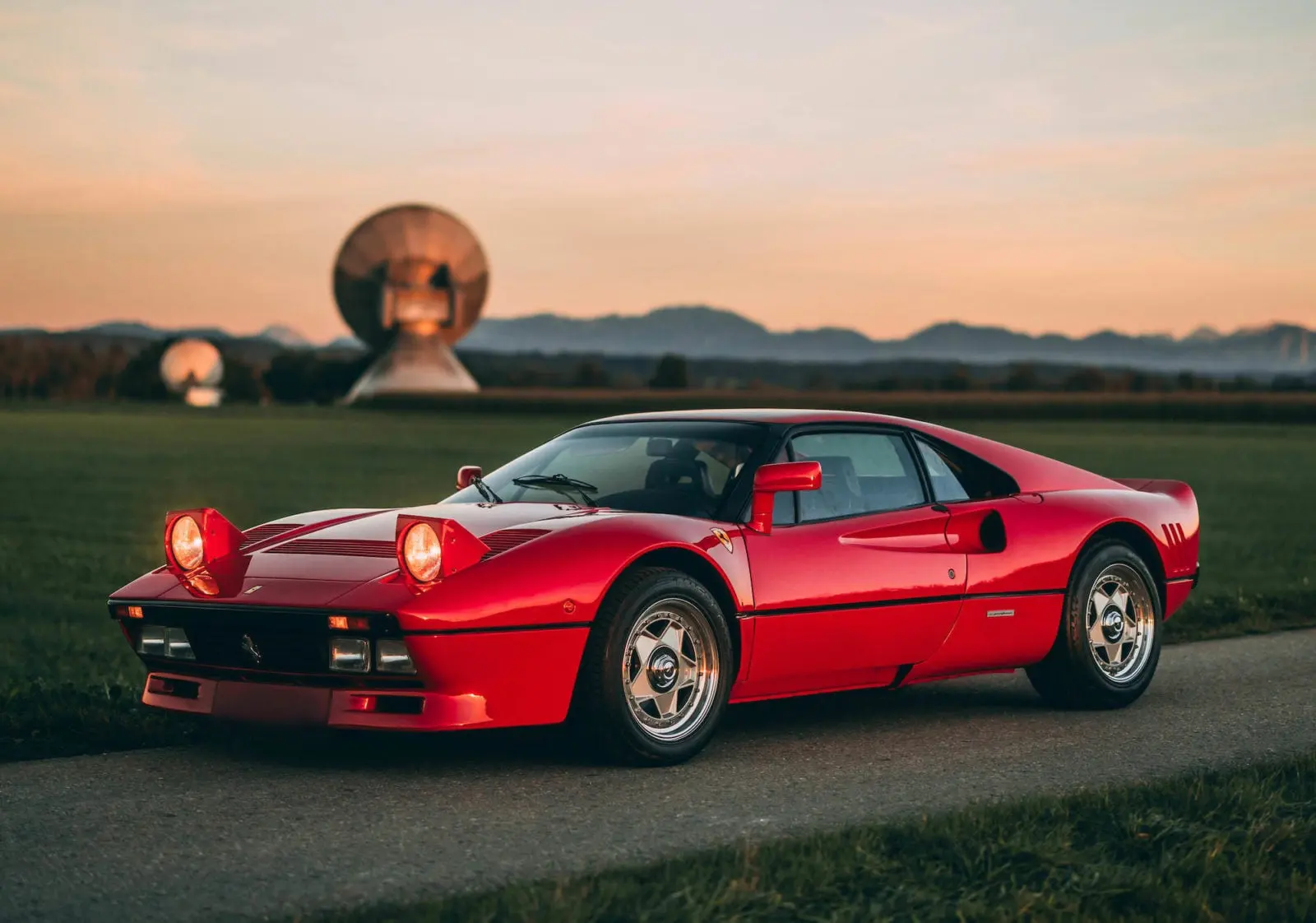
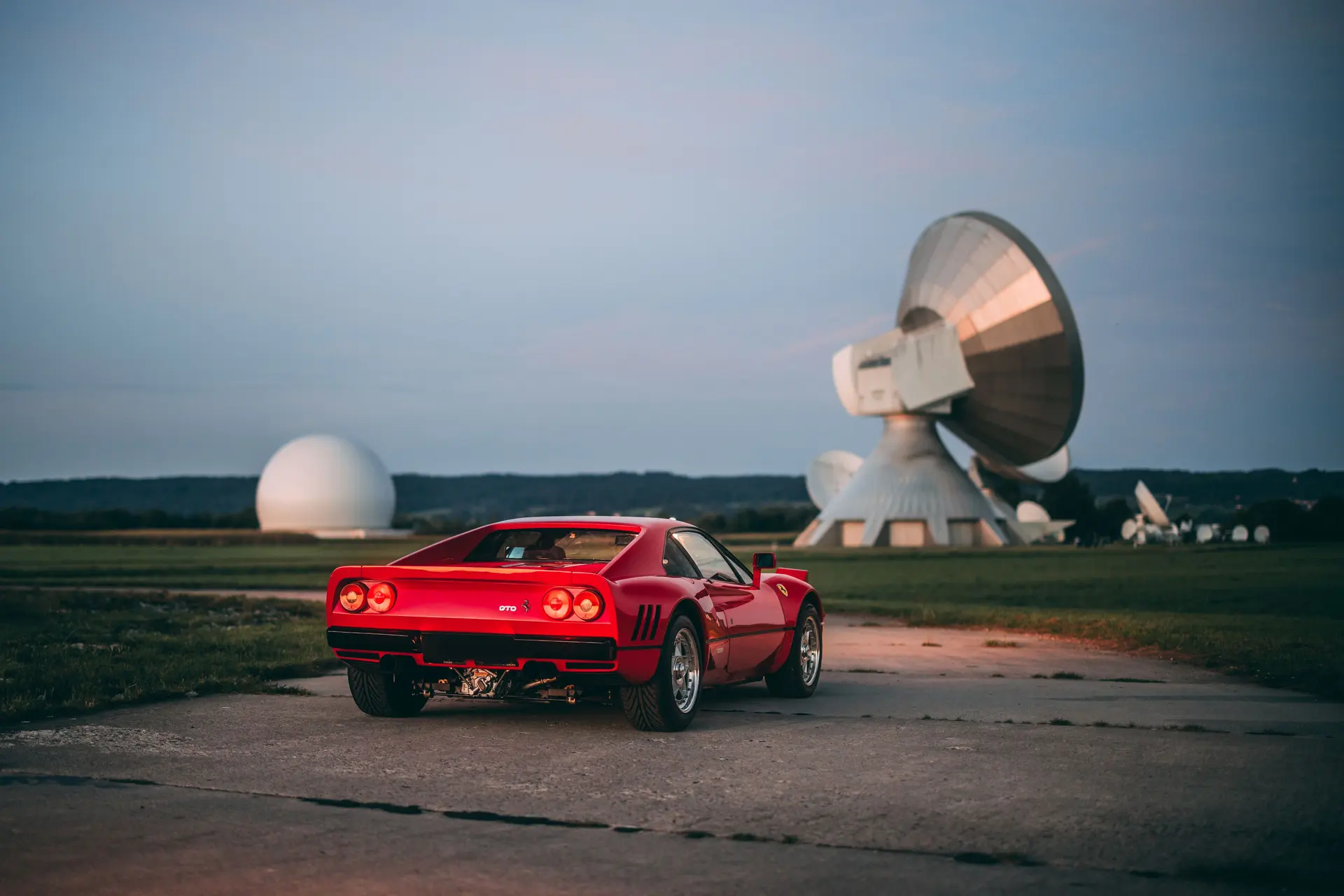
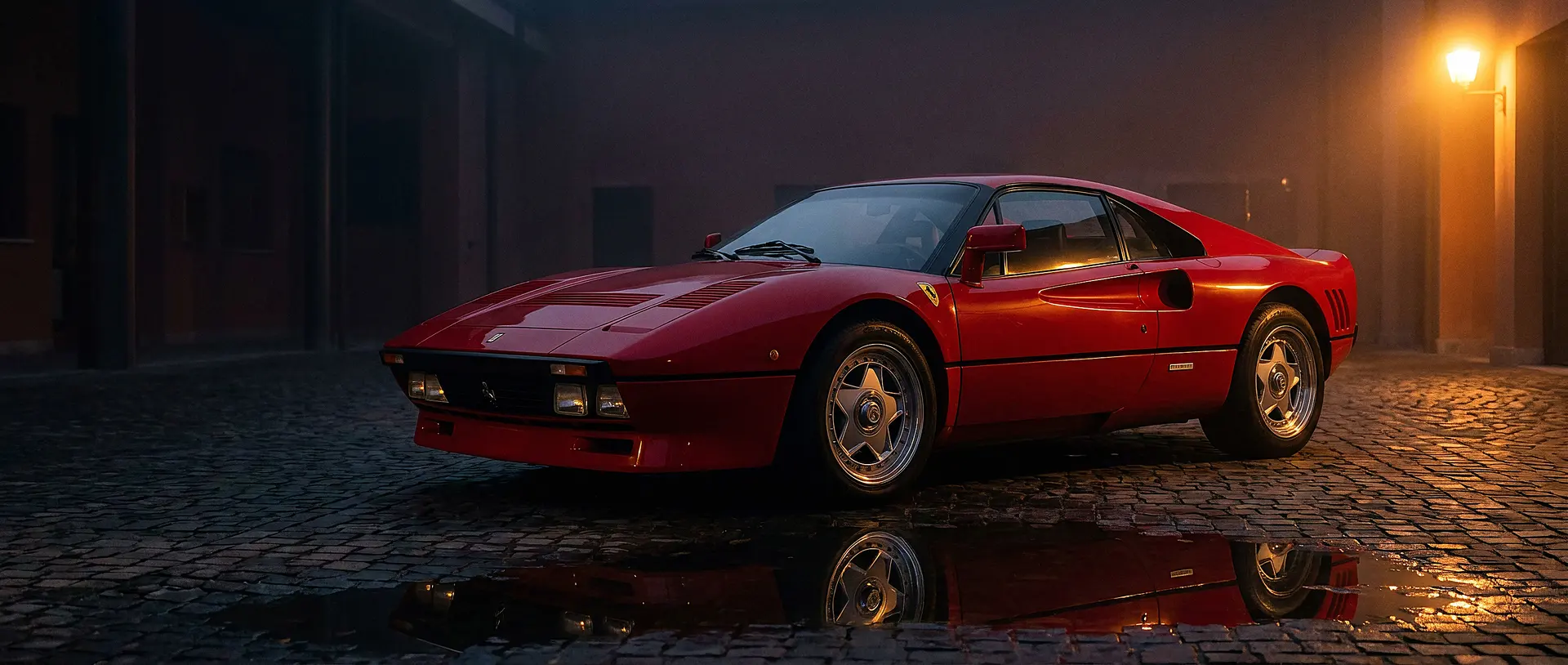
Red Ferrari 288 GTO in rear-three-quarter view beside a radome at dusk
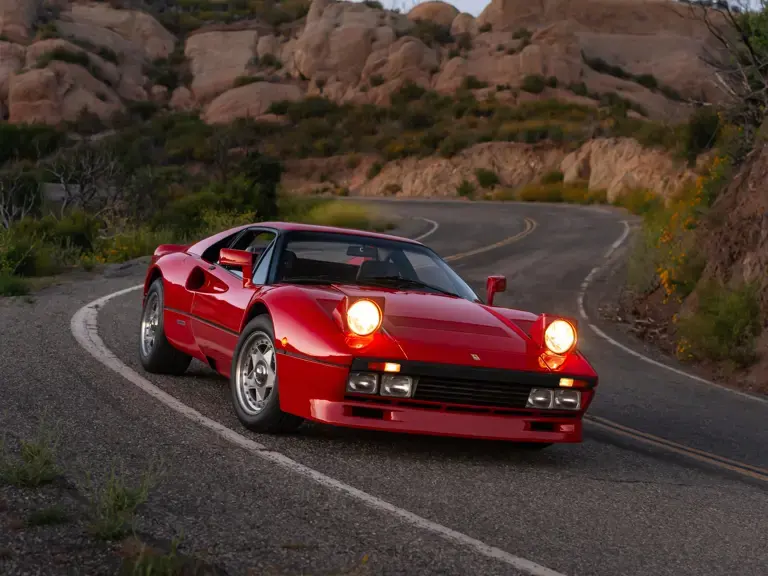
GTO chassis 56773 driving through a canyon at dusk
GTO Evoluzione chassis 79888 at a marina, front three-quarter view

The records

0hp

Road GTO

2'855 cc, twin IHI turbos

0km/h

Ferrari’s top-speed claim

not presented as a universal first

0

Road cars

Ferrari and auction-house baseline

0

Races or rallies started

the competition record never began

The rival

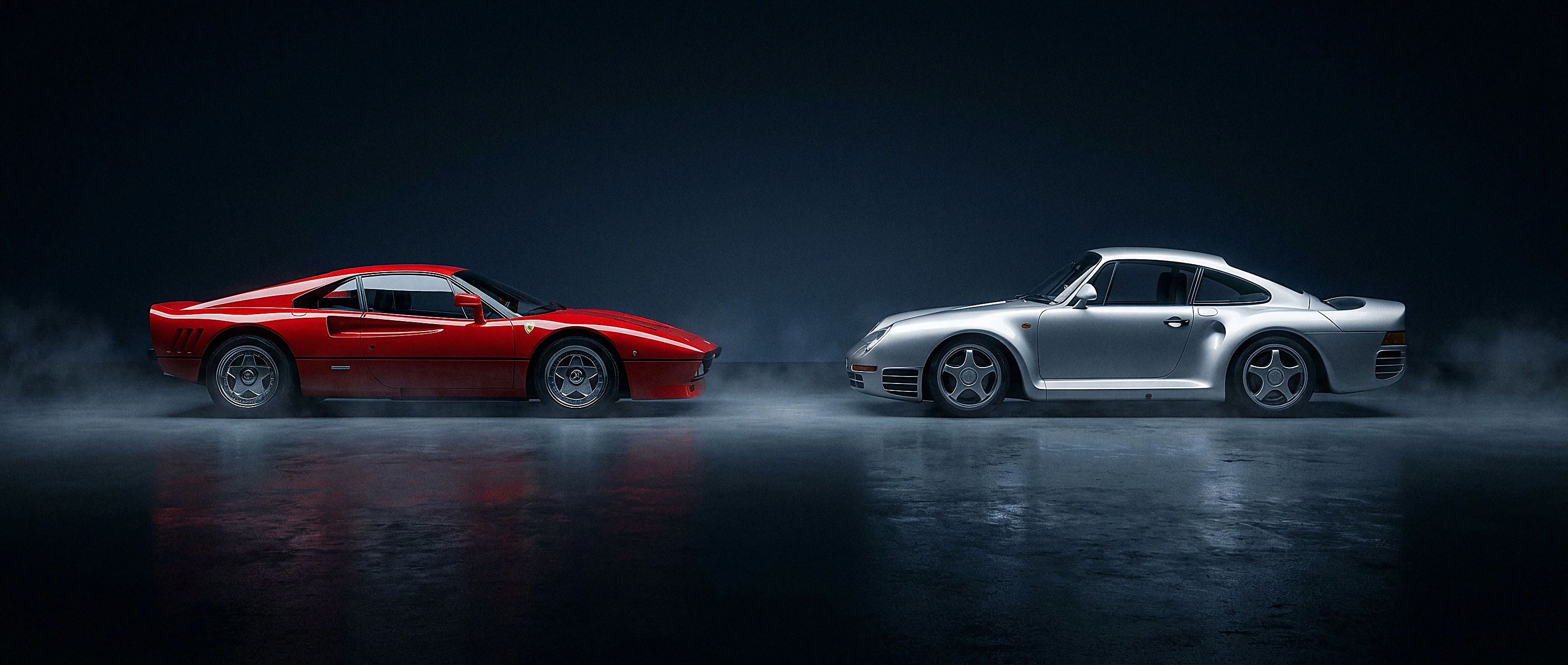
288 GTO versus Porsche 959

Two Group B homologation specials built around opposite answers: Ferrari’s light, rear-driven competition-car logic against Porsche’s electronically managed all-wheel-drive technology demonstrator. The planned circuit championship gave neither a direct verdict.

Ferrari 288 GTO and Porsche 959 facing one another across a dark stage

Ferrari 288 GTO

400-hp twin-turbo V8 · rear-mid · rear-wheel drive

Porsche 959

450-PS sequential twin-turbo flat-six · electronically controlled AWD

Rear-mid V8 · RWDLayoutFlat-six · AWD
Twin IHI turbosChargingSequential twin turbos
400 hpPeriod power450 PS
305 km/hPeriod top-speed claim317 km/h
Tubular · composite · analogueChassis philosophyAWD · ABS · selectable damping
272Production292 series-production claim; wider published totals conflict
Never raced or ralliedCompetition outcome959 rallied · 961 raced

Ferrari’s answer

A five-speed, rear-driven, tubular-chassis car built around light composite panels and a longitudinal twin-turbo V8.

Porsche’s outcome

The 959 did rally and its 961 derivative raced; neither car realised the planned Group B circuit championship.

Side markers identify the subject of each note; they do not declare a winner. Period tests used different surfaces and methods, so the file does not manufacture a direct head-to-head result.

The silhouettes

One programme, two bodies

The road GTO carried its 308 lineage in plain sight. Evoluzione turned the same unfinished competition premise into a lighter development body with more rear aero.

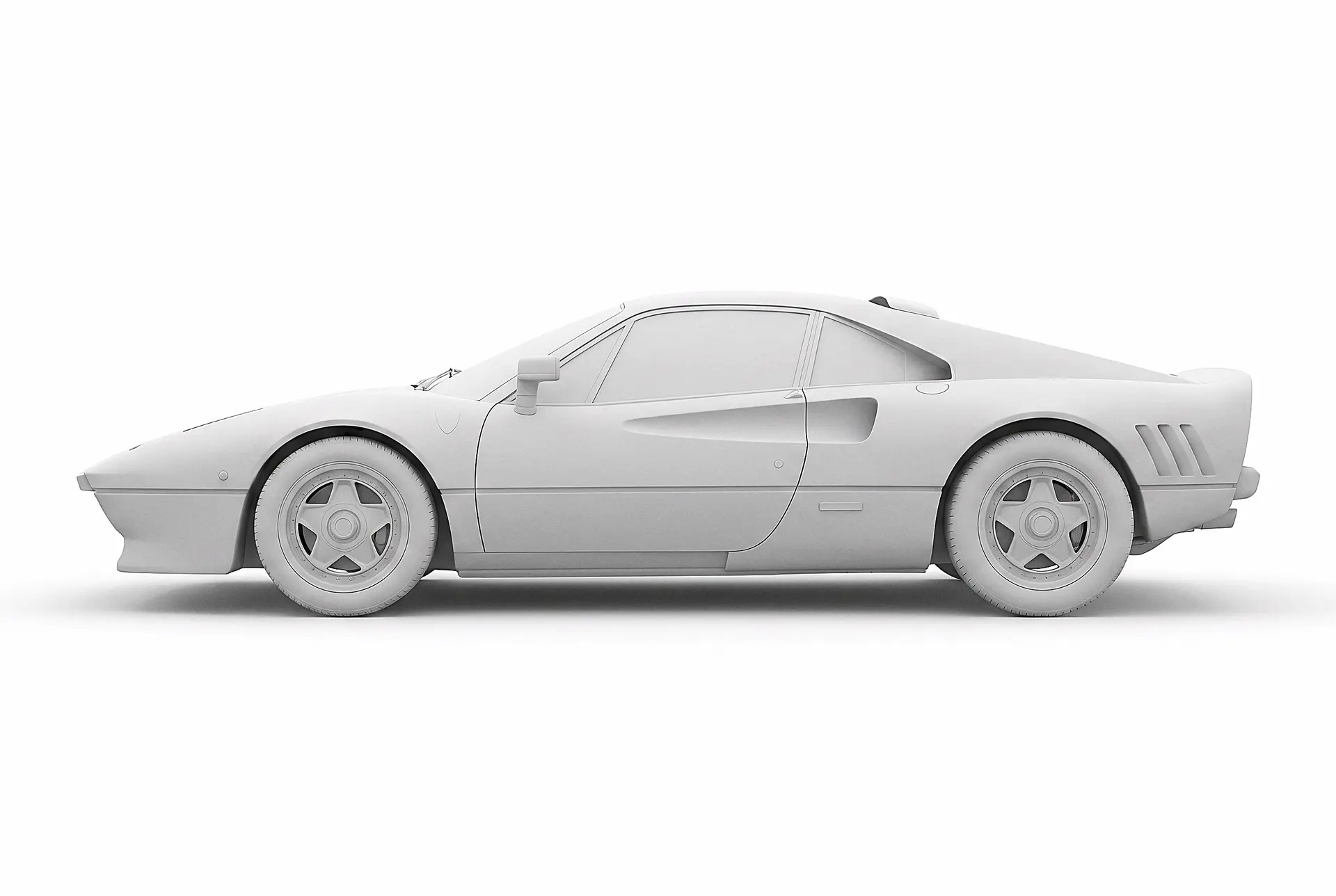
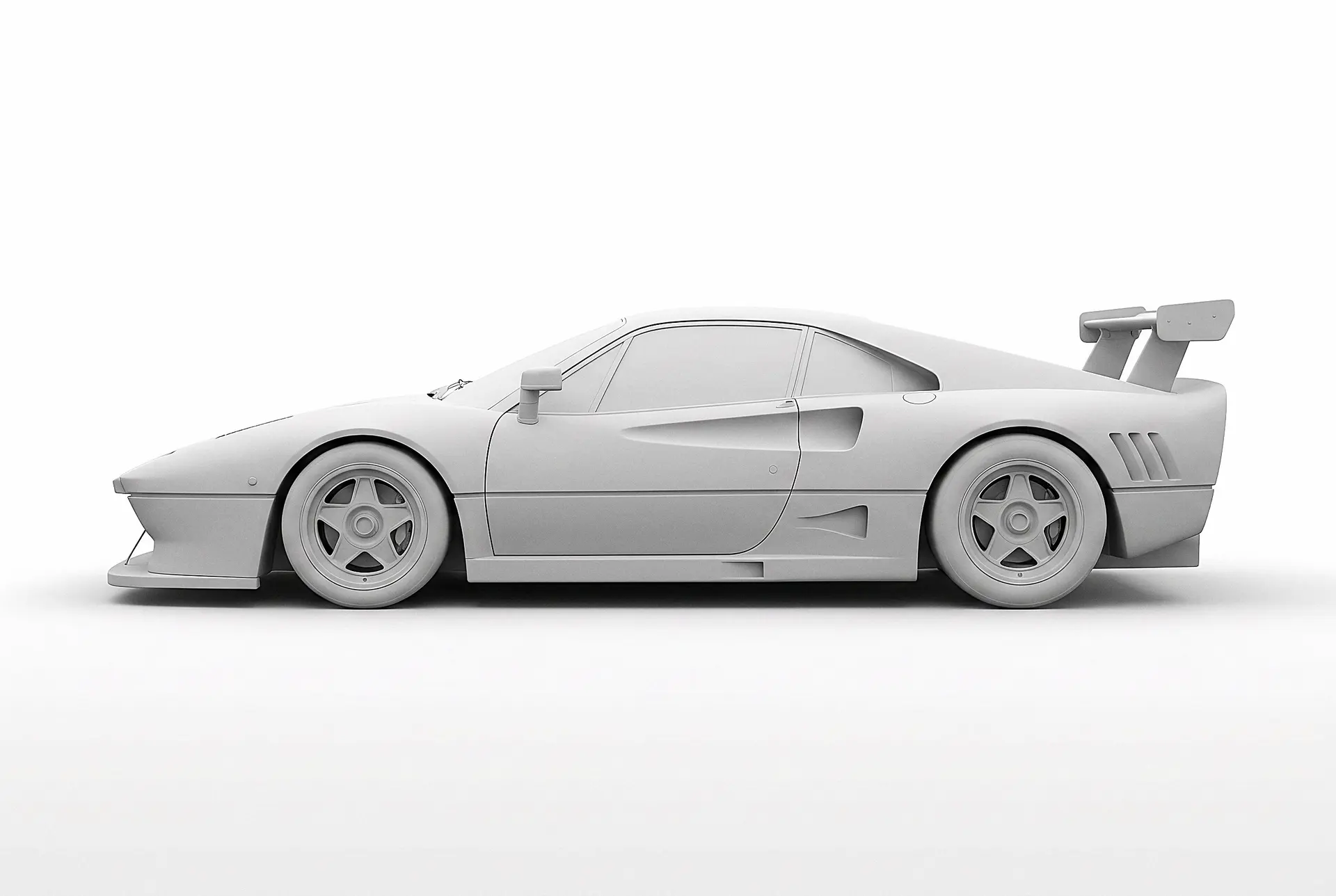
White styling model of the Ferrari 288 GTO

1984–1987 convention

GTO

The 272-car homologation road body

The GTO is recognisably related to the 308 GTB, but the longitudinal engine and extended proportions changed the architecture beneath the silhouette.

Composite, GRP and Kevlar panels sit on a tubular steel chassis; aluminium forms the doors, bonnet and deck lid. Every production road car in the reviewed primary record was Rosso Corsa.

  • 272 road cars
  • 4'290 × 1'910 × 1'120 mm
  • 400 hp · 1'160 kg
White styling model of the Ferrari GTO Evoluzione

1985–1988 completion history

Evoluzione

The development body that never reached a start

Pininfarina and Michelotto recast the body in fibreglass and Kevlar, added a carbon-fibre rear wing and enlarged the turbos for separate circuit and rally development directions.

Ferrari quotes around 650 hp and 940 kg; the high-output figure is specification-specific. The build count remains unresolved at five or six.

  • 5–6 built — source conflict
  • ~650 hp · high-output spec
  • ~940 kg · no competition start

True scale

4.29 metres long, 1.12 metres high

The GTO stretches 4,290 mm from nose to tail and stands 1,120 mm high. Its 308-derived outline hides the longitudinal engine and longer proportions that separate it mechanically from the transverse-engined 308 GTB.

Ferrari 288 GTO

4.29 m · 1.12 m high

Ferrari F40

4.36 m · 1.12 m high

Porsche 911 Carrera

4.52 m · 1.30 m high

1.80 m
0m1m2m3m4m5m6m7m8m9m10m11m12m13m14m

GTO dimensions from the reviewed technical and auction sources; comparison-car dimensions are nominal factory figures. Silhouettes are approximate. The figure stands 1.80 m.

The claim

0km/h

Ferrari claimed 4.9 seconds to 100 km/h—about 68 metres at constant acceleration; illustrative only, with no independent period timing protocol.

Road GTO · tarmac · Ferrari manufacturer figure

0 m10 m20 m30 m40 m50 m60 m0–100 km/h · 4.9 s · Ferrari claim

The variants

Two GTOs, no race record

Ferrari built the GTO around Group B’s 200-car road threshold, then developed the lighter Evoluzione for competition routes that disappeared before either produced a start. The road count is 272; Evoluzione remained a development run.

Ferrari 288 GTO

1984–1987 convention · Works / very rare · 272 built

Red Ferrari 288 GTO with raised pop-up headlights in front-three-quarter view at an outdoor radome facility.

Rosso Corsa

Road production · 1984–1987 convention

272 road cars; every production GTO documented by Ferrari as Rosso Corsa

The Group B road car: 272 built, all production examples Rosso Corsa, and no competition start to turn homologation intent into a race record.

Ferrari planned 200 cars for Group B homologation and says every one was sold before the March 1984 Geneva reveal; the additional 72 also found buyers quickly. The 1984–1987 date is the broad market convention, not a claim of continuous assembly through 1987.

Open as its own file →
  • Five-speed manual transaxle · rear-wheel drive
  • Tubular steel chassis with composite, GRP and Kevlar body panels
  • 272 Rosso Corsa production cars; no reviewed primary source documents a non-red production delivery
  • Record: €9.1175M for chassis 52471, Gooding Christie’s Paris 2026
Engine
2'855 cc twin-IHI-turbo V8 · longitudinal, rear-mid
Power
400 hp
Weight
1'160 kg · source mass convention varies
Top speed
305 km/h · Ferrari claim
0–100 km/h
4.9 s · Ferrari claim

Typical value · GTO

Never publicly traded

€1.0M€11M

The paper trail · GTO

Documented cars
10 of 272 built
Top public sale
€9.12M
Gooding Christie’s · Jan 2026 — Chassis 52471
Never traded publicly
2 of 10 documented
museum and long-hold cars
Latest movement
Gooding Christie’s · Jan 2026
Chassis 52471
Open the register

Ferrari reports 272 road GTOs and six Evoluziones. RM Sotheby’s calls chassis 79888 the fourth of five remaining; Tom Hartley calls it the last of five. The bar follows Ferrari’s count of six; the surviving ledger does not reconcile the conflict.

The cars

The Ferrari 288 GTO register

Documented individual cars — chassis, colour, ownership and sale history. Open one for its full provenance. Public records only; members see the complete registry.

10 documented · public records

The build registry

272, plus the unresolved five or six

The road-car count is settled at 272 in Ferrari’s account. The Evoluzione count is not: Ferrari says six were made, while RM Sotheby’s and Tom Hartley describe a five-car surviving or completed set. Eleven published chassis entries are indexed below.

Published provenance only. Prototype 47649 is excluded from the 272-car production board. The Evoluzione row follows Ferrari’s count of six; RM Sotheby’s and Tom Hartley describe five, and no chassis-level reconciliation closes the gap.278 tags

HICON BID

Buying interest, silently.

A HICON Bid is a confidential expression of buying interest on the Ferrari 288 GTO file — never public, never shown to other members. It is not a binding purchase, and HICONIUM holds no funds.

Sign in

HICON Bids are a member instrument. Sign in to place one.

The vault

Open a file on yours.

You keep one? The record starts in your garage — identity, papers, photography, and the market evidence this file already carries, bound to your chassis.

The x-ray

Anatomy of €9.1175 million

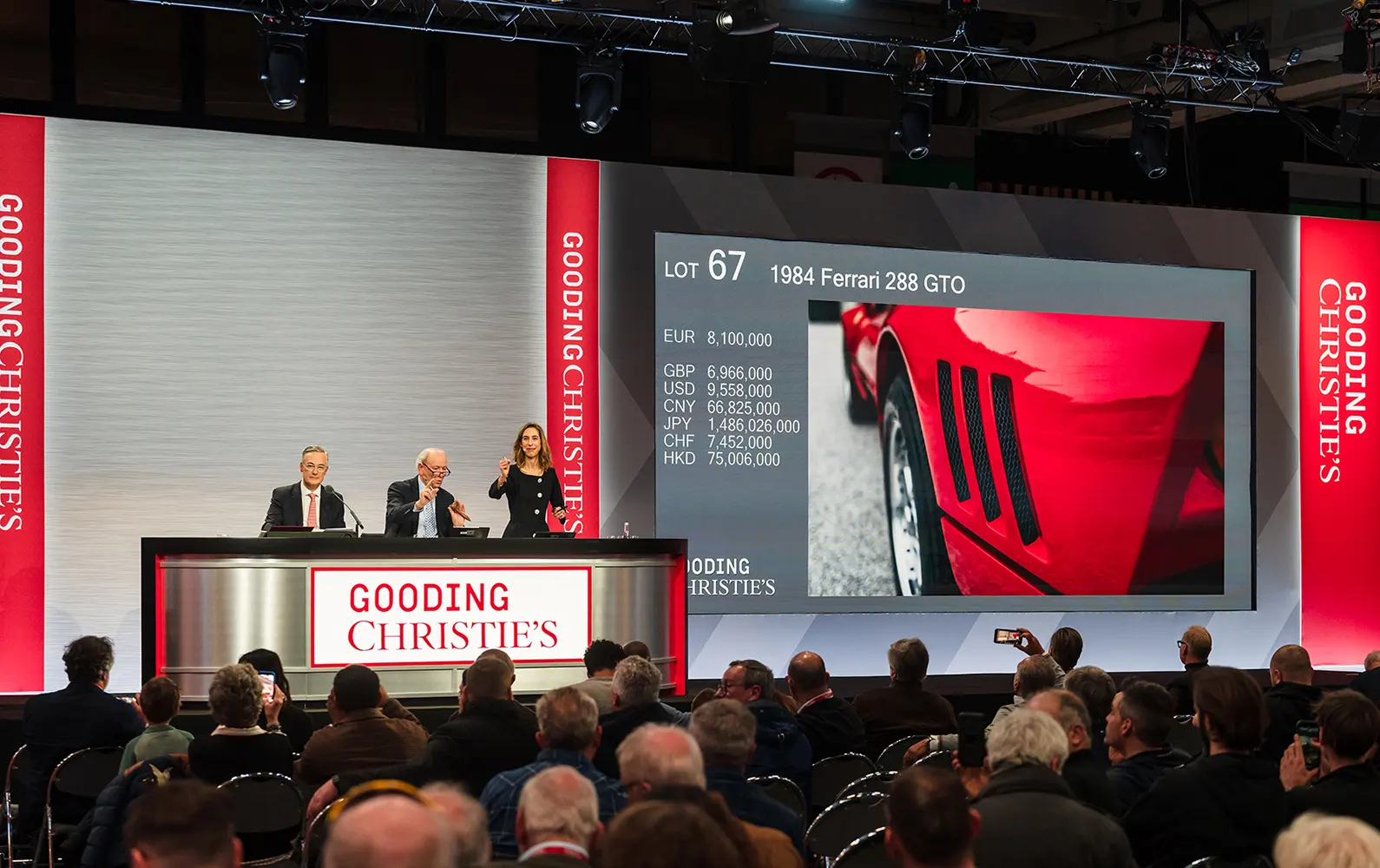
The auction board shows the €8.1 million hammer; the €9.1175 million as-sold record below includes buyer’s premium. Chassis 52471 pairs preservation, low mileage, a short custody chain and documented verification.

The record moment: chassis 52471 at €8.1 million on the Gooding Christie's Paris 2026 auction board
€9'117'500Gooding Christie’s · Paris 2026 · chassis 52471

Editorial weighting for reading, not measured price attribution or an appraisal model.

The identity files

Numbers that moved

The GTO file is unusually clear about what remains unclear. Counts, dates, purpose and launch prices need their source context kept attached; flattening them produces a cleaner story and a less accurate car.

272273

The road-car count

Ferrari and the reviewed auction catalogues support 272 road GTOs. A secondary Group B registry reports 273. The page uses 272 and keeps 273 as an unresolved secondary report, not a proven extra production car.

1984–87Mar ’86

The date convention

1984–1987 is the broad market convention. Auction records document 1984 and 1985 completions, while the final customer delivery cited in the reviewed sources was March 1986. The convention is not presented as continuous assembly through 1987.

65

The Evoluzione ledger

Ferrari says six Evoluziones were made. RM calls chassis 79888 the fourth of five remaining; Tom Hartley calls it the last of five. No chassis-level reconciliation in the reviewed sources resolves the gap.

CircuitTarmac

Two intended routes

Retrospective reporting describes a planned Group B circuit championship that failed to attract a grid. Ferrari describes privateer Group B tarmac events. These were two intended competition routes, not interchangeable source errors; neither produced a GTO start.

194M lire$83.4k / ~£78k

Three launch-price contexts

194 million Italian lire is a reported Italian contemporary list figure. $83,400 is a separately reported U.S.-equivalent list price. About £78,000 is one documented UK delivery after duties. They are territory-specific reports, not currency conversions of one global price.

GTO / EvoF40

The Enzo correction

The GTO programme ran under Enzo Ferrari’s direction, and Evoluzione can be described as the final Enzo-directed GT race car. The final Ferrari road car personally approved by Enzo was the F40, not the GTO.

Heritage · Ferrari 288 GTO

Two Owners From New

Gooding Christie’s · chassis 52471 · Paris 2026
Red Ferrari 288 GTO with raised pop-up headlights in front-three-quarter view at an outdoor radome facility.

The premise

Two hundred before the curtain rose

Group B gave Ferrari a simple numerical premise: two hundred road-going cars for homologation. The GTO was built around that threshold and became Ferrari’s first limited-edition road car of the modern line.

It arrived at Geneva in March 1984 with no need to prove demand. Ferrari says every one of the planned two hundred had already sold; the additional seventy-two also found buyers quickly. The production baseline is 272, not the 273 reported by one secondary registry.

The hands

Three hands, one unfinished programme

The GTO joined Ferrari’s turbo expertise, Pininfarina’s 308-derived line and Enzo Ferrari’s revived three-letter badge. Competition disappeared; the development chain did not.

No free period portrait on record

Nicola Materazzi

Development lead · turbo authority

Ferrari hired the Italian turbocharging specialist in 1979. He led the GTO development team while also working on early-1980s Scuderia Formula 1 cars — the engineer who carried competition powertrain thinking into Ferrari’s road flagship.

No free period portrait on record

Leonardo Fioravanti

Designer · Pininfarina

After the Daytona and 308 GTB, Fioravanti shaped the GTO by making the familiar 308 outline longer and wider without hiding its origin.

No free period portrait on record

Enzo Ferrari

Patron of the GTO revival

Ferrari says its founder embraced the Group B GT challenge and followed the GTO’s development closely. The programme ran under his direction; the F40 remained his final personally approved Ferrari road car.

1986

May 1986

Group B’s safety end

After the Tour de Corse deaths of Toivonen and Cresto, FISA ends Group B for the 1987 season. The GTO’s tarmac-rally route closes.
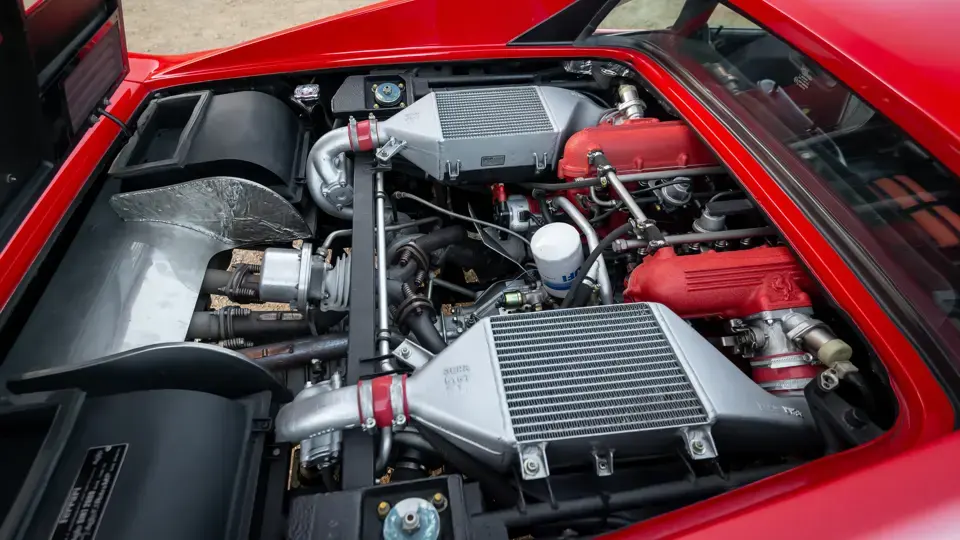
GTO chassis 56773 engine bay with the twin-turbo V8 and intercoolers visible
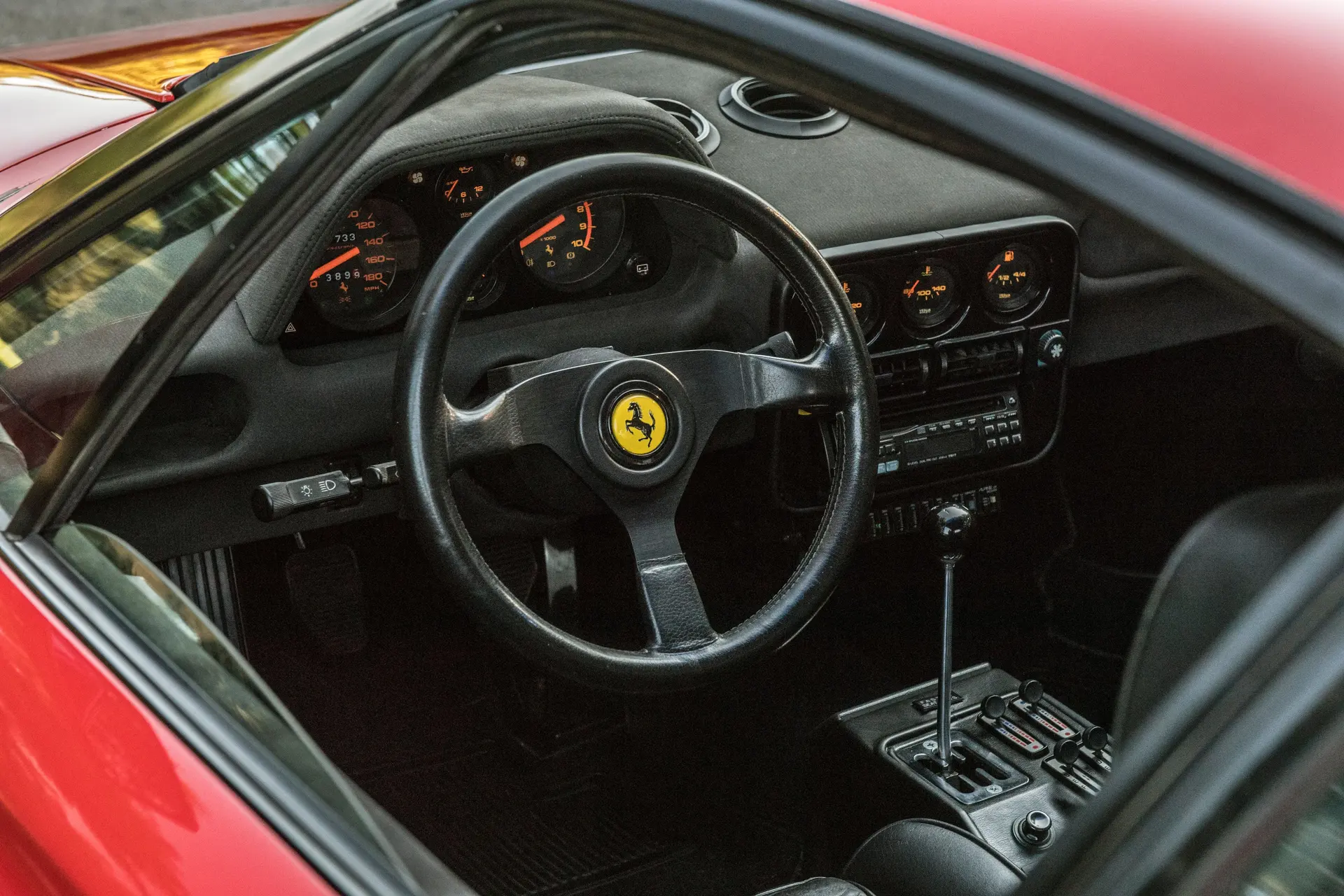
Ferrari 288 GTO dashboard and gated five-speed shifter

The engineering

A familiar outline, turned longitudinal

The 308 GTB supplied the visual starting point, not the mechanical answer. Ferrari turned the engine longitudinally, stretched the proportions and installed a 2,855 cc twin-IHI-turbo V8 behind the cabin, driving the rear wheels through a five-speed manual transaxle.

A tubular steel chassis carried composite, GRP and Kevlar bodywork, with aluminium doors, bonnet and deck lid. Ferrari claimed 400 hp, 4.9 seconds to 100 km/h and 305 km/h; each remains a manufacturer figure here, not an independently timed universal record.

2026

29 January 2026

The model record

Chassis 52471 sells for €9,117,500 in Paris, nearly €2M above the previous model record according to Gooding Christie’s.
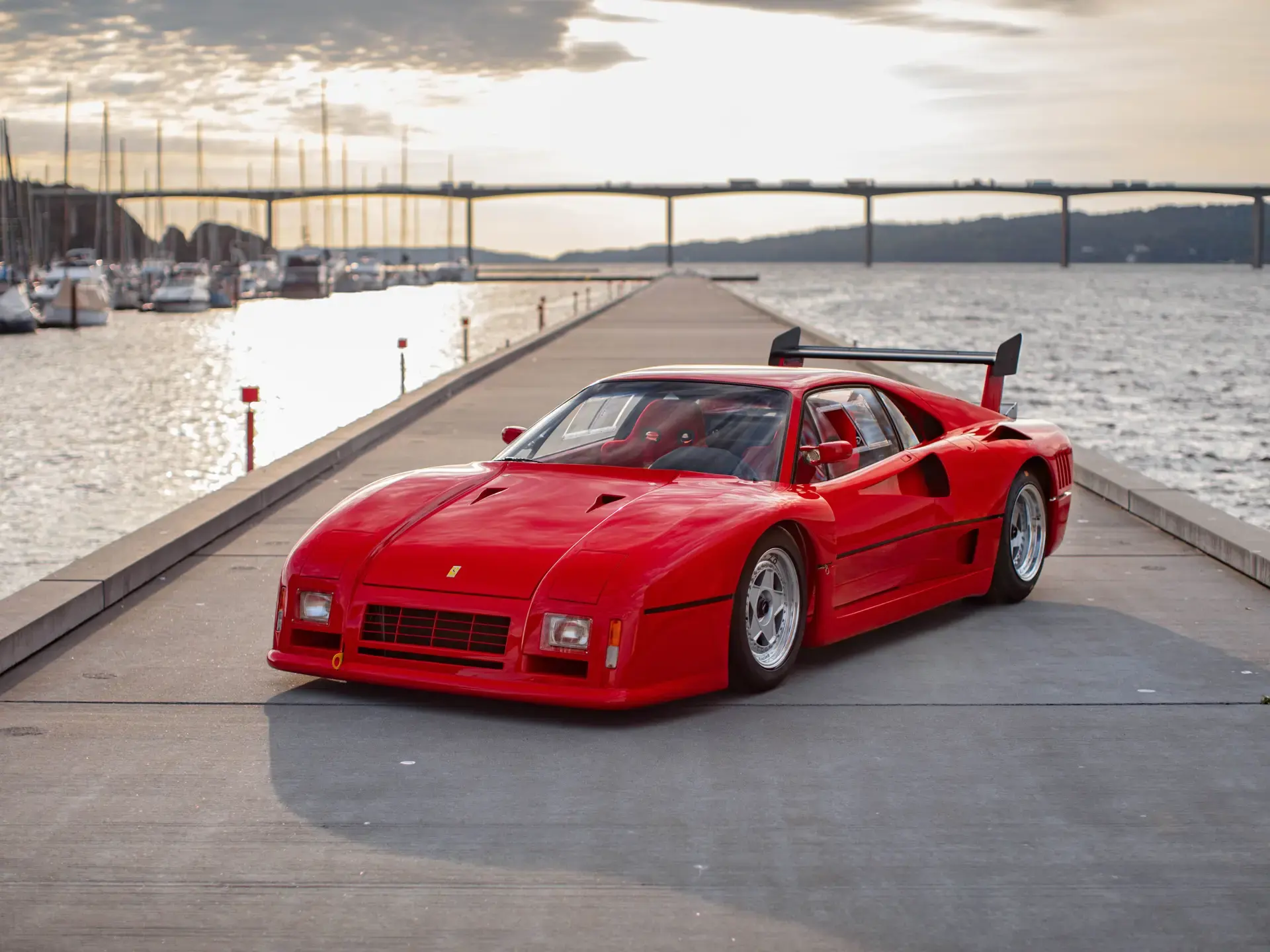
GTO Evoluzione chassis 79888 at a marina, front three-quarter view
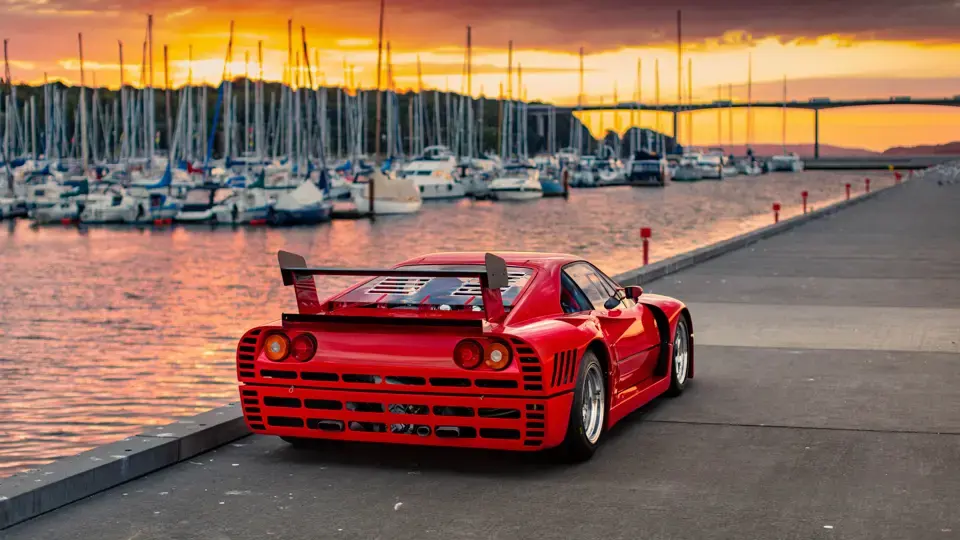
GTO Evoluzione chassis 79888, rear three-quarter view at sunset

The race that never was

Two routes, neither a start

Ferrari and Porsche expected Group B cars to have a circuit championship. Other manufacturers did not commit, the series failed to form, and the GTO never started a race or rally. Published sources give no formal cancellation date for the proposed series.

Ferrari’s own Evoluzione account preserves a second route: privateer Group B tarmac events. After Henri Toivonen and Sergio Cresto died in a Delta S4 at the May 1986 Tour de Corse, FISA ended Group B for the 1987 season. The fallback disappeared with the circuit plan.

On the record

Milestones, on a line

The moments that set the 288 GTO's standing. Use the arrows, and hover a point to read what happened.
1975The 308 foundationParis
1977The visual rehearsal
1982Group B sets the number
1984Geneva reveal
1986Group B’s safety end
1987Development becomes lineage
2026The model record

1975

The 308 foundation

Ferrari launches the 308 GTB, later identified by Ferrari as the foundation of the GTO and F40 line.

1977

The visual rehearsal

Pininfarina’s one-off 308 GTB4 previews the GTO’s wheel arches, lamps and rear spoiler under superseded Group 4 thinking.

1982

Group B sets the number

FISA’s new regulations establish the 200-road-car premise around which Ferrari develops the GTO.

March 1984

Geneva reveal

The GTO appears with a twin-turbo 2.8-litre V8, composite construction and adjustable suspension; the planned 200 are already sold.

May 1986

Group B’s safety end

After the Tour de Corse deaths of Toivonen and Cresto, FISA ends Group B for the 1987 season. The GTO’s tarmac-rally route closes.

1987

Development becomes lineage

Ferrari explicitly traces the F40 back to the lighter, more powerful GTO Evoluzione programme.

29 January 2026

The model record

Chassis 52471 sells for €9,117,500 in Paris, nearly €2M above the previous model record according to Gooding Christie’s.

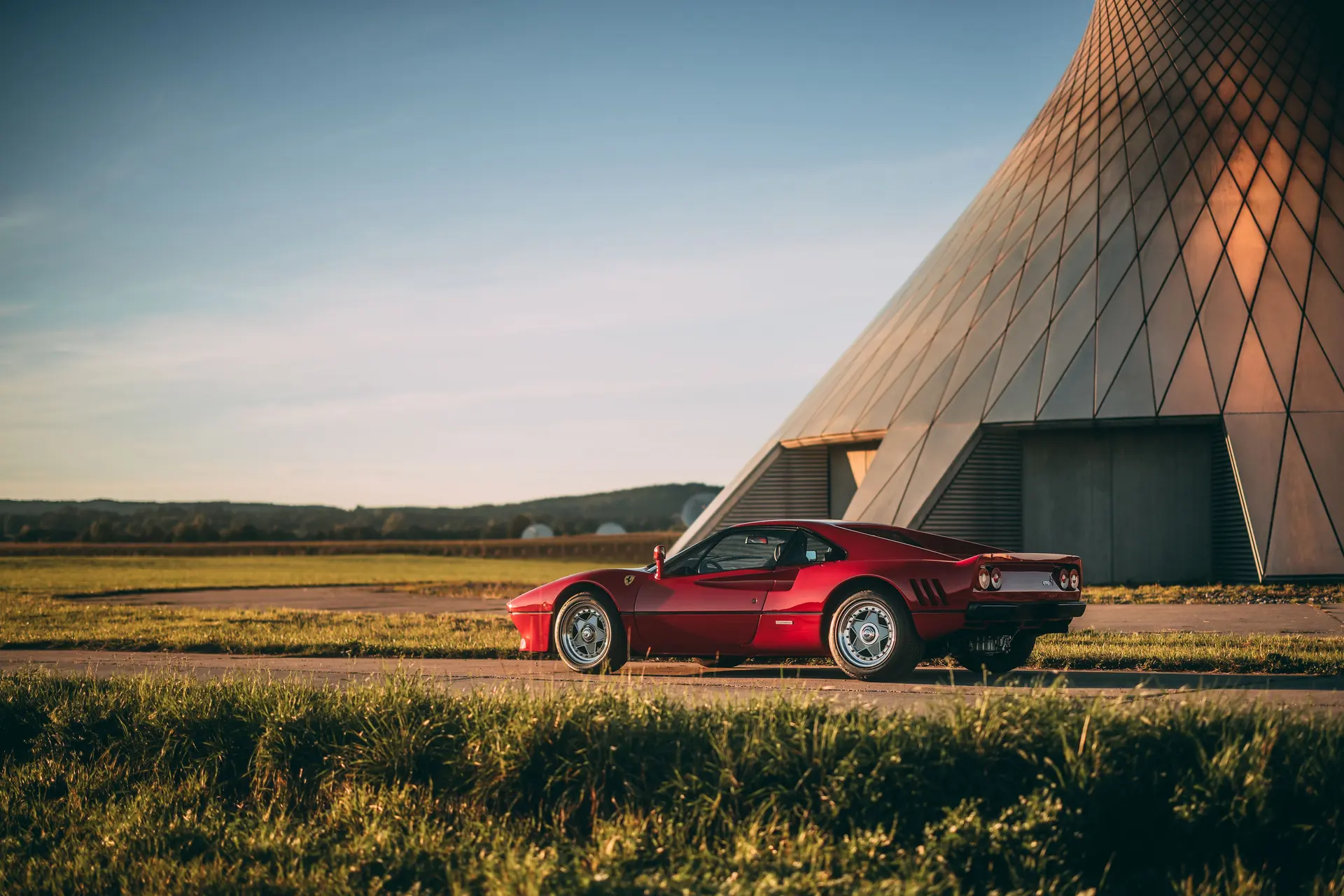
Rosso Corsa Ferrari 288 GTO in rear-three-quarter view beside a pyramid structure
GTO chassis 56773 engine bay with the twin-turbo V8 and intercoolers visible
GTO Evoluzione chassis 79888, rear three-quarter view at sunset

The ascent

Chassis Public GTO sample · 52475 → 57481 → 56761 → 58335 → 56773 → 52471

Six public stations

A sampled sequence of public GTO sales, not an index and not one chassis followed through time. Amounts remain exactly as sold in their reported currencies; the 2023 step down is retained rather than forced into a smooth curve.

$1’402’500

The preserved opening point

Chassis 52475 at Gooding — unrestored and documented.

Scottsdale, Arizona, USA

201420162019202220232026

Gooding Christie’s €9.1175M result for chassis 52471 is the latest documented public model record.