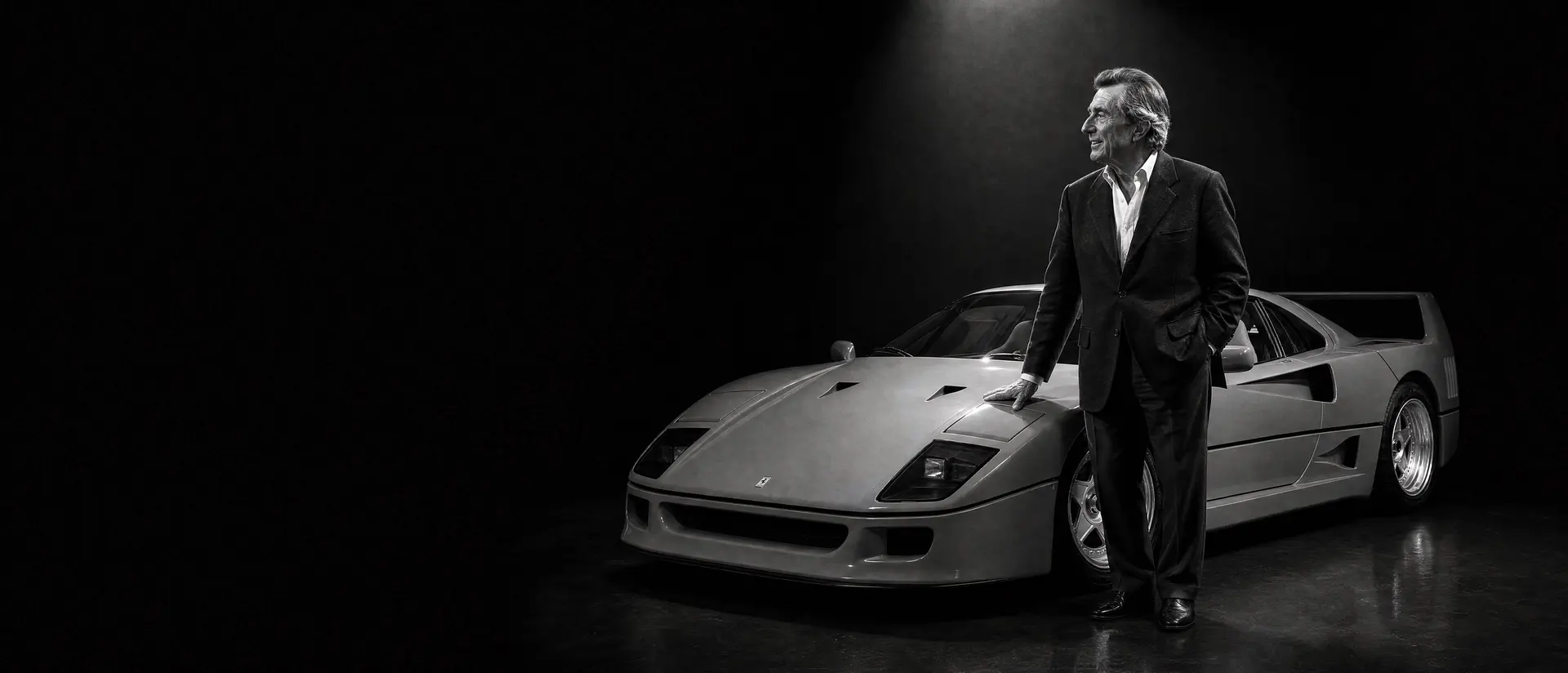
Leonardo Fioravanti in a tailored dark jacket standing beside a Ferrari F40 under a single overhead spotlight, his hand resting on the front wingAI-generated

People · Designer · b. 1938

Leonardo

l’aria decide la forma

Born
Milan, 1938
House
Pininfarina, 1964–1988
Then
Ferrari · Fiat · Fioravanti S.r.l.
In the register
Three files

The aerodynamicist

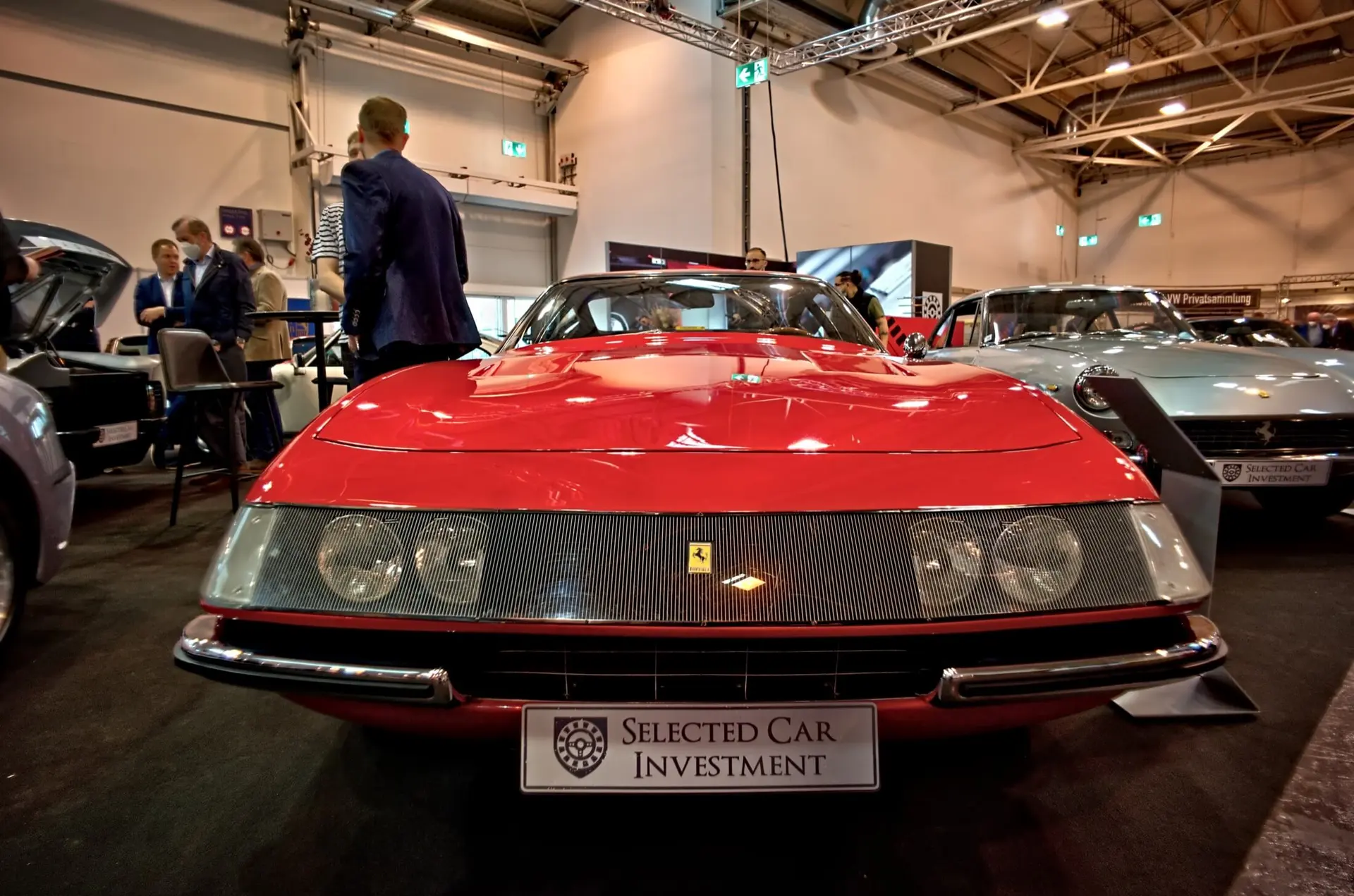
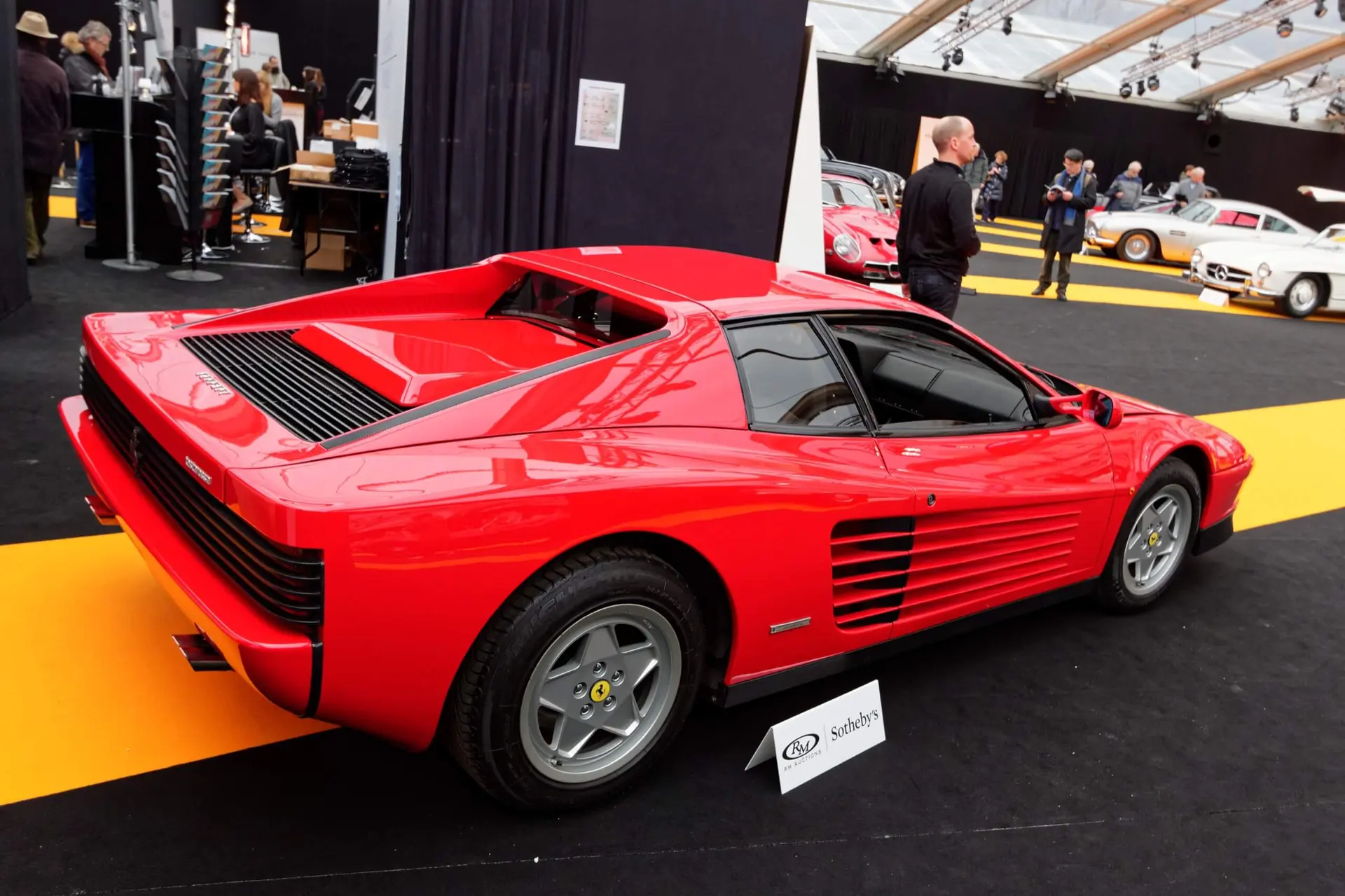
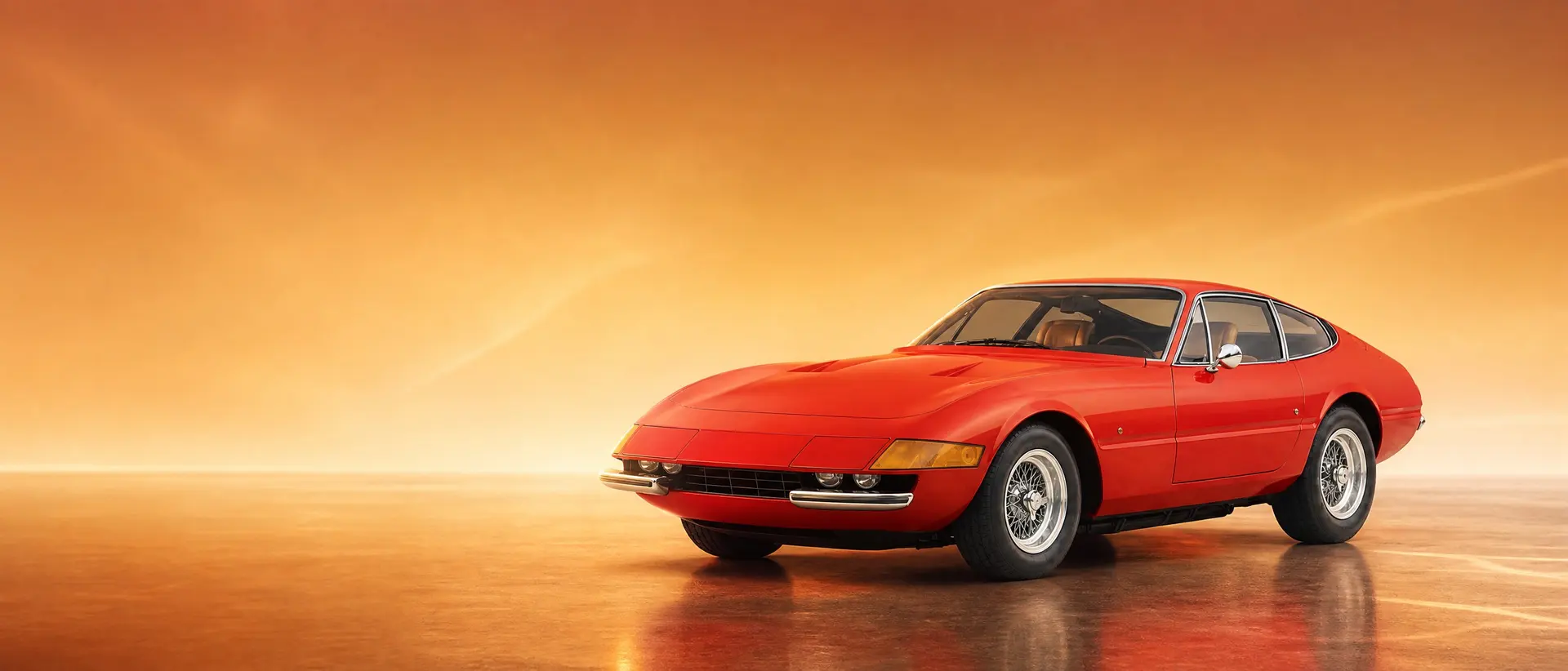
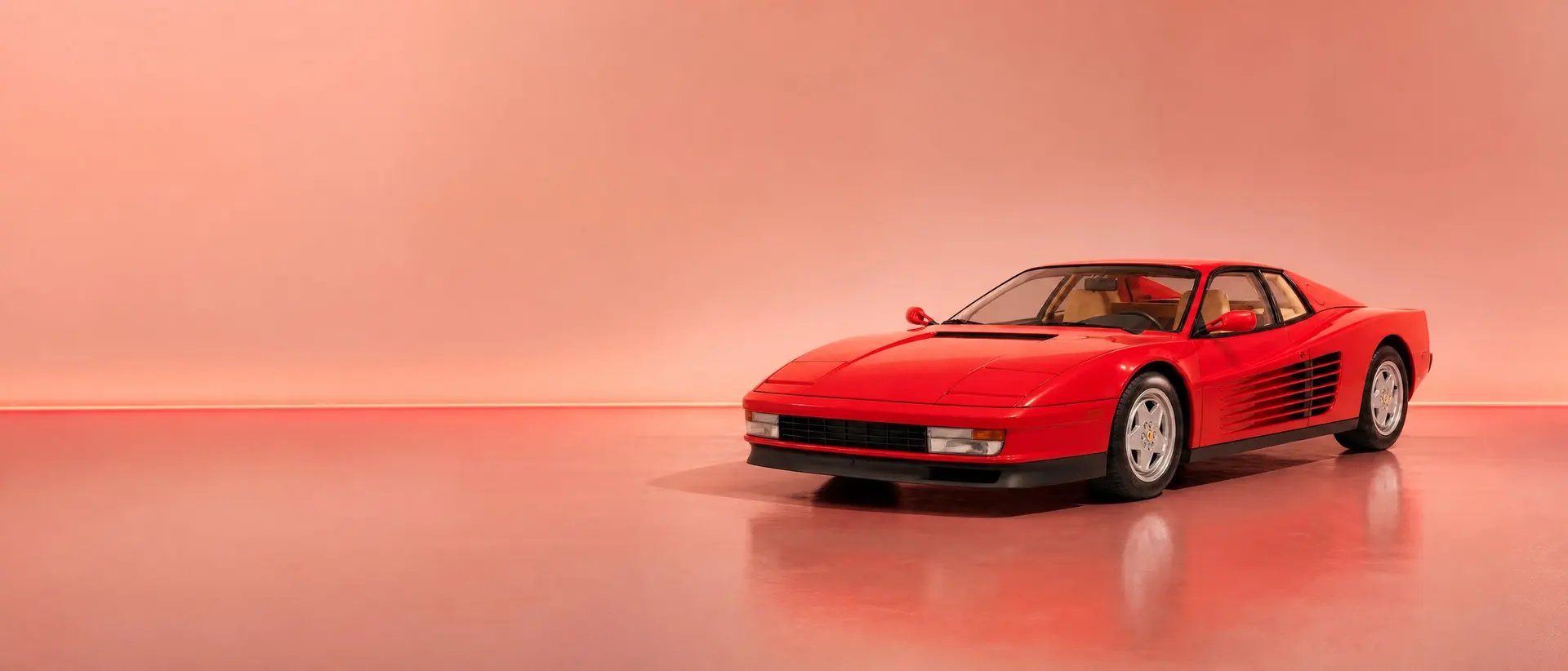
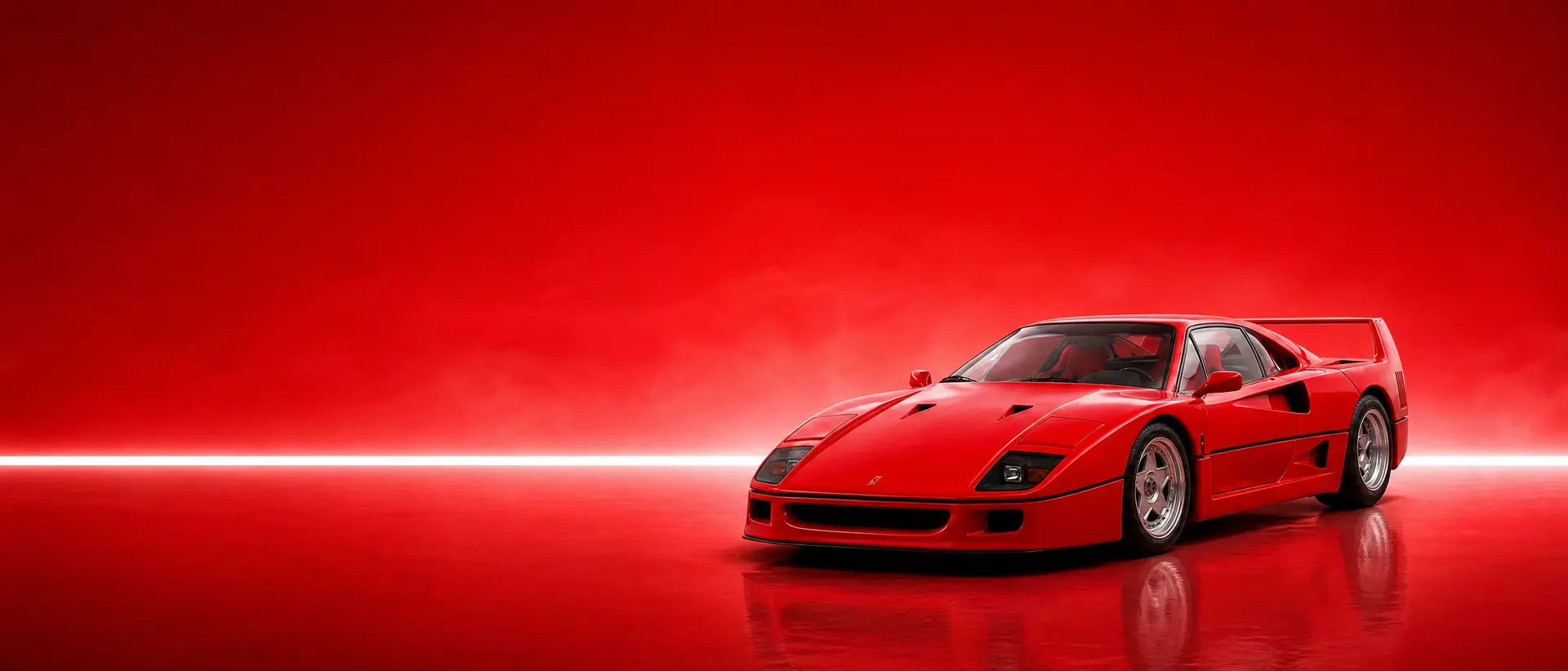
A mechanical engineer from the Milan Polytechnic, Fioravanti spent twenty-four years at Pininfarina treating airflow as the first client. The Daytona re-proportioned the front-engined GT around a long bonnet and a cut tail; the Testarossa let its cooling draw the body; the F40 closed the era under his design direction.

The house work was collaborative and he kept it that way in the record — Brovarone on the Dinos, Martin on the Aerodinamica, Camardella on the F40 body. What stayed constant was the method: find where the air wants to go, then build the car out of the answer. After Pininfarina came Ferrari’s management, Fiat’s styling centre, and from 1991 his own studio in Turin.

The air passes, the body answers, the tail cuts it clean

BMC 1800 Aerodinamica, 1967 — drag coefficient 0.45 to 0.35, the tail chopped clean

The register

Daytona, Testarossa, F40

Signature moves

The nose, the duct, the cut tail

The long nose, the cut tail

The Daytona stretched the bonnet and chopped the tail flat — the Kamm cut as a GT proportion, stated in 1968 and never softened.

Lighting as frontal architecture

The Daytona’s lamps sat behind one full-width Plexiglas panel. The lighting was the nose, not a detail applied to it.

Air as form-giver

The BMC 1800 Aerodinamica took a saloon from a drag coefficient of 0.45 to 0.35 with a chopped Kamm tail — a team result, with Paolo Martin contributing substantially.

Cooling packaged into the body

On the Testarossa the radiators moved to the sides, close to the engine. The ducts that fed them were not styled over — they became the car.

Regulation turned into a feature

The Testarossa’s intake fins satisfied a German safety requirement — and, in Fioravanti’s account, steadied the lateral airflow into the radiators.

The archive

Prints from the drawer

Photographs of the man and the register cars that carry his air — choose a print and it pushes the others aside.

Fiorano, 2007. Stefano Mecchia, CC BY 2.0, via Wikimedia Commons.

Beyond the register

From the Aerodinamica to his own name

'65–'69

Ferrari 250 LM Speciale

Early Pininfarina work on the mid-engined Ferrari theme.

BMC 1800 Aerodinamica

The chopped-tail aerodynamic saloon — team-led, with Paolo Martin contributing substantially.

Dino 206 GT / 246 GT

Assisting Aldo Brovarone on the small mid-engined berlinetta.

Ferrari P5 and P6

Two mid-engined studies from the Pininfarina years.

'71–'75

Ferrari 365 GT4 Berlinetta Boxer

The flat-twelve berlinetta whose front radiator the Testarossa would later answer.

Fiat 130 Coupé

The formal three-box coupé, drawn at Pininfarina.

Ferrari 308 GTB/GTS

The V8 berlinetta of the Pininfarina years.

'80–'00

Ferrari Pinin

The four-door Ferrari prototype, drawn at Pininfarina.

Ferrari 288 GTO

The Group B homologation Ferrari — the step before the F40.

Fioravanti Sensiva and Tris

Concepts from his own Turin studio, independent from 1991.

The house

Pininfarina

Twenty-four years, from the drawing office to Managing Director of Studi & Ricerche — the Ferrari decades of the house ran through his hands. Then three years inside the Fiat Group, as deputy general manager at Ferrari and head of Fiat’s styling centre, before the studio carrying his own name became his full-time practice in 1991.

Pininfarina, 1964–1988 · Fiat Group, 1988–1991 · Fioravanti S.r.l.

In his words

“I wanted to find a solution … and decided to remove the front water radiator.”

Leonardo Fioravanti · on the Testarossa, Classic Driver