 1963
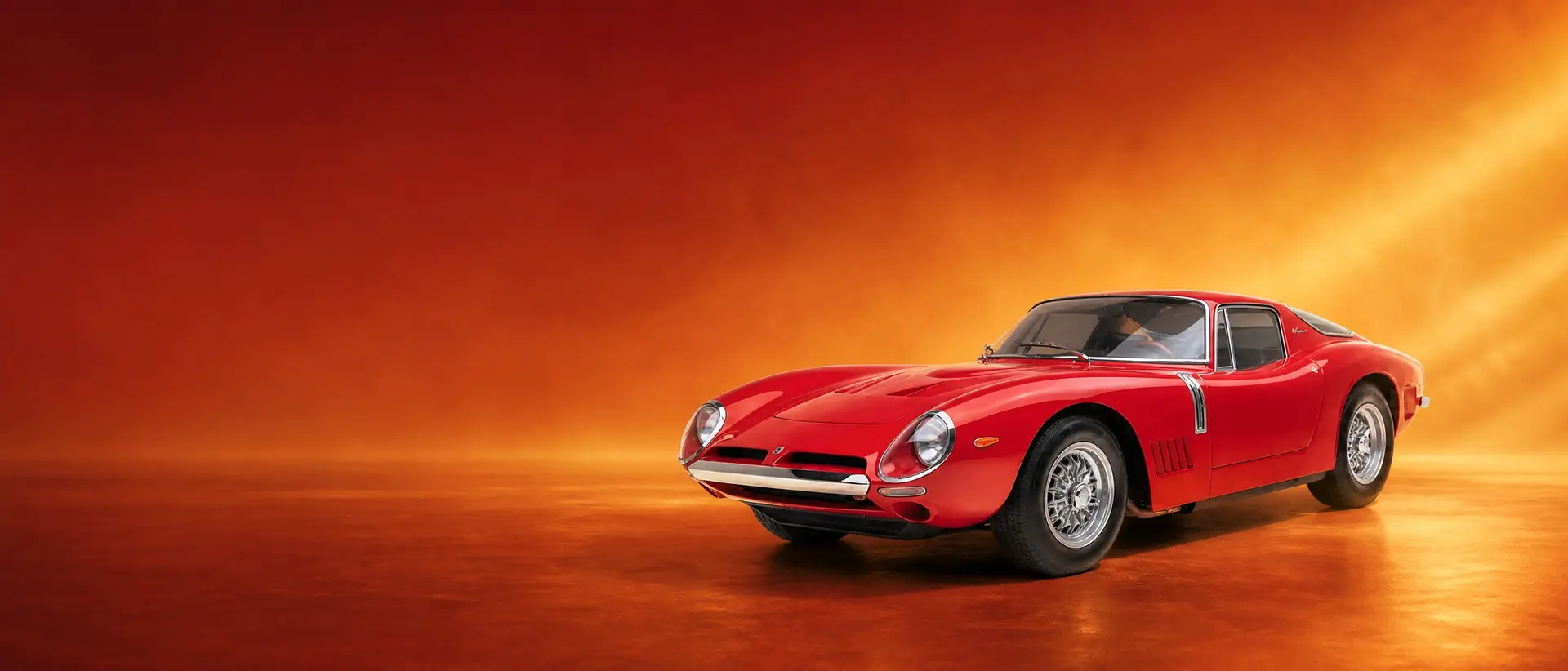
1963Bizzarrini 5300 GT Strada
Body designer · Bertone
At Bertone he drew the Iso Grifo A3/C low over its competition chassis — a form that outlived the Iso–Bizzarrini split of 1965 and carried on as the 5300 GT Strada and Corsa.
 AI-generated
People · Designer · b. 1938
Giorgetto
la semplicità e le proporzioni
The steady hand
Head of Bertone’s Style Centre at twenty-one, then Ghia’s, then — from 1968 — his own house, founded with Aldo Mantovani to carry a design from sketch to production line. Giugiaro never worked one visual formula; he worked the same discipline on every brief, from the Ghibli to the Golf.
His verdicts stayed geometric: flat planes, taut surfaces, structure left visible, proportion doing the work ornament pretends to do. The register holds five files where the progression is documented — from the sculptural Bizzarrini and Ghibli of the coachbuilding years to the compact mid-engined wedges of Bora, Merak and M1.
The register
1963Body designer · Bertone
At Bertone he drew the Iso Grifo A3/C low over its competition chassis — a form that outlived the Iso–Bizzarrini split of 1965 and carried on as the 5300 GT Strada and Corsa.
 1966
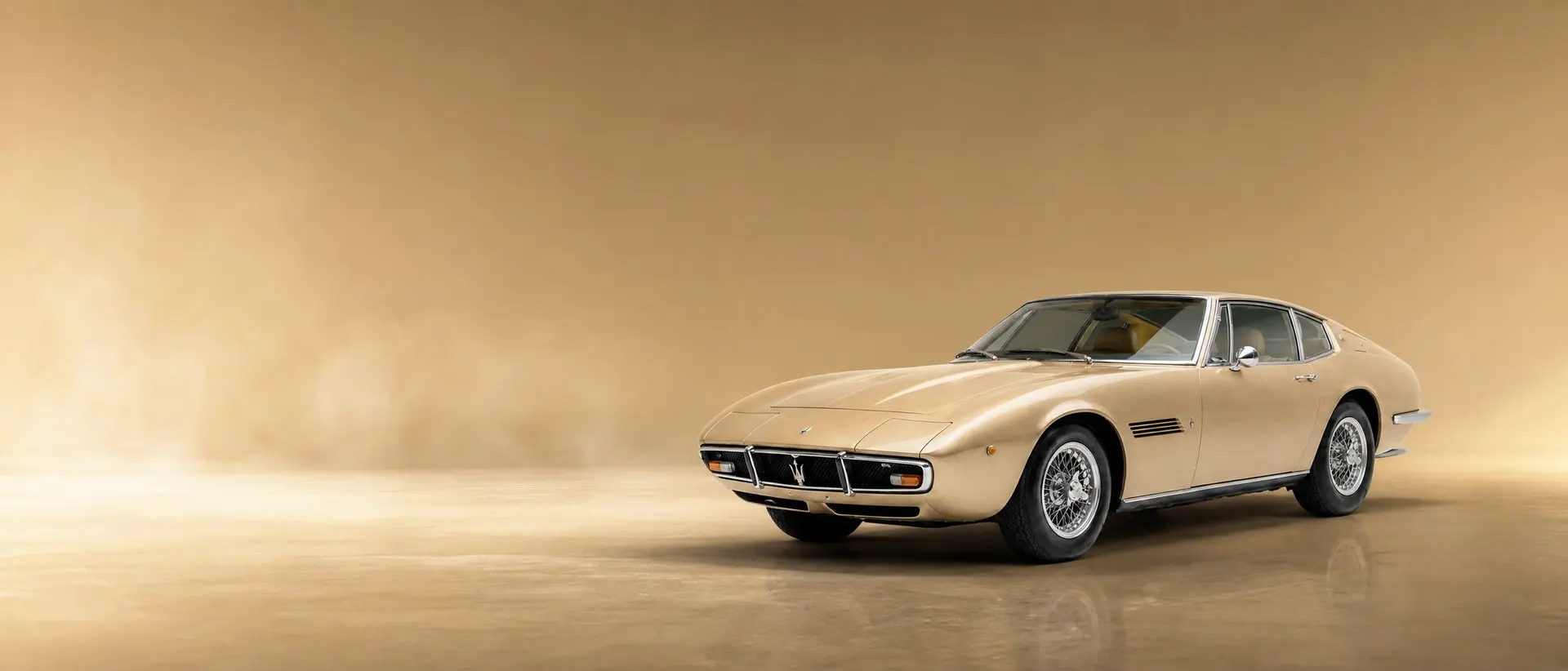
1966Designer · Ghia
Unveiled on Ghia’s Turin stand in November 1966: shark nose, retractable lamps, a bonnet so low Maserati adopted dry-sump lubrication to fit the V8 beneath his line.
 1971
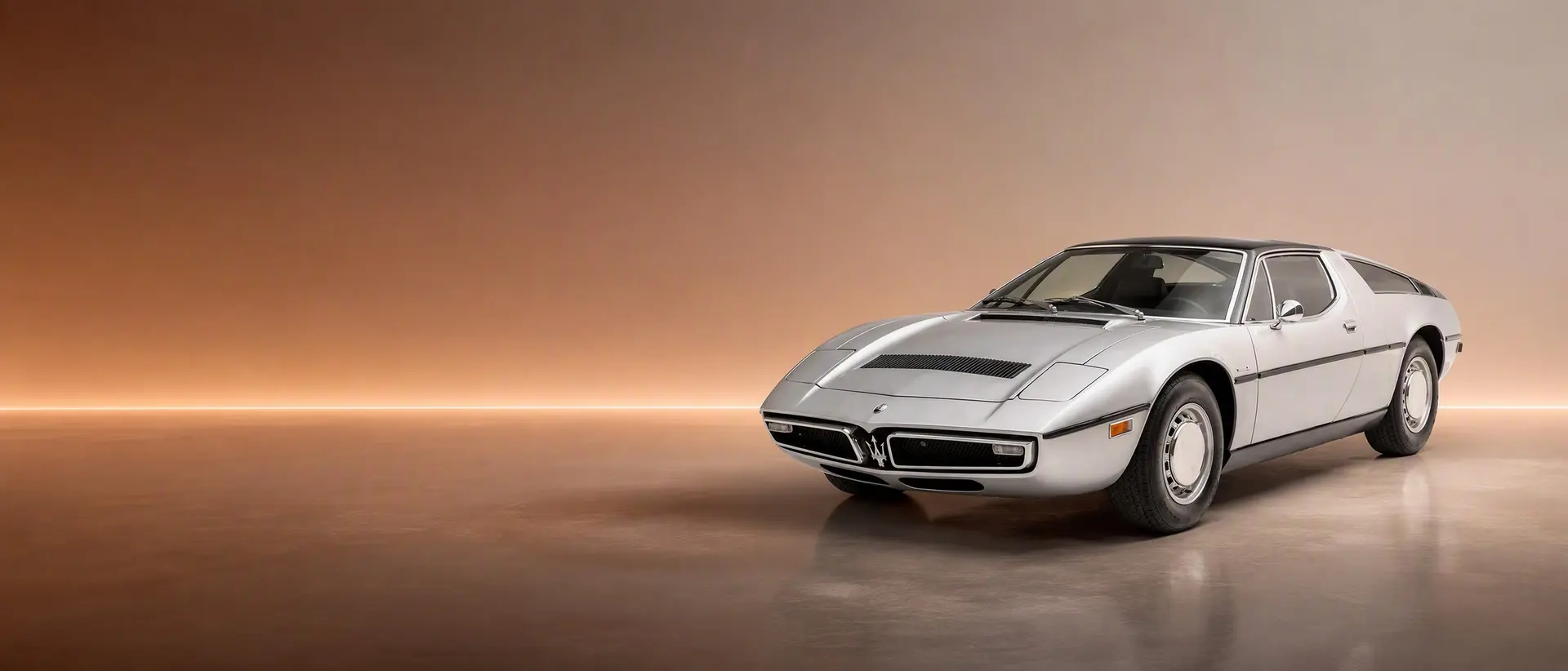
1971Designer · Italdesign
Maserati’s first mid-engined road car. Giugiaro drew the two-seat fastback around Giulio Alfieri’s package — 564 built, each one carrying his low glass tail.
 1972
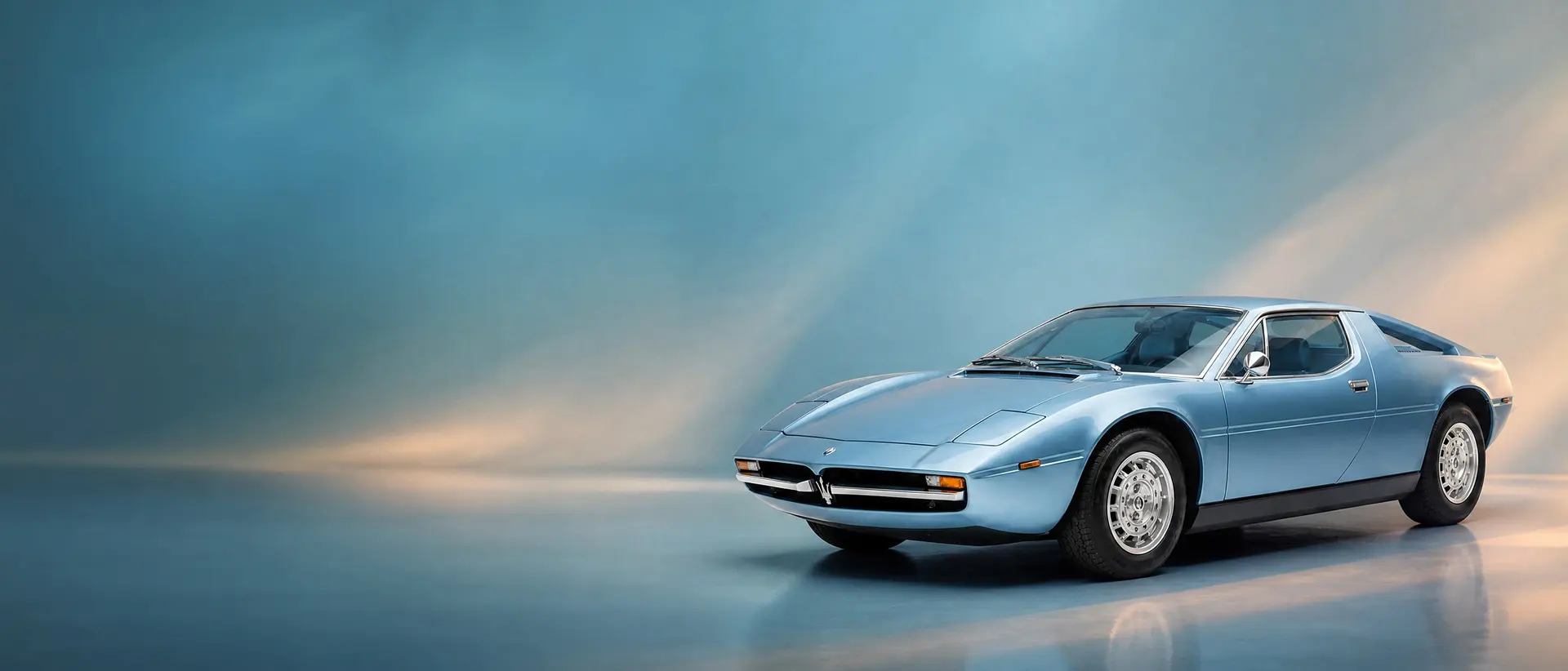
1972Body designer · Italdesign
The Bora architecture opened into a 2+2. Where the Bora carried glass over its engine, the Merak carries air — the structural pillar left bare as a flying buttress.
 1978
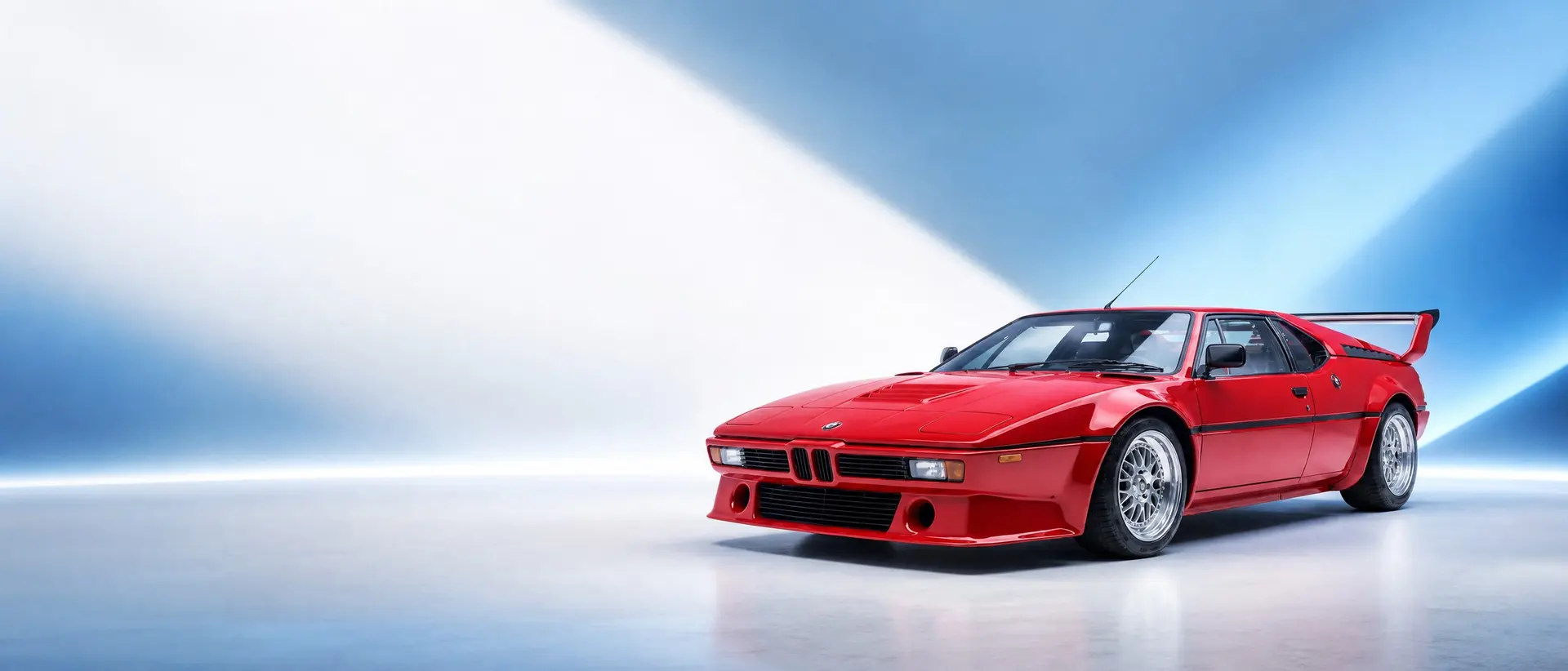
1978Body designer · Italdesign
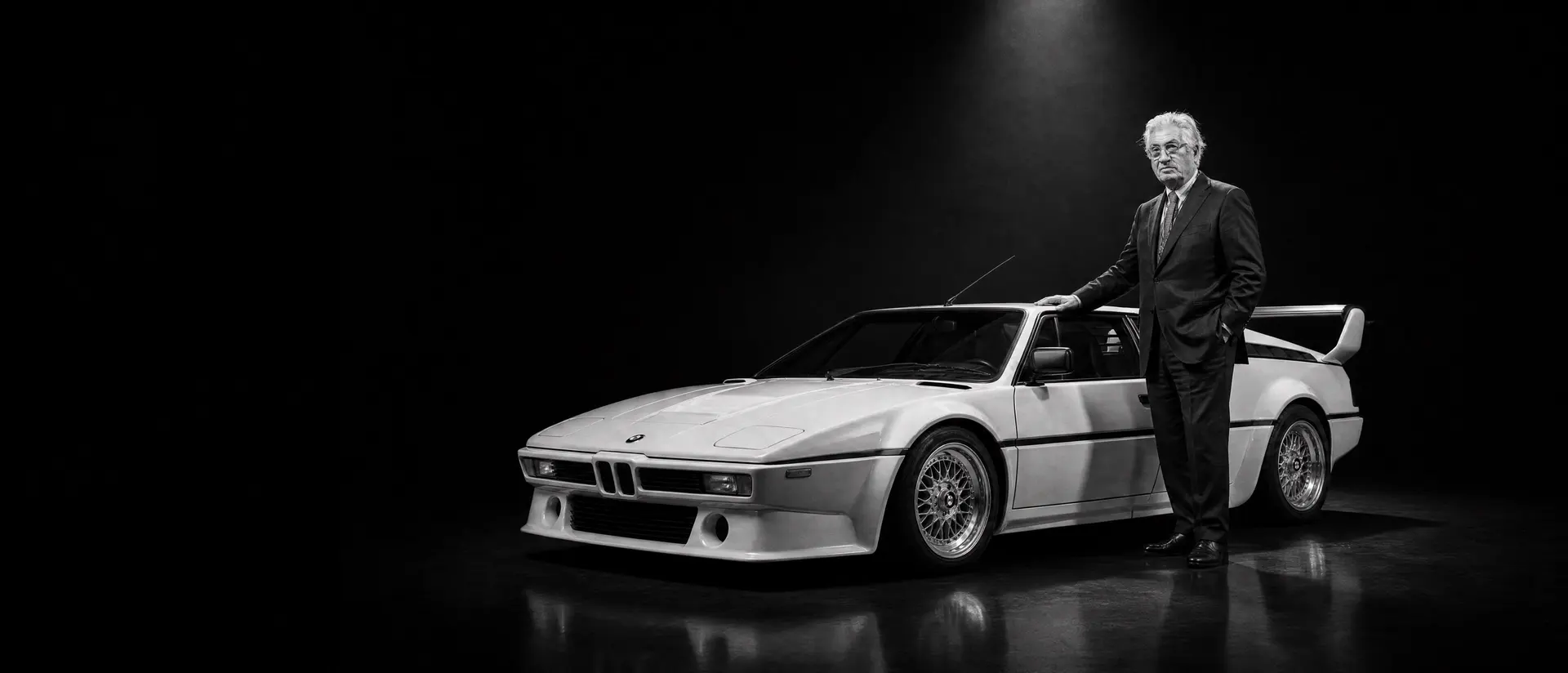
Paul Bracq’s 1972 Turbo study translated into a production wedge. Italdesign joined body to frame and fitted the interior; BMW counts it as its first fully fledged M car.
Signature strokes
The Mangusta was an exercise in flat elements; the Esprit, Boomerang and M1 keep the geometry planar and sharp-edged. Curves earn their place or go.
The Giulia GT holds its side in one taut pull; his own archive calls the Uno’s surfaces “taut, spare.” Nothing ornamental survives the pencil.
The Ghibli forced the V8 lower, the Golf stands on a short vertical tail, the Panda is room at a controlled cost. Proportion is the design.
The Merak’s rear pillar stays bare and becomes the flying buttress; the Golf makes its upright tail and pillars the profile. Structure turned into graphic identity.
Italdesign’s remit ran from sketch through prototype to production line. On the Alfasud and the Panda, manufacturing, weight and cost were drawn in, not added later.
The archive
Works photographs from Bertone to Milan and one editorial reconstruction — choose a print and it pushes the others aside.
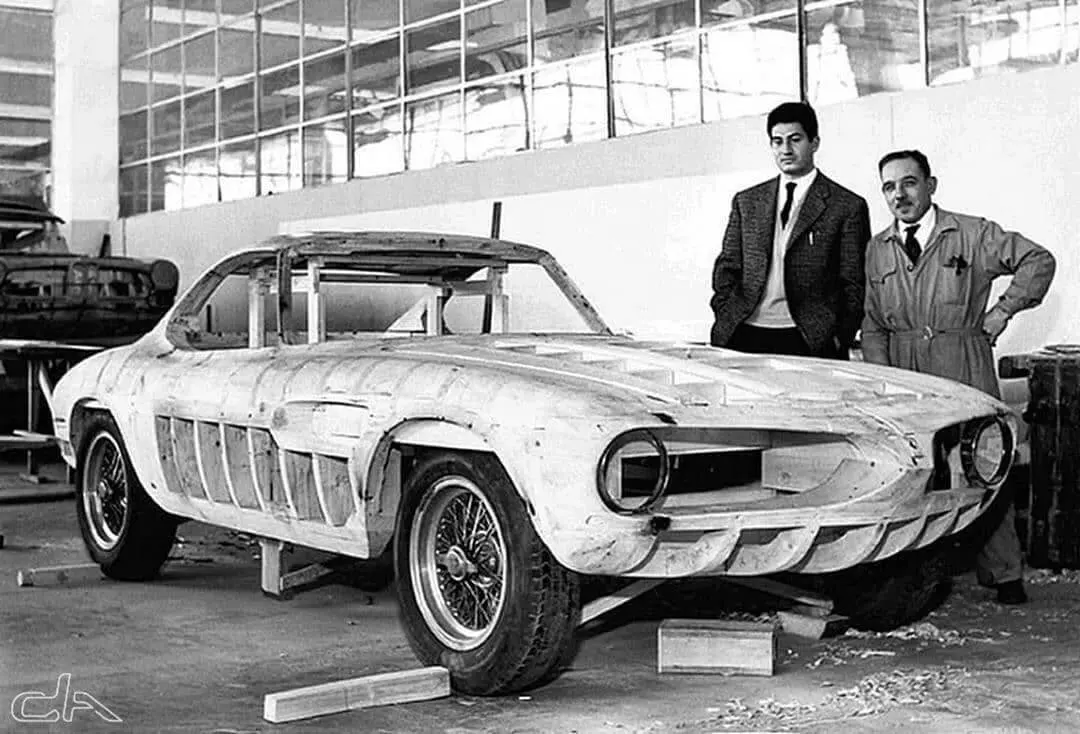
Beside the Ferrari 250 GT wooden buck at Bertone, 1962. Wikimedia Commons, public domain.
Beyond the register
The compact production coupé, shown to the press in September 1963.
Giugiaro on the styling, Giotto Bizzarrini on the engineering.
Shown at Geneva and Tokyo in 1966 before series production in Japan.
The low Ghia-era sports car with a split, gull-wing-opening rear deck.
An Italdesign project carried through design, engineering and the assembly line.
Shown at Turin in 1972; on the road from June 1976.
The squared fastback with the short, vertical rear — the compact hatchback stated.
Maximum room at a controlled cost, engineered jointly with Aldo Mantovani.
Stainless steel over composite, gull-wing doors, one production run into legend.
The high roof and near-vertical rear screen that reset the city car.
Launched in Japan in 1991, exported as the Lexus GS 300.
The houses
Bertone
Head of the Style Centre, 1959–1965
Nuccio Bertone put a twenty-one-year-old in charge of the Style Centre. Six years produced the Giulia GT, the Iso Grifo and the low A3/C body that became the 5300 GT.
Ghia
Style Centre, 1965–1968
Three years running Ghia’s style and prototype work — long enough to put the Ghibli on the house’s Turin stand in 1966 and the Mangusta on the road behind it.
Italdesign
Co-founder, 1968–2015
Founded with Aldo Mantovani in February 1968: design and engineering under one roof, from sketch to production line. Bora, Merak, M1, Golf, Panda — the model proved itself for five decades.
In his words
“It is the simplicity of the whole and the proportions.”
Giorgetto Giugiaro · Wallpaper*, 2026