959

The Group B brief, delivered to the road

A cancelled Group B destination turned into a road-car technology programme: 2'849 cc, two sequential turbochargers, 450 PS and an electro-hydraulic centre coupling that could send up to eighty per cent rearward.

Market value · road

$1.6M$2.3M

Typical $1.8M · 26 sales · +116% vs ’20–’21

$964K$5.7M
Open Market & Price

Market value · road

$1.6M$2.3M

Typical $1.8M · 26 sales · +116% vs ’20–’21

$964K$5.7M
’04’26
Market history · in the terminal
Open Market & Price
Top speed
317 km/h (Porsche retrospective)
Power
450 PS (sequential twin-turbo)
0 to 100
3.7 s (Porsche retrospective)
Drive
PSK AWD (up to 80% rearward)
Displacement
2'849 cc (flat-six)
Kerb weight
1'450 kg (catalogue; test: 3'500 lb)
List price
DM 420'000 (RM factory-history account)
Dakar
1–2–6 (Paris–Dakar 1986)

Market & Price

The price and the proof

A terminal for one car: the model curve over the documented record, the benchmarks it is measured against, and the instruments that read it.

Records: 959 Sport · WP0ZZZ95ZJS905011 — $5,505,000 · Broad Arrow, Amelia Island · 2026; 959 Paris-Dakar · WP0ZZZ93ZFS010015 — $5,945,000 · RM Sotheby’s, Atlanta · 2018. 62 documented road sales on file · 2004–2026.

HCN:959Live model
$1'832'3871.4% · 12M
$1M$2M$5M20182020202220242026CovidRate shockS&P 500
Model curve · anchored to 62 documented salesnot investment advice
The readouts · model figures against the benchmarks62 documented anchors · last sale 2 mo ago

Compound annual growth

WindowThis car*S&P 500Gold
1Y+1.4%+18.8%+21.9%
5Y+11.0%+11.4%+17.6%
10Y+5.3%+13.3%+11.8%

*Modeled price CAGR · S&P is a price index, no dividends

Deepest drawdown · model window

This car*-71.1%Oct 2018Jun 2021 · recovered Feb 2026
S&P 500-50.8%Oct 2007Mar 2009 · recovered Mar 2013
Gold-39.3%Sep 2011Dec 2015 · recovered Jul 2020

Forecast ladder · model quantiles

HorizonP10P50P90
+6M$1.6M$1.9M$2.3M
+12M$1.5M$2.0M$2.6M
+24M$1.4M$2.1M$3.1M

Median path with the 10th and 90th percentile · not investment advice

Transaction ledger · documented sales

62 of 62 recorded sales · shown in USD · recorded currency in each record

The road-car file is thin enough that condition, legal status and specification move the visible range. The two headline results are category markers: a $5.505M Sport and a $5.945M Paris-Dakar works car, not one continuous 959 price curve.

Price range · road · openConfidence · lowA cautious secondary-guide range for sound Komfort road cars, checked against dated public results from $1.05M to $2.535M. Sports and works rally cars sit outside it; this is not an appraisal.

Floor

$1.6M

Typical

$1.8M

Ceiling

$2.3M

Estimate band for good road cars. 26 documented sales since 2019 plotted below.

$944K$1.6M$1.8M$2.3M$5.7M
Hover the spectrum to read a value, or a dot for the sale behind it.

Band and axis shown in USD. Sale positions use indicative fixed-rate conversion to USD; sale readouts retain recorded currencies. US dollars, sound Komfort road cars. The band is guide-derived and checked against public auctions; Sports, Canepa conversions and works cars stay separate.

Road record

$5,505,000

959 Sport · WP0ZZZ95ZJS905011

Broad Arrow, Amelia Island · 2026

Road record

$5,945,000

959 Paris-Dakar · WP0ZZZ93ZFS010015

RM Sotheby’s, Atlanta · 2018

The wider market · Porsche at auction · median per year · modeled between anchors1,973 lots · 2003–2026 · exact yearly anchors · modeled line

Instrument calibration for this file is in progress — the terminal above reads the documented record directly.

Published auction totals remain in their reported currencies. No currency conversion or blended all-959 index is used here.

Overview

A competition brief that outlived its category.

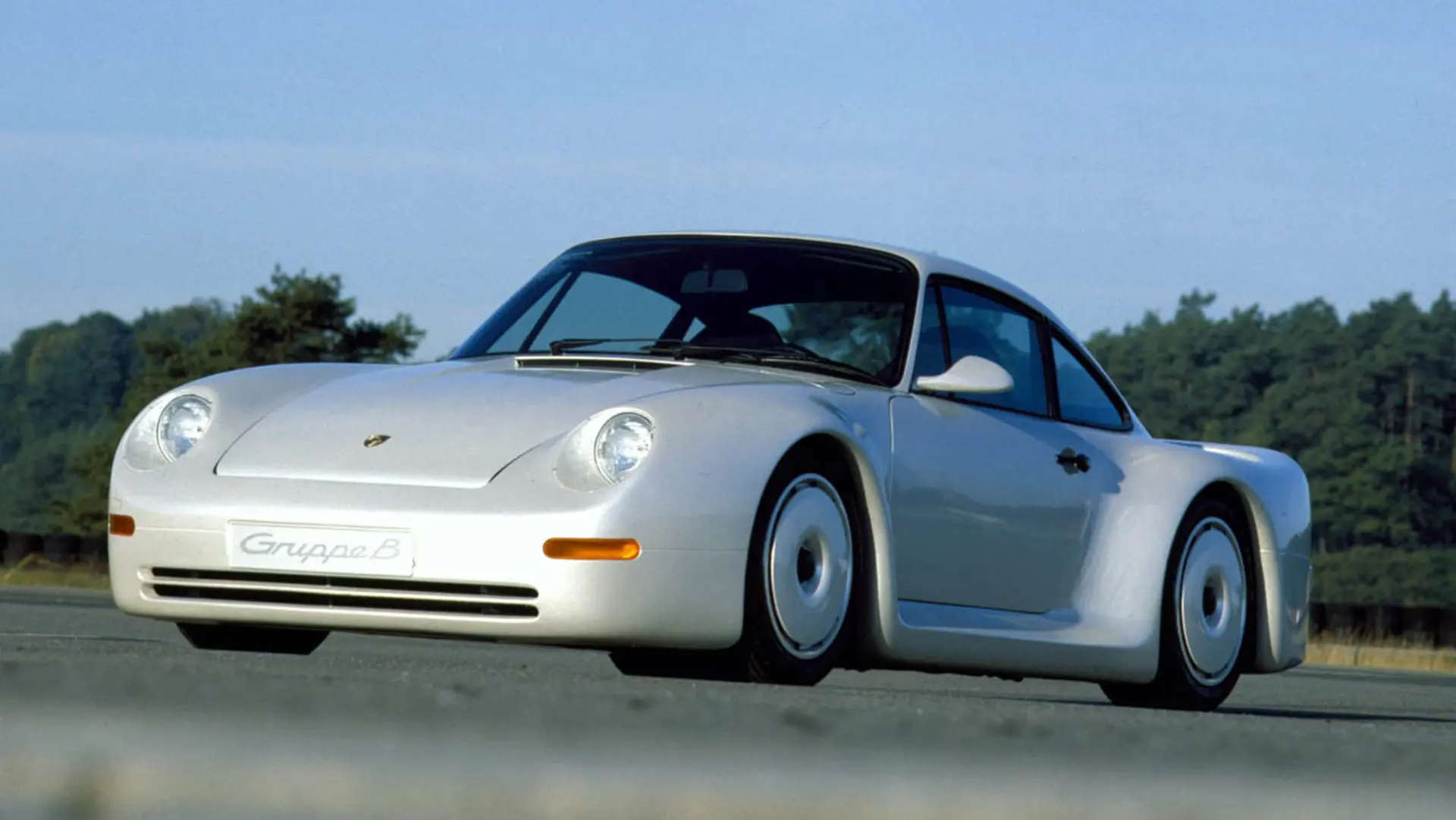
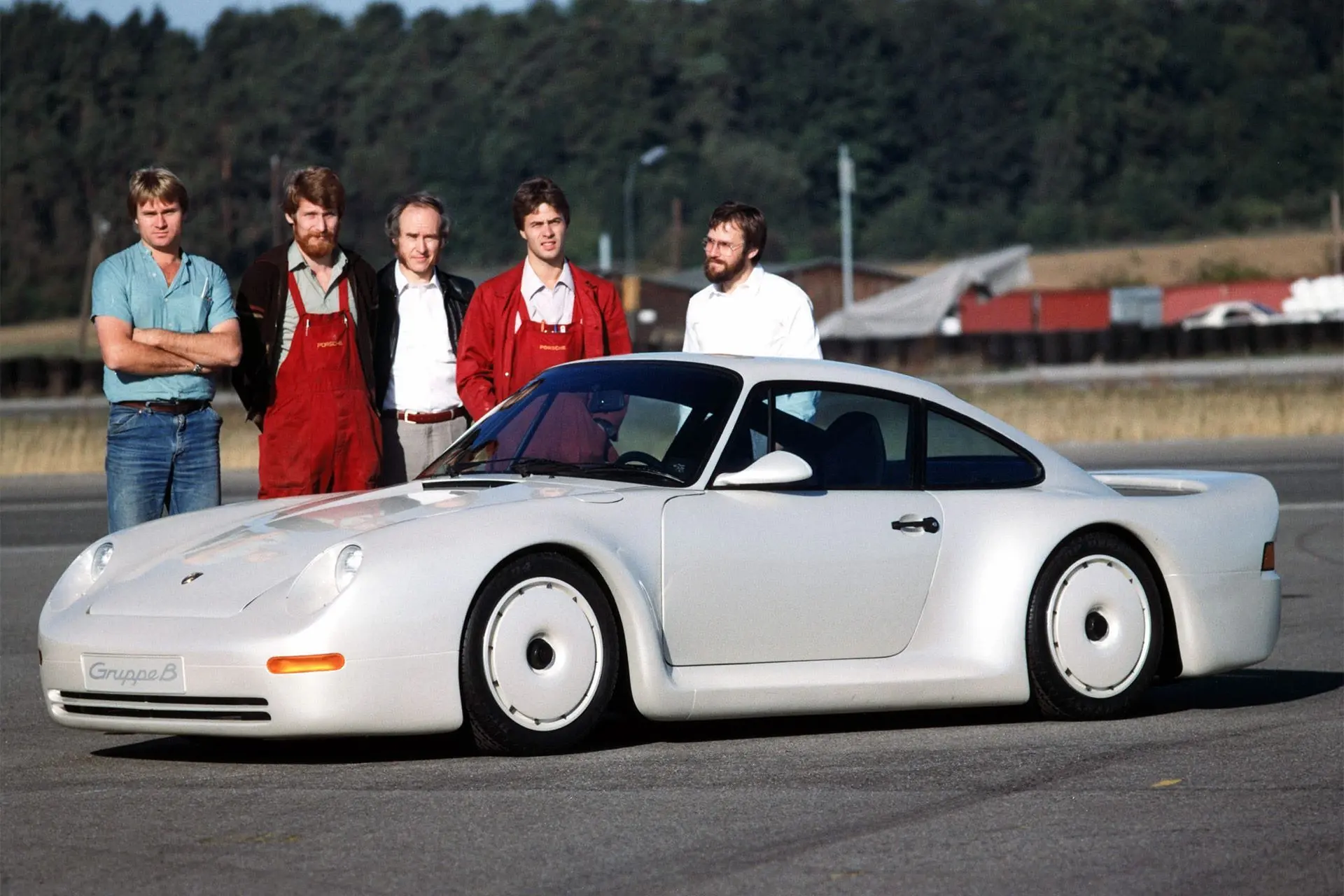
RM traces the programme to Helmuth Bott and Porsche chairman Peter Schutz in 1981. The white Gruppe B study appeared at Frankfurt in September 1983 with the planned twin-turbo flat-six; Group B disappeared before the 959 could make that intended category its home.

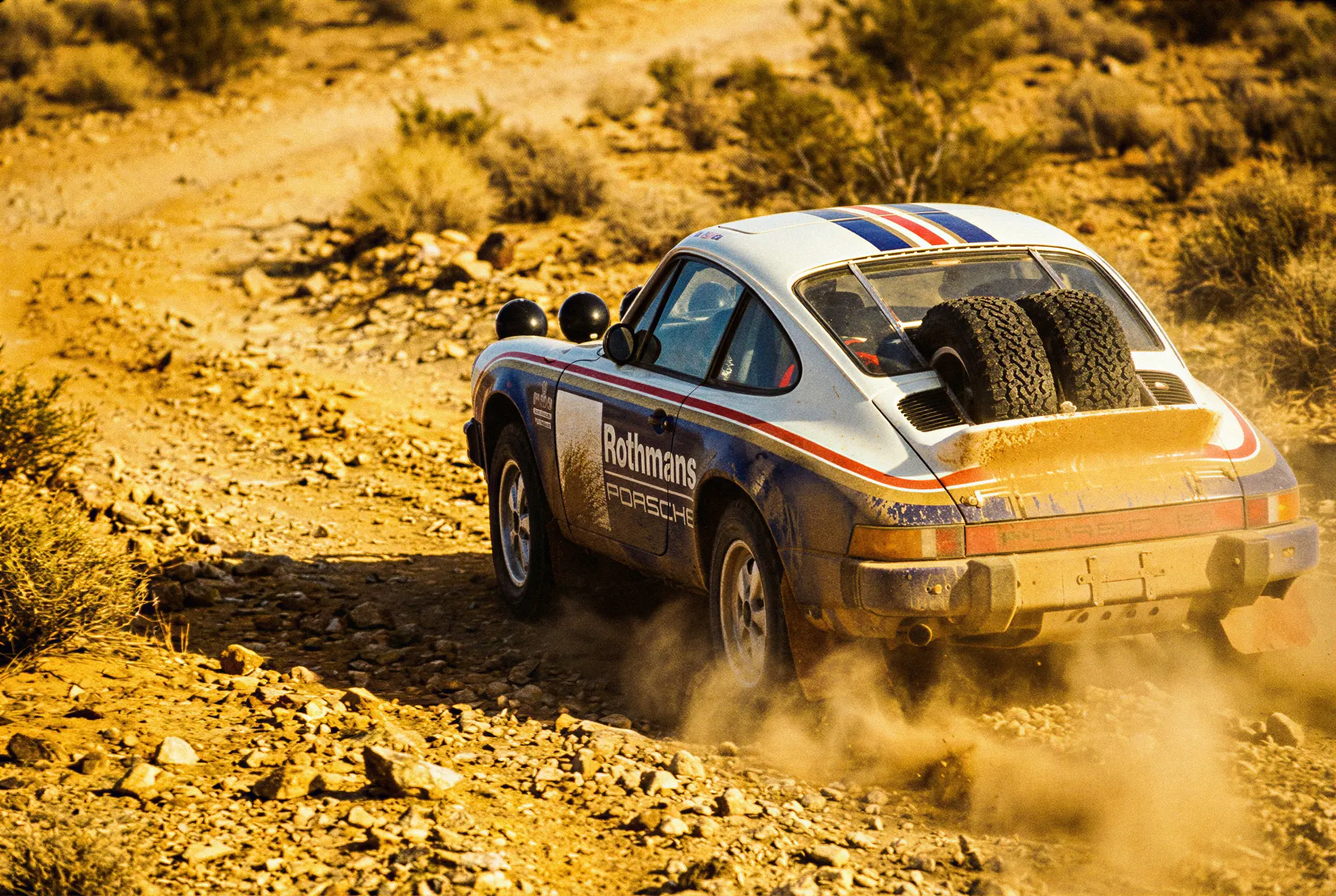
Porsche used the desert instead. The Type 953 won Paris-Dakar in 1984, all three 959s retired in 1985, and the 400 PS 1986 cars finished first, second and sixth. Porsche launched the road car in 1986, but its own retrospective says customer deliveries began in 1987.

Power
450 PS
0 to 100
3.7 s
Top speed
317 km/h
Drive
PSK all-wheel drive
List price
DM 420'000

Reference

Technical specifications

Powertrain

Engine
2'849 cc flat-sixsequential twin-turbo
Output
450 PSPorsche retrospective
Drive
Porsche-Steuer Kupplung all-wheel drivecontinuously variable front/rear torque
Rearward torque
Up to 80%depending on conditions, per Porsche

Performance

Top speed
317 km/hPorsche gives this for the 959, not specifically the Sport
0 to 100 km/h
3.7 sPorsche retrospective; test protocol unstated
Catalogue kerb weight
1'450 kgCarfolio; Car and Driver’s period test lists 3'500 lb

Body & dimensions

Length
4'260 mmsecondary technical database; agrees with Dakar dimensions
Width
1'840 mmsame secondary technical source
Height
1'280 mmRM Sotheby's Komfort description, rounded imperial prose — no exact factory metric row retrieved

Komfort & Sport

Komfort
Leather, air-conditioning and sound insulationconventional belts; electronically controlled adaptive suspension
Sport
Roll cage, cloth seats and four-point harnessescoil-overs; air-conditioning and stereo deleted
Sport weight saving
About 220 lbRM Sotheby’s description
Sport colours
Grand Prix White or Guards RedRM’s Sport-specific statement, not a full 959 palette

Paris-Dakar specification

Output
400 PS1986 works rally tune
Ground clearance
290 mm
Fuel capacity
330 L
Front damping
Double dampersall-terrain tyres and reinforced lightweight structure
Centre differential
Variable electro-hydraulic

Production & price

Series production
292 claimed by Porsche1987–88; relationship to the 29 Sports is unexplained
Other main claims
292 + 29 or 294 + 29Bonhams and Road & Track; incompatible scopes
Late 1992–93 cars
Six to eight reportedBonhams gives the disagreement; Kidston says eight
List price
DM 420'000RM says Porsche lost about half the cost of each of 292 sold cars
Late-car price
About DM 750'000Bonhams DM 750'000; Kidston DM 747'500
White Porsche Gruppe B study driving on an outdoor test track
Editorial artwork of a Porsche Type 953 on a desert rally stage
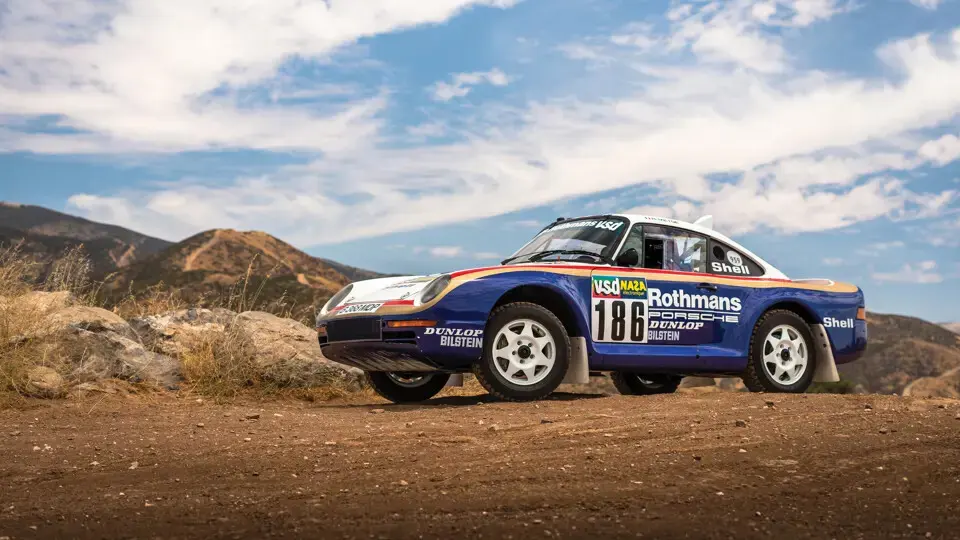
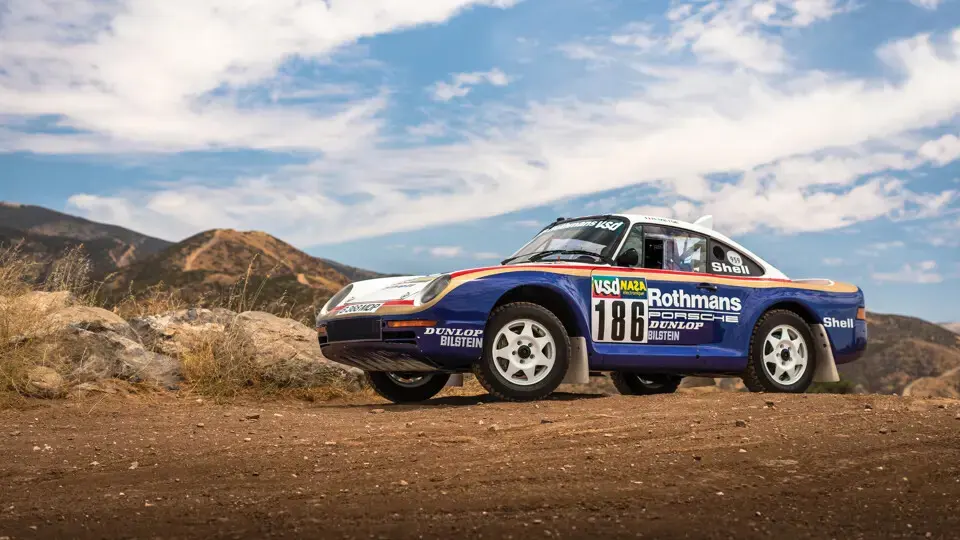
Porsche 959 Paris-Dakar chassis 010015 in Rothmans #186 livery

The records

0PS

Road car

2'849 cc sequential-twin-turbo flat-six

0km/h

Porsche’s published top speed

not a Sport-only figure

0

Sports

repeated RM and Broad Arrow count

DM 0

List price

RM’s factory-history account

The rival

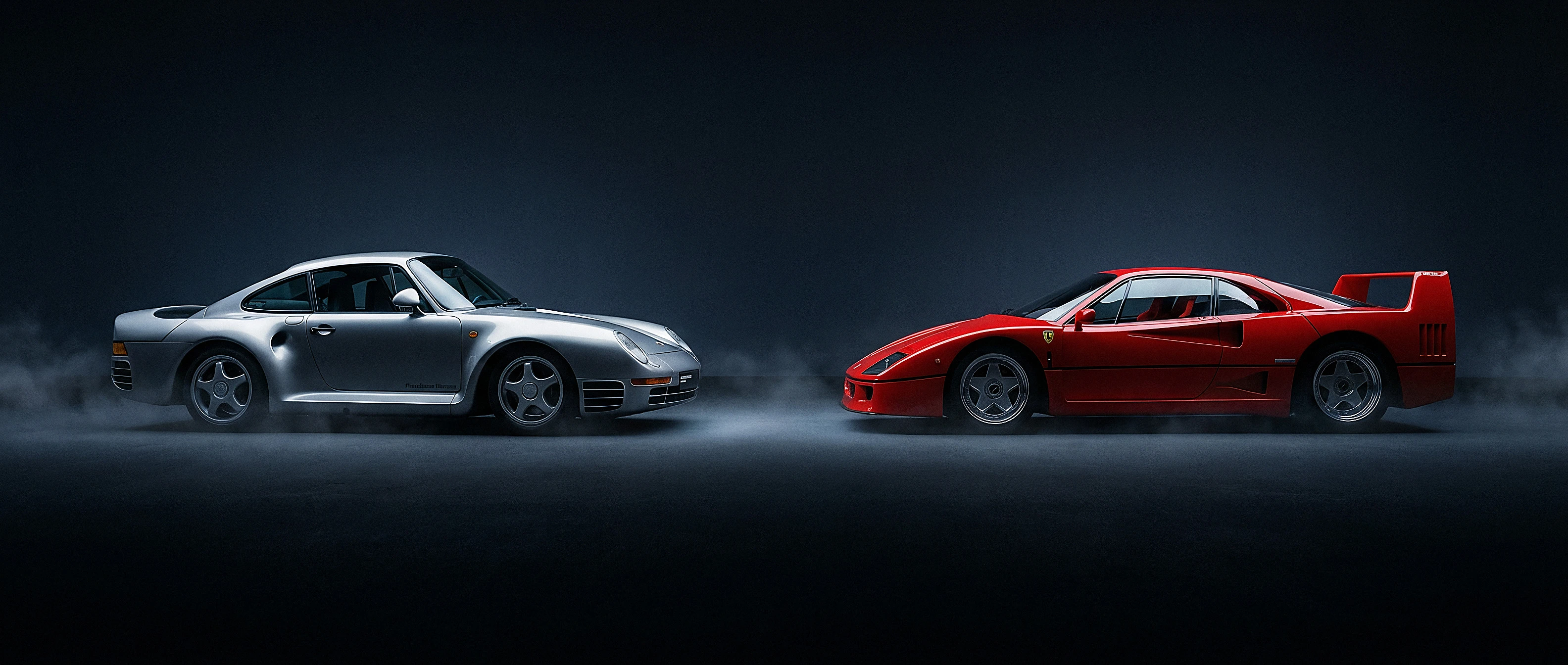
959 versus F40

The poster-war survives because the answers are opposite. RM contrasts the 959’s technical sophistication with the F40’s brute-force appeal: electronically managed all-wheel drive against rear-drive minimalism.

Silver Porsche 959 and red Ferrari F40 nose to nose across a dark technical stage

Porsche 959

Sequential-twin-turbo flat-six and PSK all-wheel drive — the systems car.

Ferrari F40

Twin-turbo V8 and rear-wheel drive — the minimal argument, without a shared unit convention.

2'849 cc twin-turbo flat-sixEngine2'936 cc twin-turbo V8
450 PSPower478 PS (471 hp)
3.7 s0 to 100 km/h4.1 s
317 km/hTop speed324 km/h
PSK all-wheel driveDriveRear-wheel drive

Acceleration · published figures

Porsche gives the 959 3.7 seconds to 100 km/h; Ferrari gives the F40 4.1.

Top speed · published figures

Ferrari gives the F40 324 km/h; Porsche gives the 959 317.

A paper comparison, not a sourced head-to-head test. Manufacturers retain their own units: 450 PS for Porsche, 478 PS for Ferrari. Chassis 905016 was photographed at a 1989 track day with an F40 and 288 GTO, but no result is claimed.

True scale

The Komfort, on a qualified datum

The sourced road-car length is 4'260 millimetres. A Komfort auction description supports 1'280 millimetres as a medium-confidence height, while an exact factory metric row was not found.

Porsche 959

4.26 m · 1.28 m high

Ferrari F40

4.36 m · 1.12 m high

Porsche 911 Carrera

4.52 m · 1.30 m high

1.80 m
0m1m2m3m4m5m6m7m8m9m10m11m12m13m14m

Length: 4'260 mm, secondary technical source. Height: 1'280 mm for the Komfort body, medium confidence from RM Sotheby’s rounded 50-inch text; an exact factory metric row was not found. The p959 outline is traced from the catalogue cut-out, so perspective is approximate. The figure stands 1.80 m.

The road launch

0km/h

Porsche gives 3.7 seconds to 100 km/h—about 51 metres at constant acceleration; illustrative only.

Porsche retrospective · road-car figure · test surface unstated

0 m10 m20 m30 m40 m50 m0–100 km/h · 3.7 s · surface unstated

The variants

Five 959s, five different jobs

Vorserie proved the package; Komfort carried it into a leather road car; Sport removed weight and comforts; Paris-Dakar crossed the desert; the 961 took the programme to Le Mans. The production arithmetic and markets are not shared.

959 Komfort

1987–1988 · 1992–1993 · Limited · 207 built

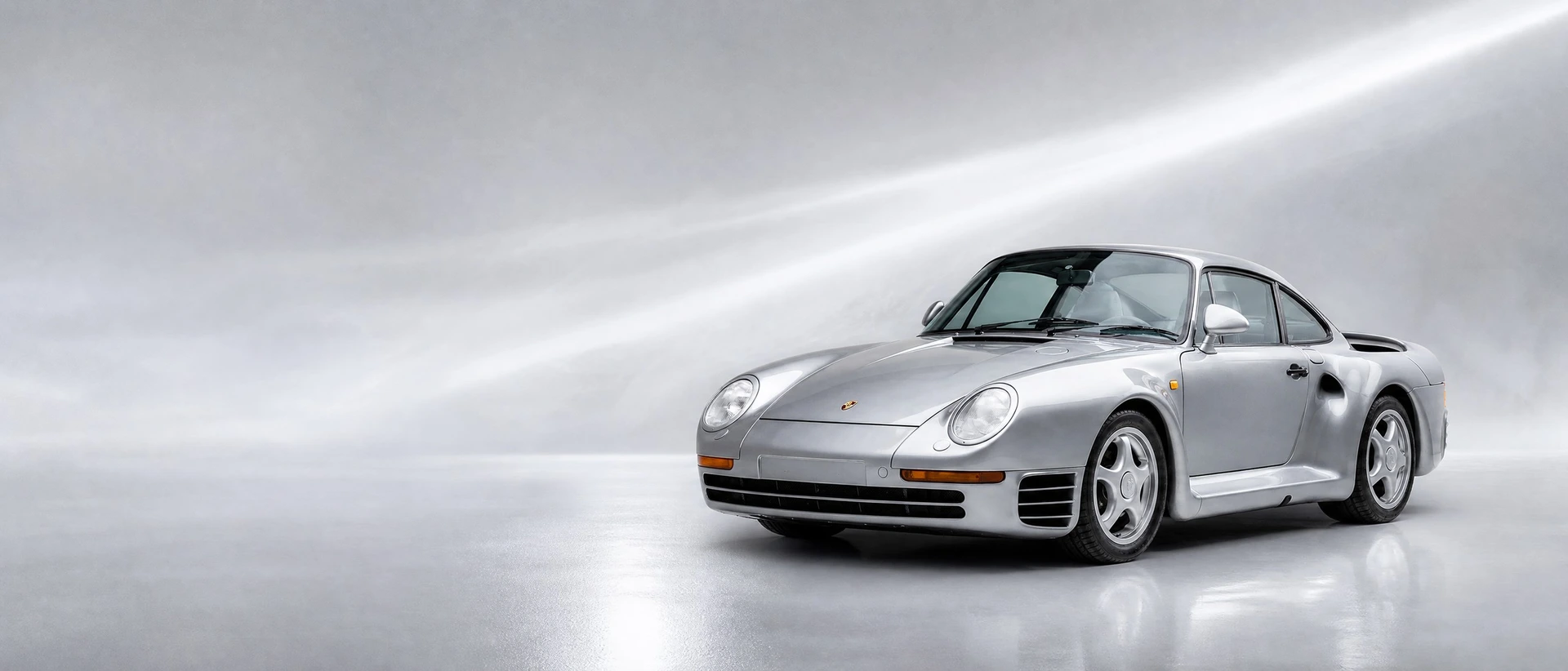
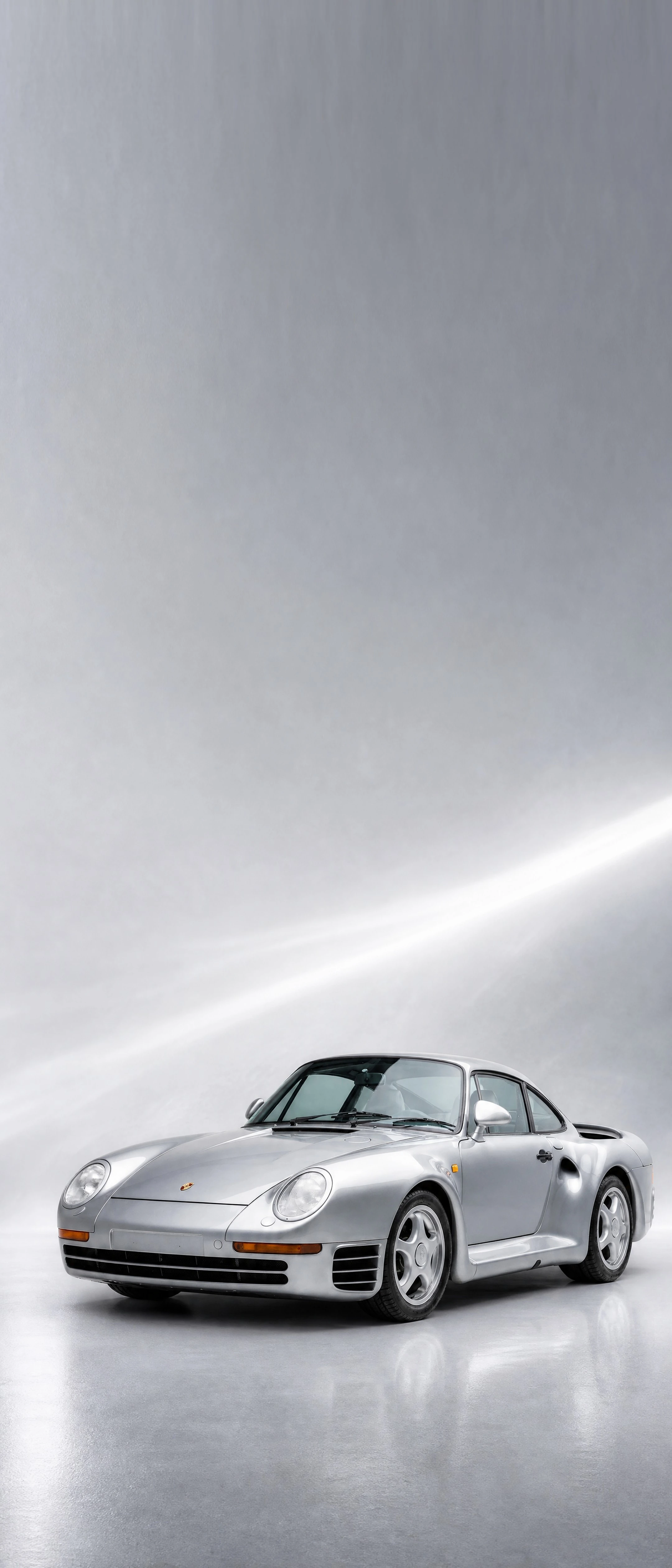
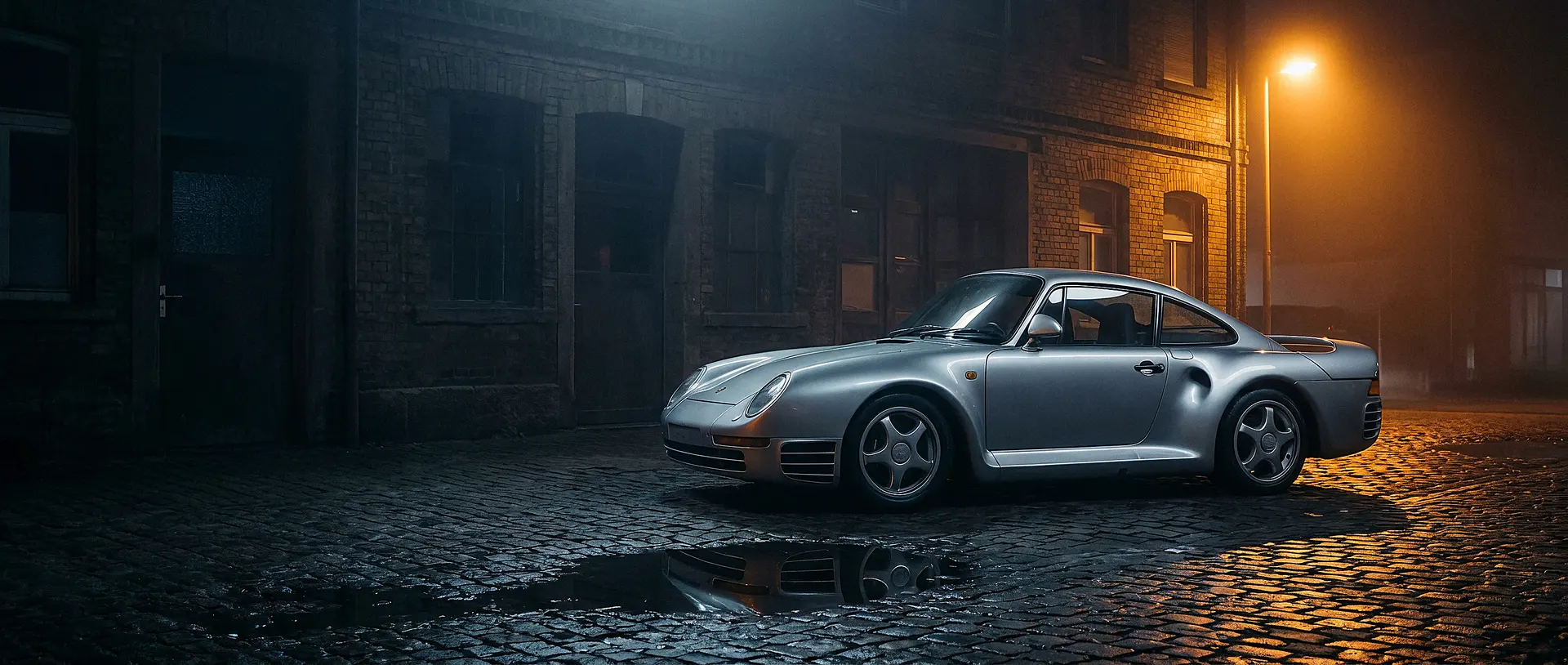
Porsche 959 Komfort in Polar Silver on the road

Polar Silver

Documented Komfort road colour · not a complete palette

A factory-colour road-car stage showing variety, not a complete palette.

The road 959 with leather, air-conditioning, sound insulation, conventional belts and electronically controlled adaptive suspension.

RM reports 207 standard-production Komforts, but this is not a settled total. Porsche states 292 series-production cars overall, while other published Komfort/Sport arithmetic produces incompatible totals. Six to eight late Komforts were reportedly assembled in 1992–93.

Open as its own file →
  • PSK all-wheel drive can send up to 80% of torque rearward
  • DM 420'000 list price in RM’s factory-history account
  • Secondary guide range for sound road cars: US$1.5M–2.4M
  • Six to eight late cars reported for 1992–93
Engine
2'849 cc sequential-twin-turbo flat-six
Power
450 PS
Weight
1'450 kg catalogue kerb
Top speed
317 km/h
0–100 km/h
3.7 s

Typical value · Komfort

Never publicly traded

€0.3M€3.2M

The paper trail · Komfort

Documented cars
14 of 207 built
Top public sale
$2.92M
RM Sotheby’s · Dec 2022 — Chassis 003
Never traded publicly
2 of 14 documented
museum and long-hold cars
Latest movement
RM Sotheby’s · Jan 2026
Chassis 900225
Open the register

The Komfort bar follows RM’s 207 standard-production claim; Porsche’s 292 series-production total and the 29 Sports do not reconcile cleanly with wider published arithmetic. Twenty-one Vorserie cars and the single 961 remain separate programme files.

The cars

The 959 Komfort register

Documented individual cars — chassis, colour, ownership and sale history. Open one for its full provenance. Public records only; members see the complete registry.

14 documented · public records

The build register

Nine files, not a production total

The board indexes nine documented chassis: eight accessible files across Komfort, Sport and Paris-Dakar, plus the pre-series V5 note shown here only. It does not choose between incompatible published production totals.

Nine documented chassis are indexed here. Eight open through the available variant filters; V5 remains a board-only pre-series note. RM’s programme account describes three 1985 Dakar cars, three 1986 cars and one 961; the road-car totals remain disputed.9 tags

HICON BID

Buying interest, silently.

A HICON Bid is a confidential expression of buying interest on the Porsche 959 file — never public, never shown to other members. It is not a binding purchase, and HICONIUM holds no funds.

Sign in

HICON Bids are a member instrument. Sign in to place one.

The vault

Open a file on yours.

You keep one? The record starts in your garage — identity, papers, photography, and the market evidence this file already carries, bound to your chassis.

The x-ray

Anatomy of a $5.505 million Sport

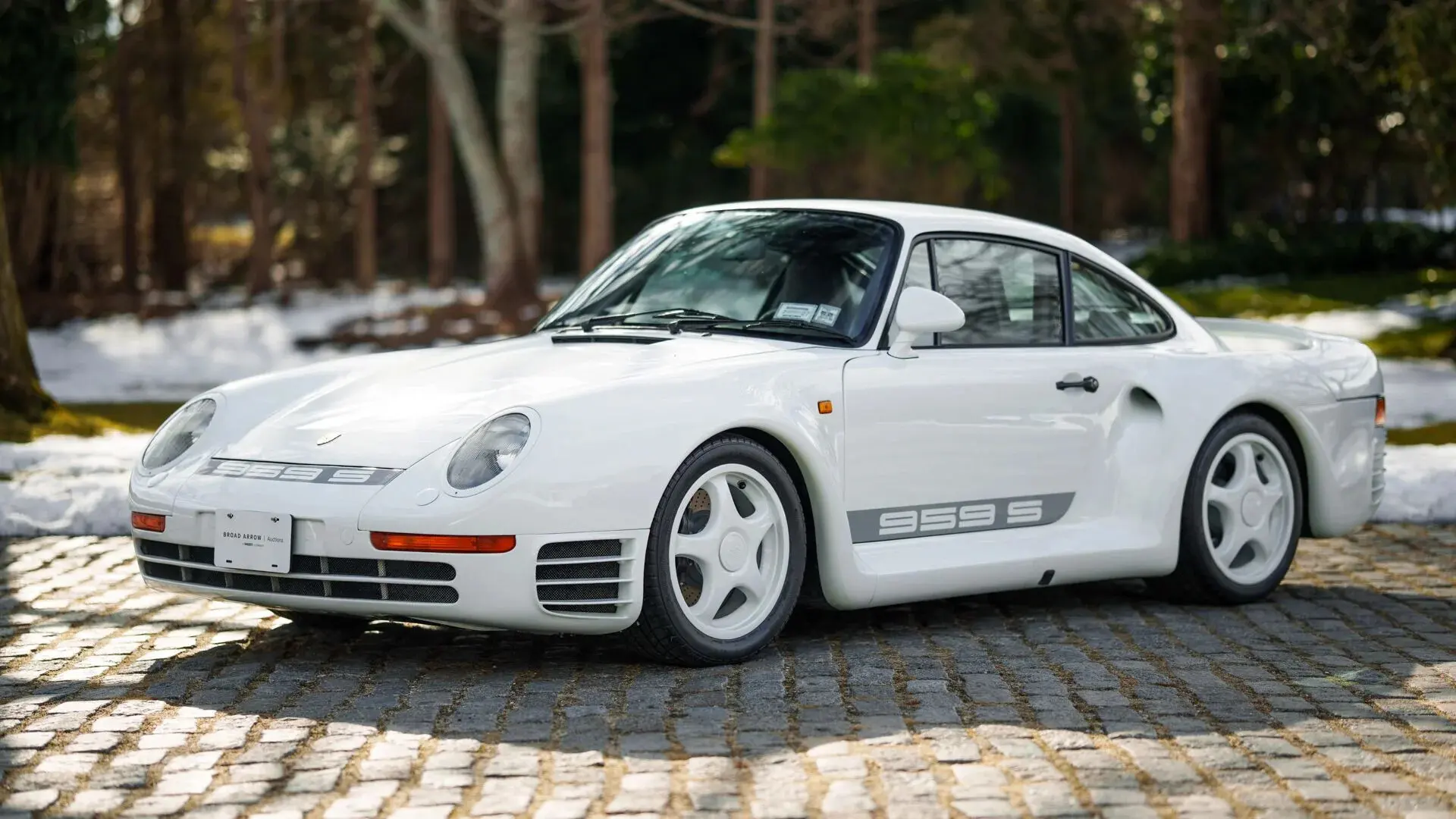
Broad Arrow called chassis 905011 a new world auction record for the 959 Sport. The phrase matters: RM’s 1985 Paris-Dakar works car had already sold for $5.945 million. This is an editorial reading of the Sport result, not a claim that one layer can be priced alone.

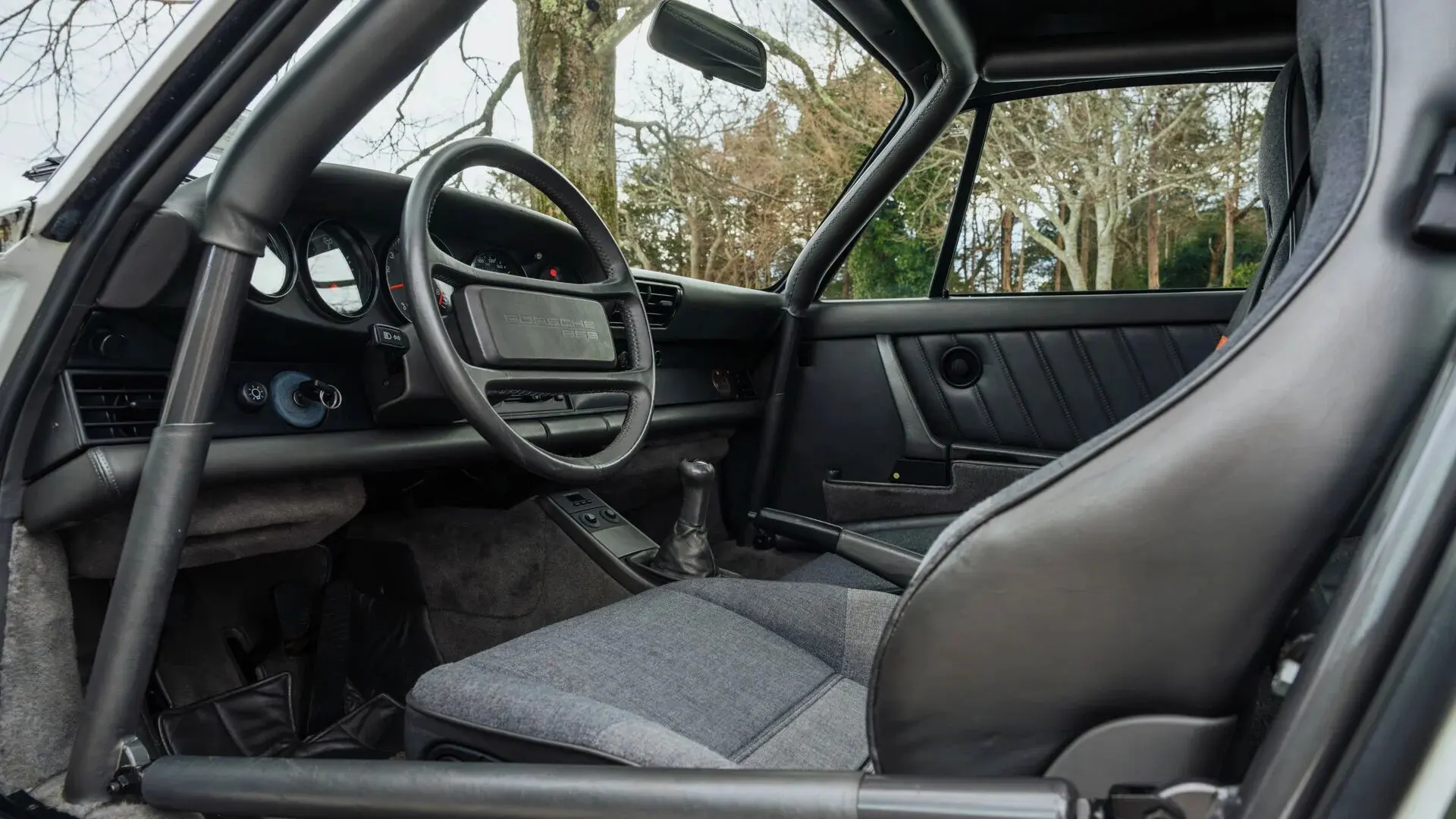
Porsche 959 Sport chassis 905011 cabin and front seats
$5'505'000Broad Arrow · Amelia Island 2026 · chassis 905011

Editorial weighting for reading, not measured data. Broad Arrow’s result includes buyer’s premium and is a Sport record; the $5.945M 1985 Paris-Dakar sale remains the higher documented public 959 result.

The identity files

Numbers that moved

The 959’s identity problem is arithmetic, not a hidden chassis plate. Porsche, auction houses and secondary sources count different scopes; the page keeps those scopes visible instead of collapsing them into one confident number.

292321–323

The main production ledger

Porsche calls 292 cars the 1987–88 series production, and RM also prints 292 as the total run. Bonhams writes 292 plus 29 Sports; Road & Track writes 294 Komforts plus 29 Sports. Those latter claims produce 321 and 323 before late cars. Separate dealer claims of 329 or 337, and Wikipedia’s 337 plus eight, remain unscoped and unresolved.

68

The 1992–93 re-run

Bonhams says six late cars were assembled and notes that some sources say eight. Kidston says eight cars from spares, four red and four silver. The safe file is six to eight reported late cars, sold at about DM 750'000 — Bonhams prints DM 750'000 and Kidston DM 747'500.

29Sport

The lightweight file

RM Sotheby’s and Broad Arrow both state that 29 Sports were built. The specification is concrete: factory roll cage, cloth seats, four-point harnesses and conventional coil-overs, with air-conditioning and stereo deleted; RM describes roughly 220 lb saved.

DM 420'000≈½ cost

The price Porsche charged

RM’s factory-history summary gives a DM 420'000 list price and says Porsche lost about half the cost of each of the 292 cars sold. That is the auction house’s formulation, not an audited per-car loss calculation.

Heritage · Porsche 959

Excellent original condition.

Broad Arrow catalogue · 959 Sport 905011 · 2026
White Porsche Gruppe B study driving on an outdoor test track
White Porsche Gruppe B study with five team members at an outdoor test facility, front-three-quarter view

1981–1983 · The brief

A Group B car before there was a race car

RM places the beginning in 1981, with research-and-development chief Helmuth Bott and Porsche chairman Peter Schutz setting the direction. The public first saw the answer in September 1983: a white Gruppe B study at Frankfurt, shaped around a planned twin-turbo flat-six and a category Porsche expected to enter.

The category would not survive long enough to receive it. The road car kept the research brief instead: sequential turbocharging, PSK all-wheel drive and 450 PS in a shape first shown as a homologation study. Published production arithmetic never became as orderly as the engineering.

The hands

Three names, one programme

Published accounts identify three engineering roles without reducing the programme to one inventor.
No free period portrait on record

Helmuth Bott

Research and development chief · programme sponsor

RM names Bott in the 959 programme leadership and describes the technical sponsor who turned a cancelled Group B brief into Porsche’s technology flagship.

No free period portrait on record

Hans Mezger

Engine architect · racing lineage

Porsche’s Group C history links the 956/962 twin-turbo engine family to the unit later developed for the 959; it does not identify Mezger as the sole project lead.

No free period portrait on record

Manfred Bantle

Programme engineer · prototype bridge

RM names Bantle alongside Bott in leadership of the prototype programme — the programme engineer in the bridge from study to production.
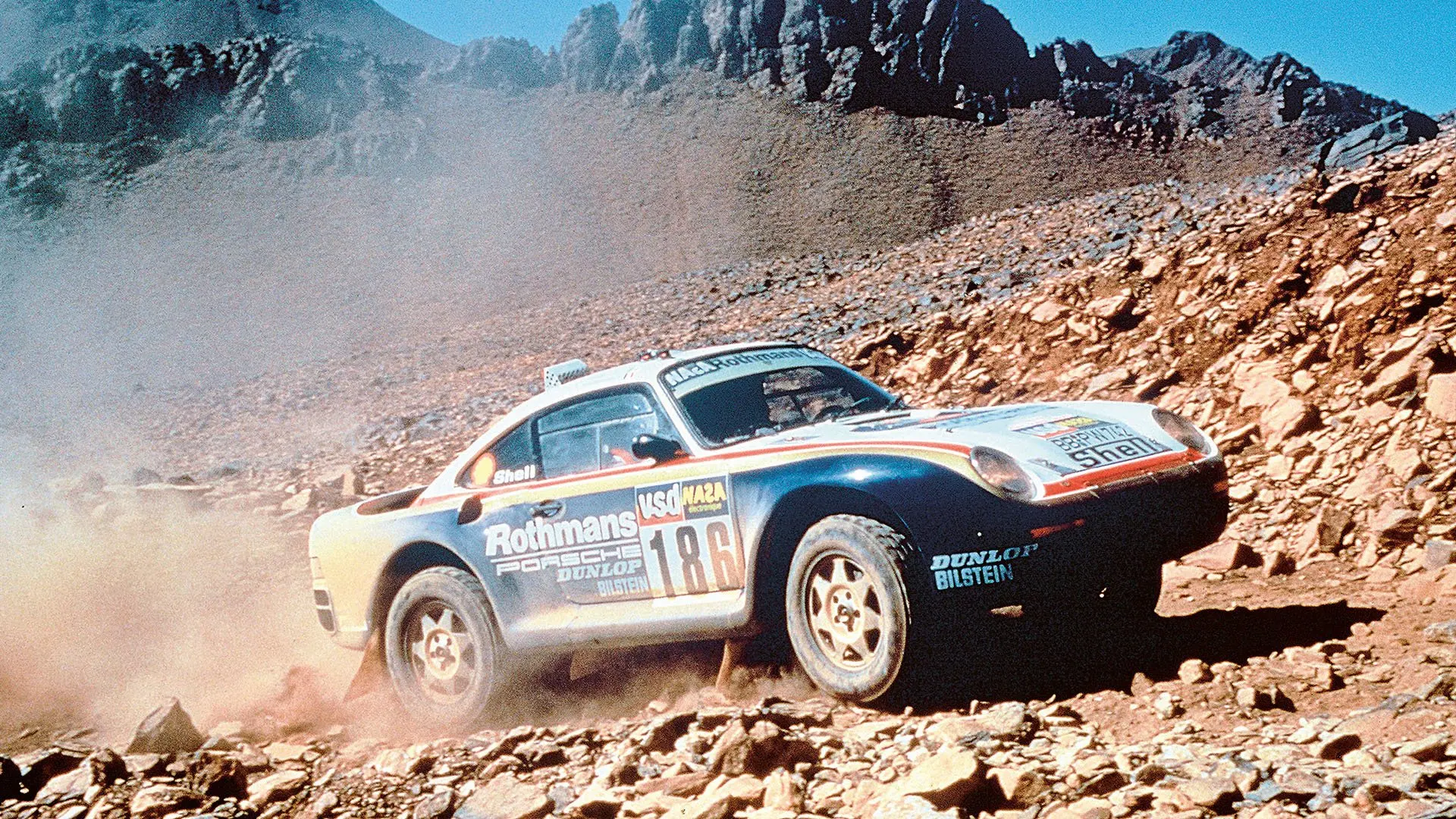
A Rothmans-liveried Porsche 959 climbing a rocky Paris-Dakar stage
The 1985 Porsche 959 Paris-Dakar #186, chassis 010015
A Rothmans-liveried Porsche 959 on a snowy rally stage

1984–1986 · The desert

Win, fail, return

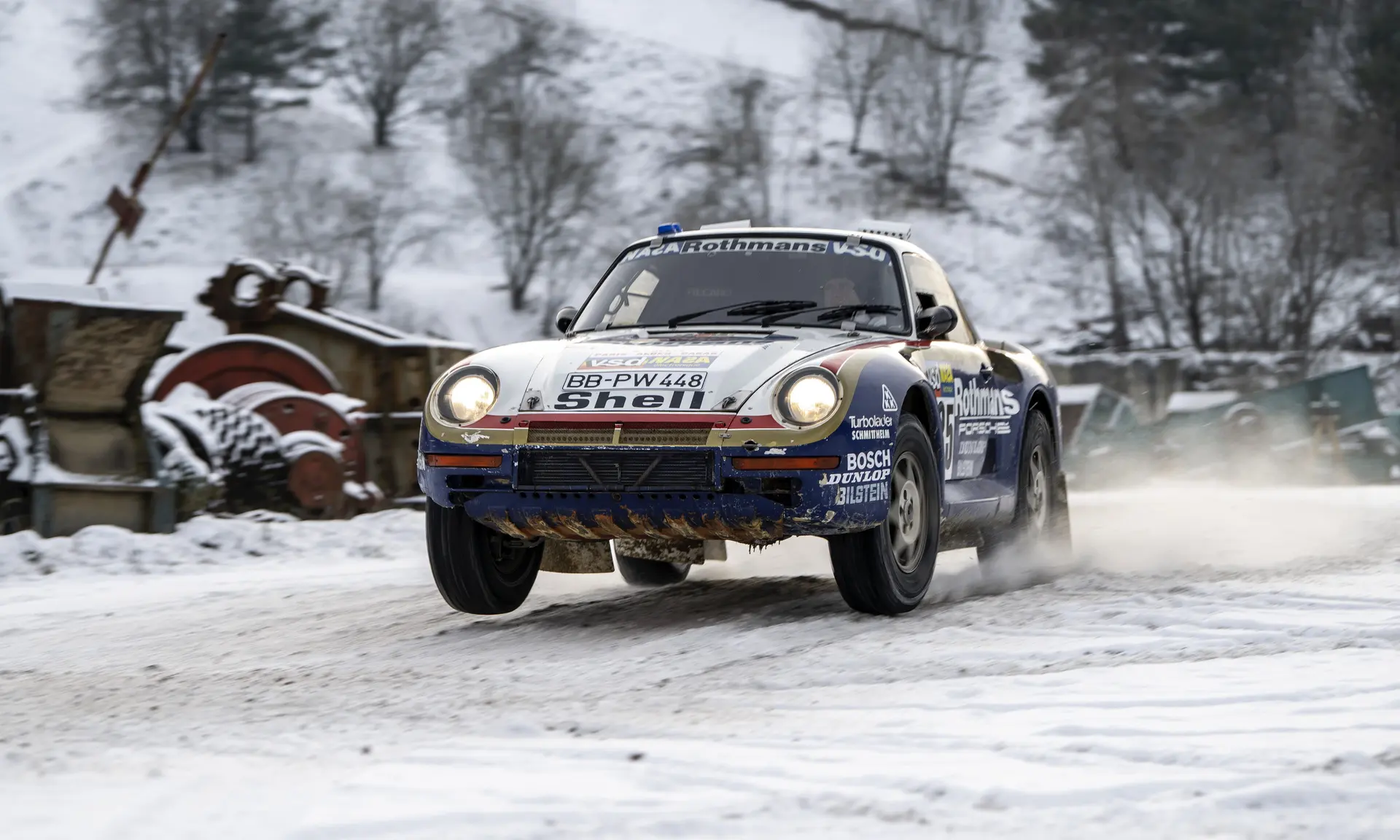
The first proof carried a different type number. In January 1984 the naturally aspirated Type 953 won Paris-Dakar with René Metge and Dominique Lemoyne; Porsche says all three cars finished. The purpose-built 959s arrived a year later and all three failed: oil line, rock strike, accident.

For 1986 Porsche returned with three 400 PS turbo cars. Across a prologue and eighteen stages on the organiser's 15'000-kilometre route — 7'731 kilometres of them specials — Metge and Lemoyne won. Ickx and Brasseur finished second; Kussmaul and Unger’s service car finished sixth after pulling both team-mates from mud.

2018

Milestone

The $5.945M works car

RM Sotheby’s sells the restored 1985 #186 at its Porsche anniversary sale.

The highest documented public 959 result belongs to a works rally car.
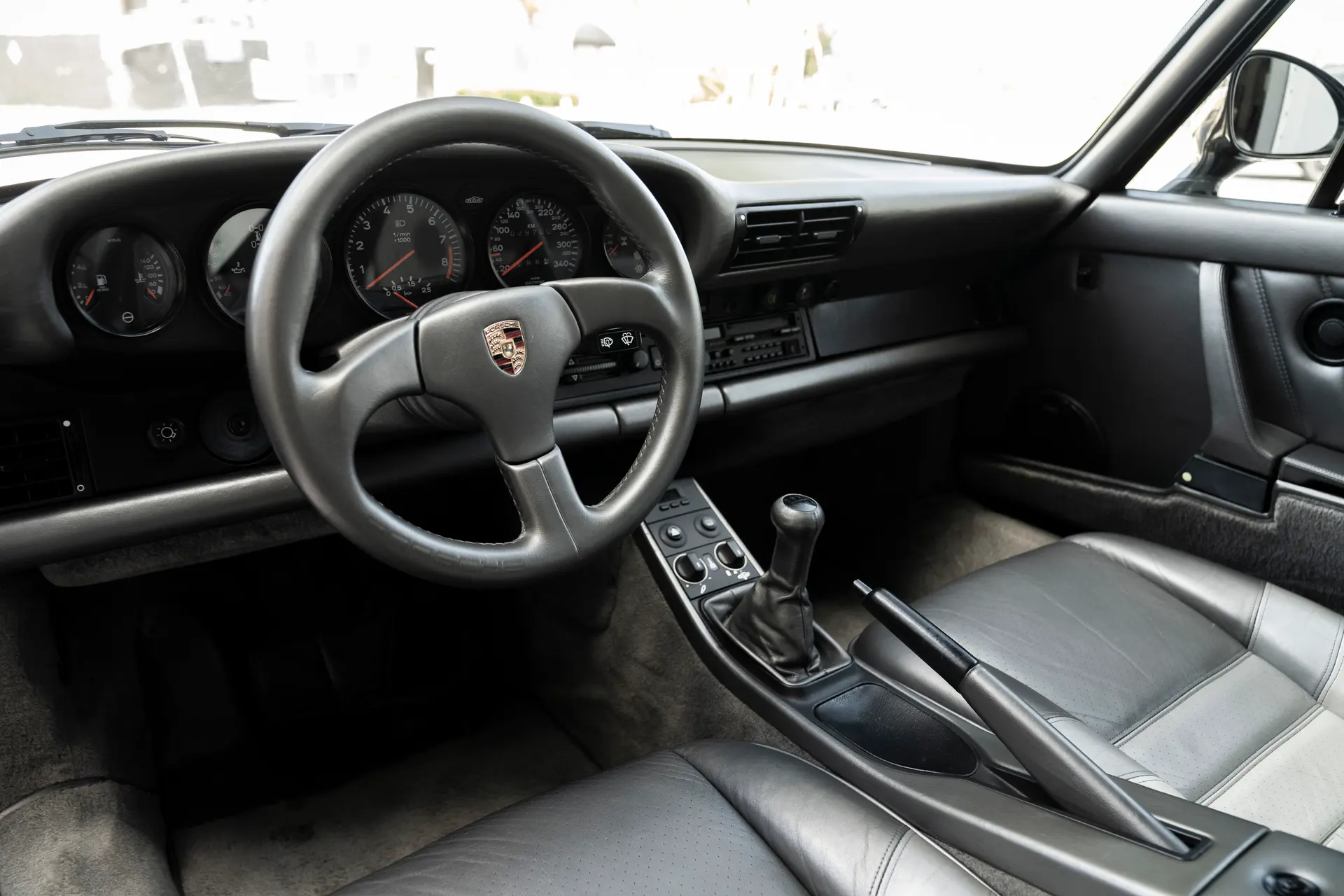
Porsche 959 dashboard and switchgear
Porsche 959 sequential-twin-turbo flat-six engine bay
Porsche 959 Sport in Grand Prix White

1986–1988 · The road

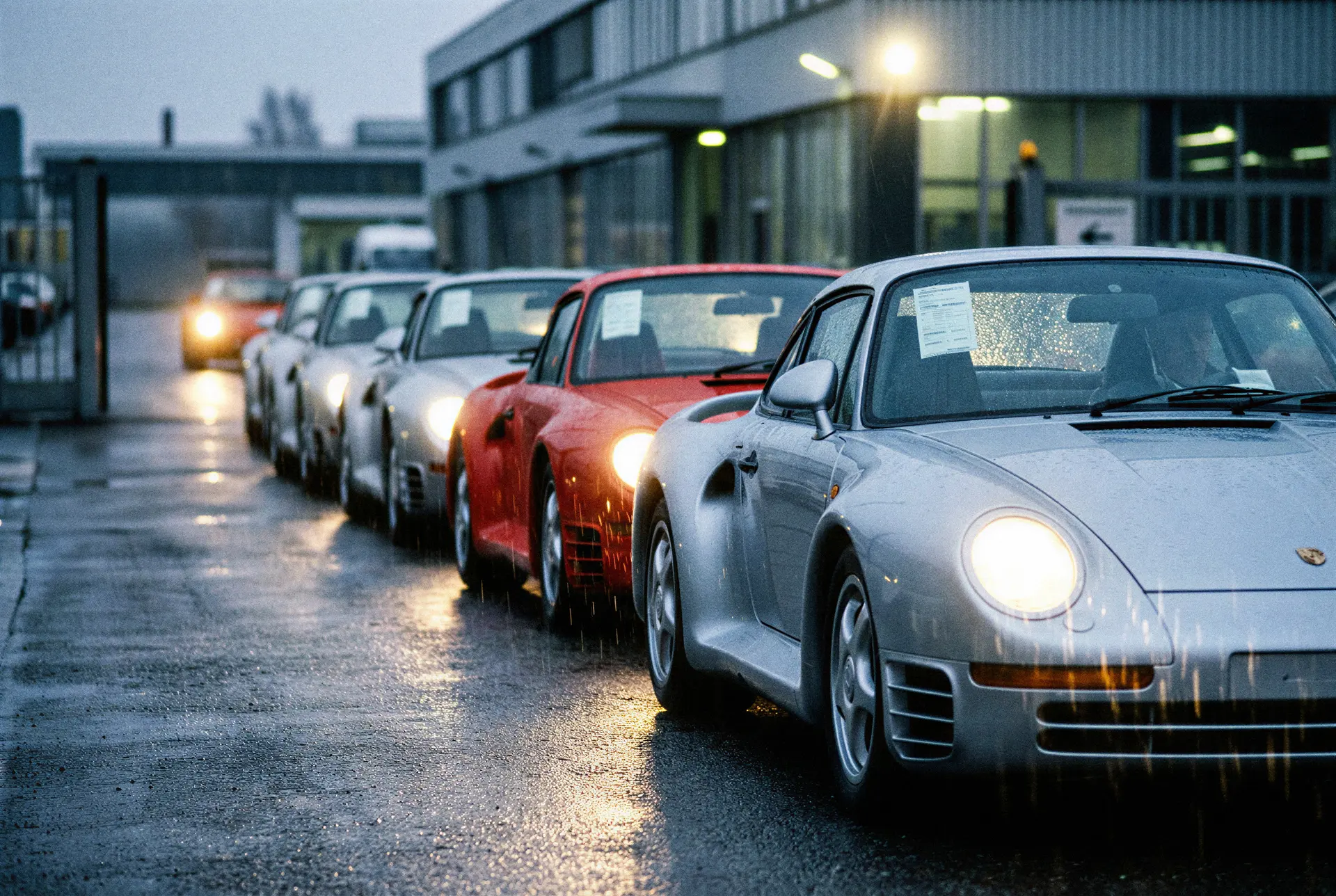
Launched in 1986, delivered in 1987

Porsche’s retrospective calls the 959 a 2'849 cc sequential-twin-turbo, 450 PS, four-wheel-drive road car launched in 1986. The same source says customer deliveries began in 1987. That establishes the delivery gap, but not a promised date or a quantified delay.

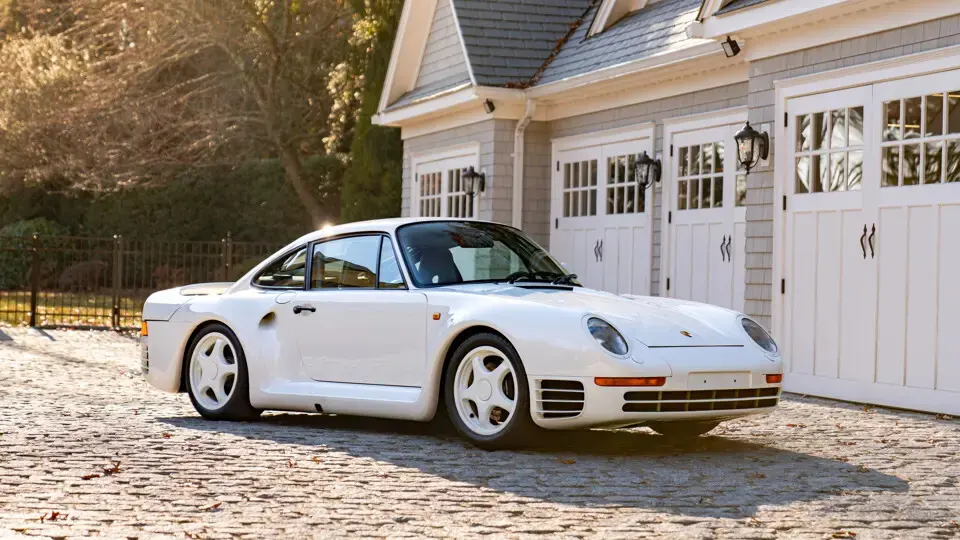
Komfort cars carried leather, air-conditioning, sound insulation, conventional belts and adaptive suspension. The 29 Sports deleted air-conditioning and stereo for a roll cage, cloth seats, four-point harnesses and coil-overs. RM describes roughly 220 lb saved; buyers were offered Grand Prix White or Guards Red.

On the record

Milestones, on a line

The moments that set the 959's standing. Use the arrows, and hover a point to read what happened.

1983Gruppe B studyFrankfurt IAA
1984Type 953 wins DakarMetge / Lemoyne
1985All three 959s retireOil line, rock, accident
1986Paris-Dakar, one–two–sixMetge / Lemoyne win
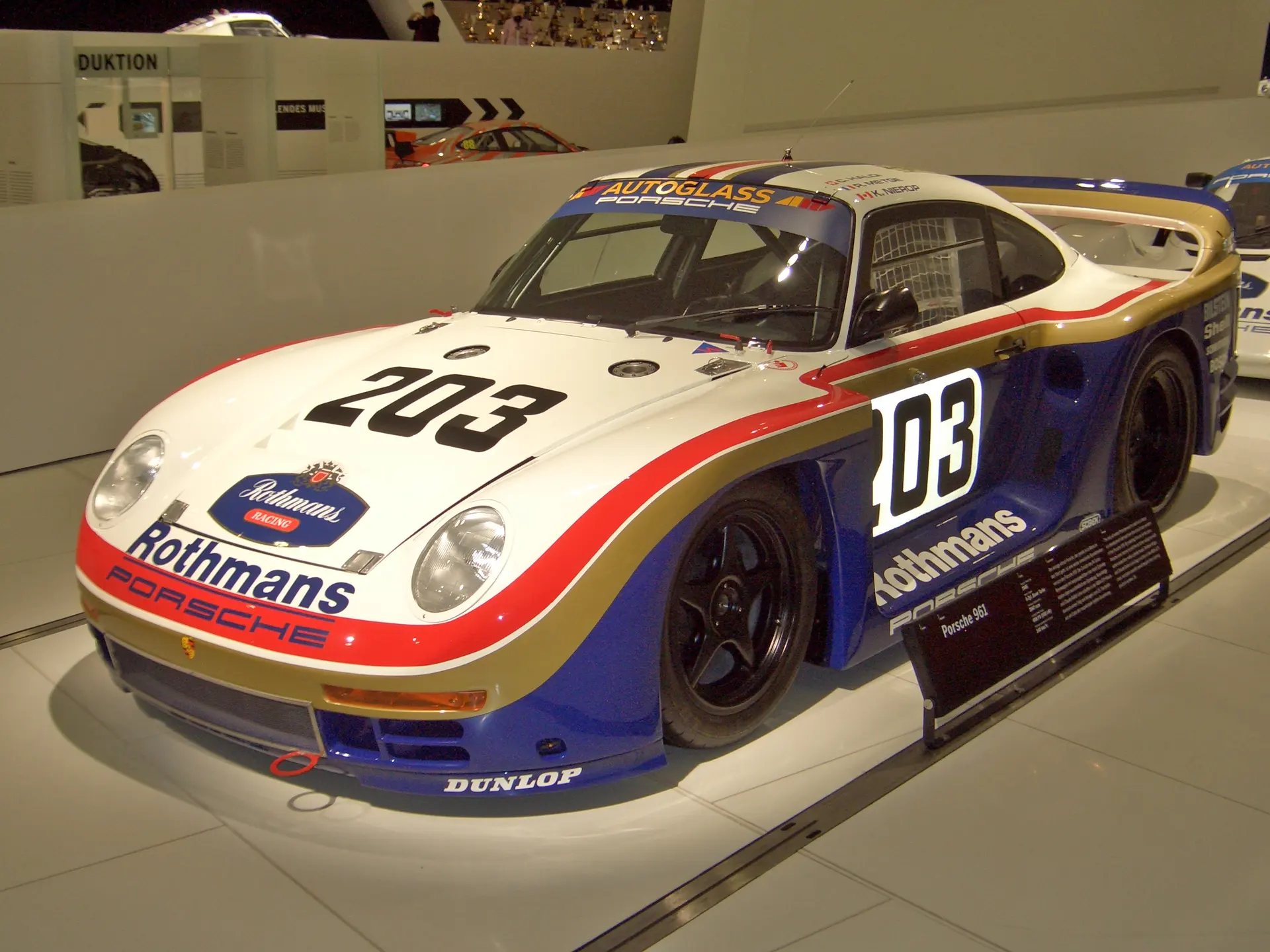
1986The 961 at Le MansSeventh overall · IMSA GTX
1987Customer deliveries beginOne year after launch
1992The late re-runSix, or perhaps eight
2018The $5.945M works carParis-Dakar chassis 010015
2026The $5.505M SportBroad Arrow · 905011

September 1983

Gruppe B study

The white study presents Porsche’s planned twin-turbo Group B direction.

The category disappears; the research programme becomes the road car.

January 1984

Type 953 wins Dakar

The naturally aspirated all-wheel-drive prequel wins; Porsche says all three cars finish.

The desert validates the drivetrain direction before the turbo 959.

January 1985

All three 959s retire

The purpose-built Dakar programme fails in public before it succeeds.

The failure chapter makes the 1986 return legible.

22 January 1986

Paris-Dakar, one–two–six

All three works cars reach Lac Rose: first, second and sixth.

The programme converts three years of desert development.

1986

The 961 at Le Mans

Metge and Ballot-Léna bring the circuit sibling home seventh overall and first in class.

Porsche calls it the first all-wheel-drive race car to finish Le Mans.

1987

Customer deliveries begin

Porsche launched the 959 in 1986; its retrospective places first customer deliveries in 1987.

A documented delivery gap, without an invented promised delivery date.

1992–1993

The late re-run

Cars assembled from spares return the 959 to production at about DM 750'000 each.

The late cars make every simple production total scope-dependent.

2018

The $5.945M works car

RM Sotheby’s sells the restored 1985 #186 at its Porsche anniversary sale.

The highest documented public 959 result belongs to a works rally car.
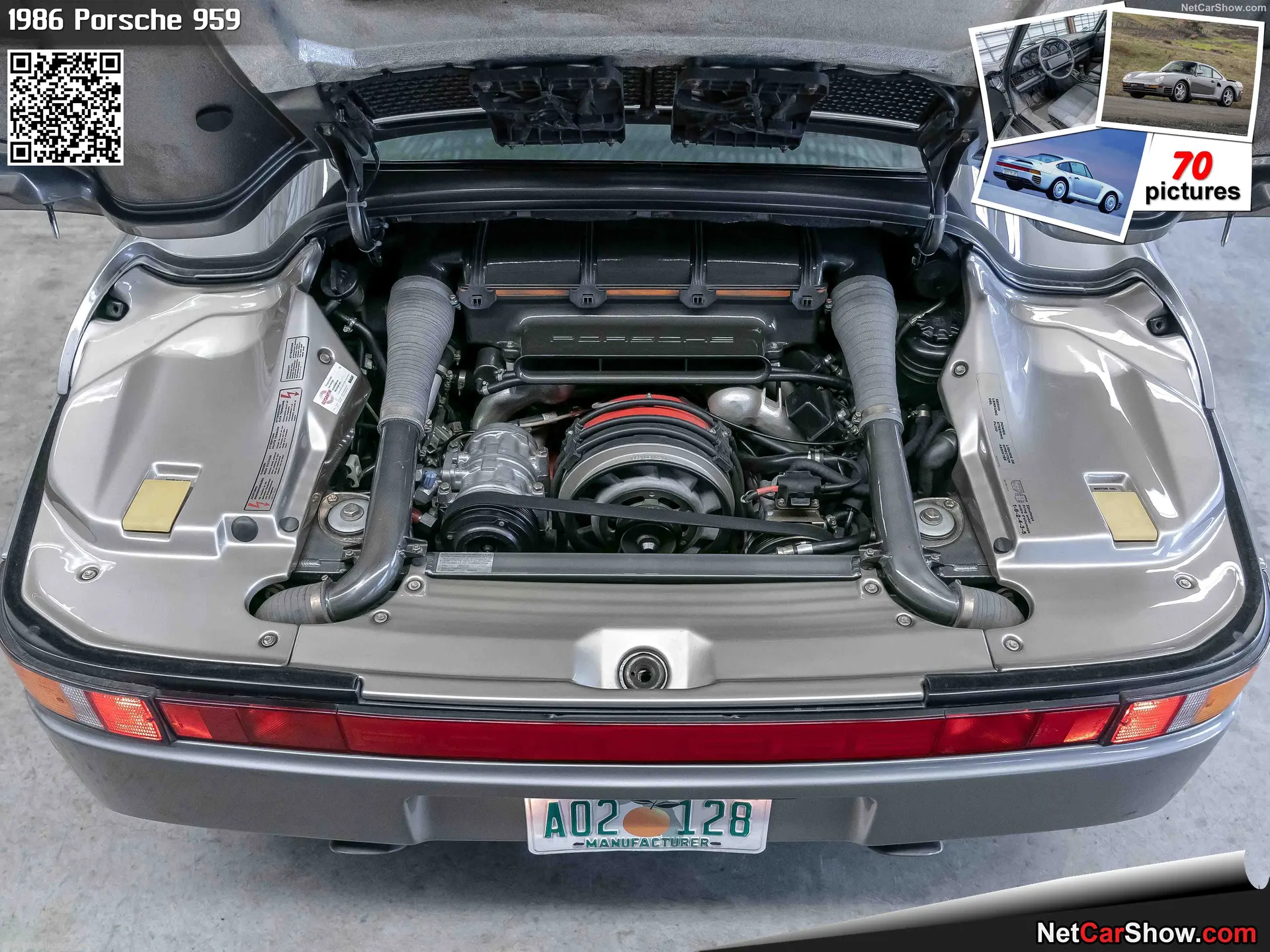
2026

The $5.505M Sport

The Vasek Polak Jr car sets Broad Arrow’s stated world auction record for a 959 Sport.

A Sport record, deliberately not presented as the all-959 record.
Jan 1985Jan 1Stage 1Stage 4Stage 9Stage 12Stages 16–17Senegal RiverJan 22
3 Porsche entries

The conversion

Paris–Dakar 1986 — all three came home

Versailles to Lac Rose, 1–22 January 1986: a prologue and eighteen numbered stages over the organiser's stated 15'000-kilometre route, 7'731 kilometres of them special sections — Porsche's own retrospective rounds the trek to some 14'000. Porsche entered three turbo 959s; they finished first, second and sixth.

Jan 1985The three-car failure

The prequel was complete attrition: Metge and Lemoyne lost an oil line after two stage wins, Ickx and Brasseur struck a rock while leading, and Mass and Kiefer retired after an accident. All three purpose-built 959s failed to finish.

3 of 3

Porsche finishers

15'000 km route · ASO count

Distance

Event average not published

Average

Prologue + 18 stages · 7'731 km of specials

Course

Metge / Lemoyne · #186 · Porsche works team

Porsche 961, the circuit sibling that finished seventh overall at Le Mans in 1986
Porsche 959 road cars entering customer delivery in 1987 — artwork
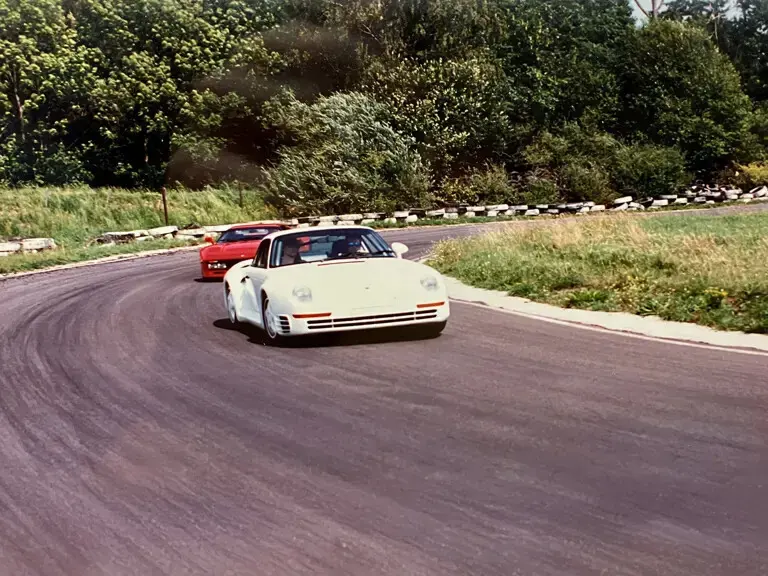
Porsche 959 Sport at a French track day with a Ferrari F40 and 288 GTO in 1989

The ascent

Chassis 959 registry · 900203 → 905011

Six sales, three different markets

Komfort, Sport and a unique works rally car cannot form one normalised curve. These are six documented AS SOLD stations in their reported currencies, kept together only to show how specification and history split the 959 market.

$1’732’500

Paint-to-sample Komfort

Chassis 900203, after 25 years with its first owner — Gooding Pebble Beach.

Pebble Beach, United States

201520172018202020232026

The $5.505M result is the Sport record. The $5.945M Dakar works-car result is higher and belongs to a different category.