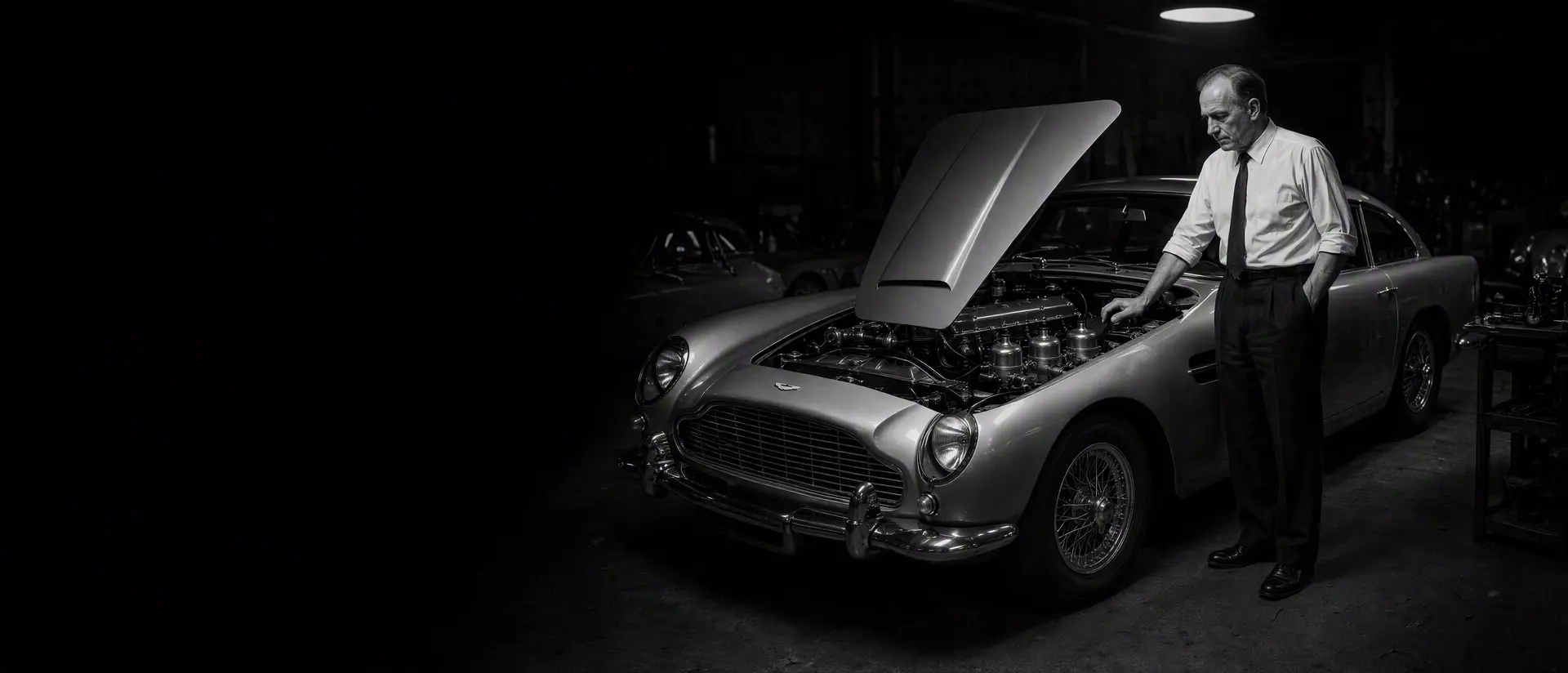
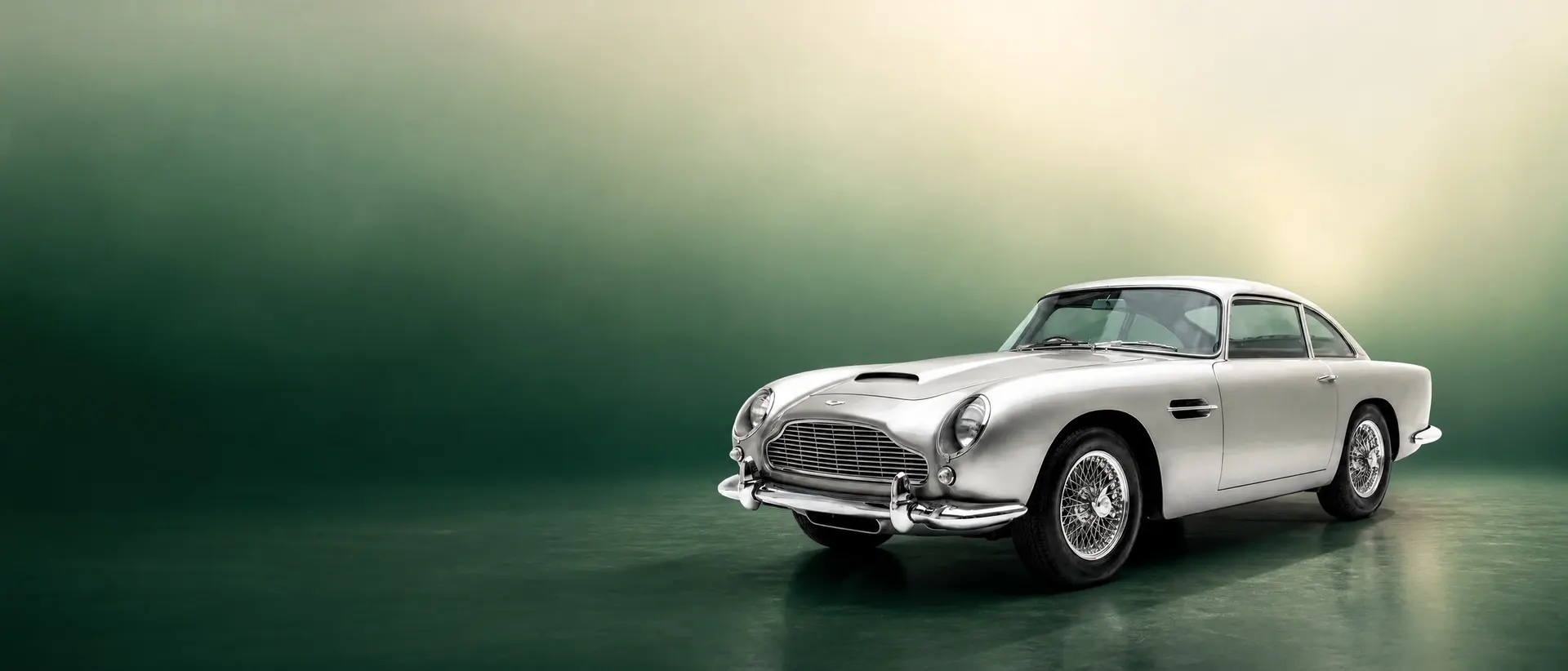
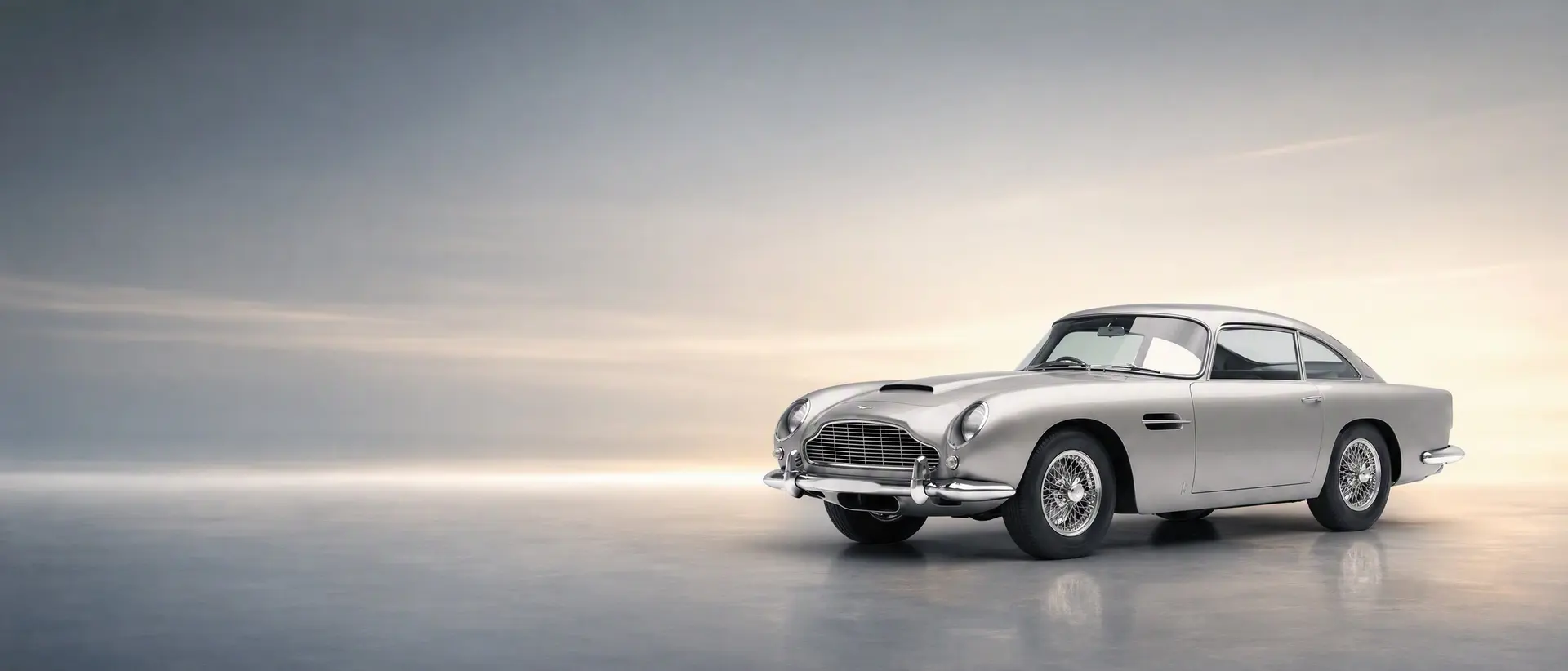
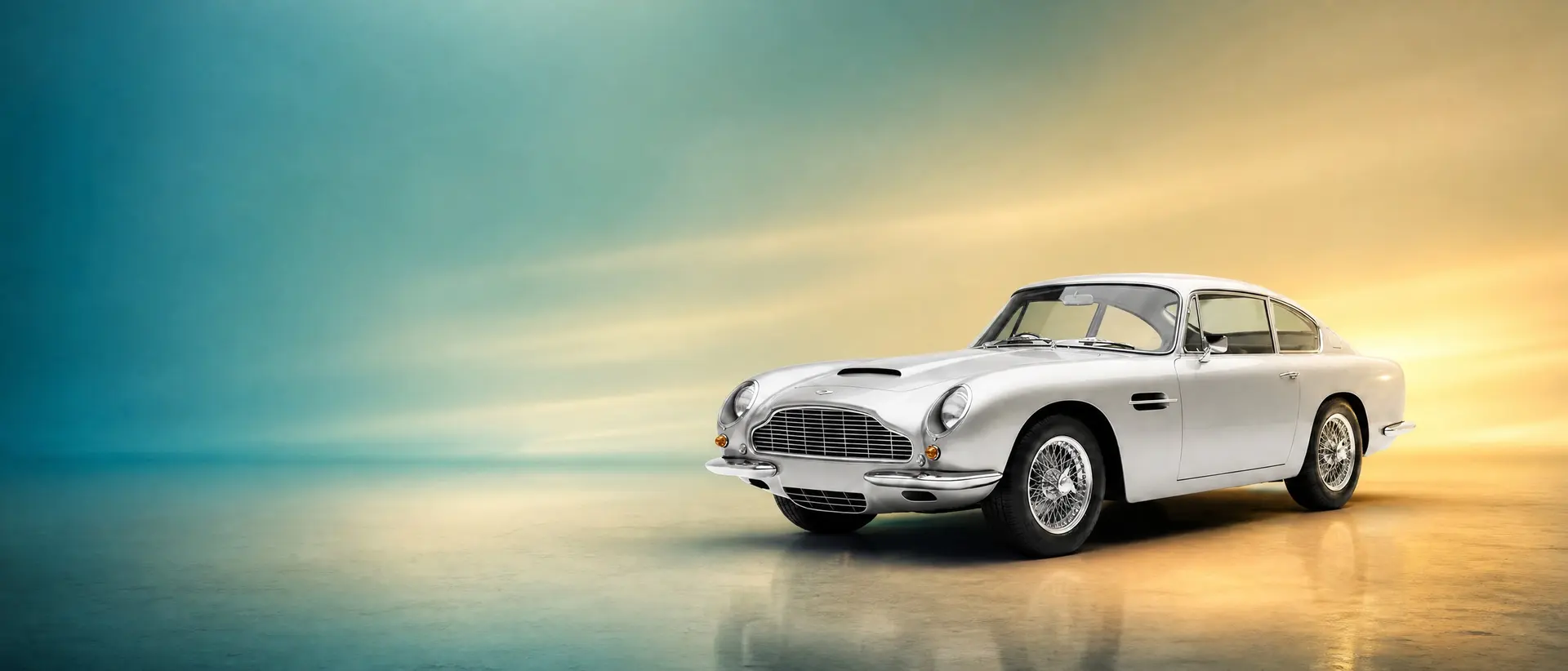
Tadek Marek in shirt and tie beside an Aston Martin DB5 with the bonnet open, his twin-cam straight-six beneath itAI-generated

People · Engineer · 1908–1982

Tadek

inżynier z Krakowa

Born
Kraków, 1908
Died
Italy, 1982
House
Aston Martin, Newport Pagnell
In the register
Five files

The engine man

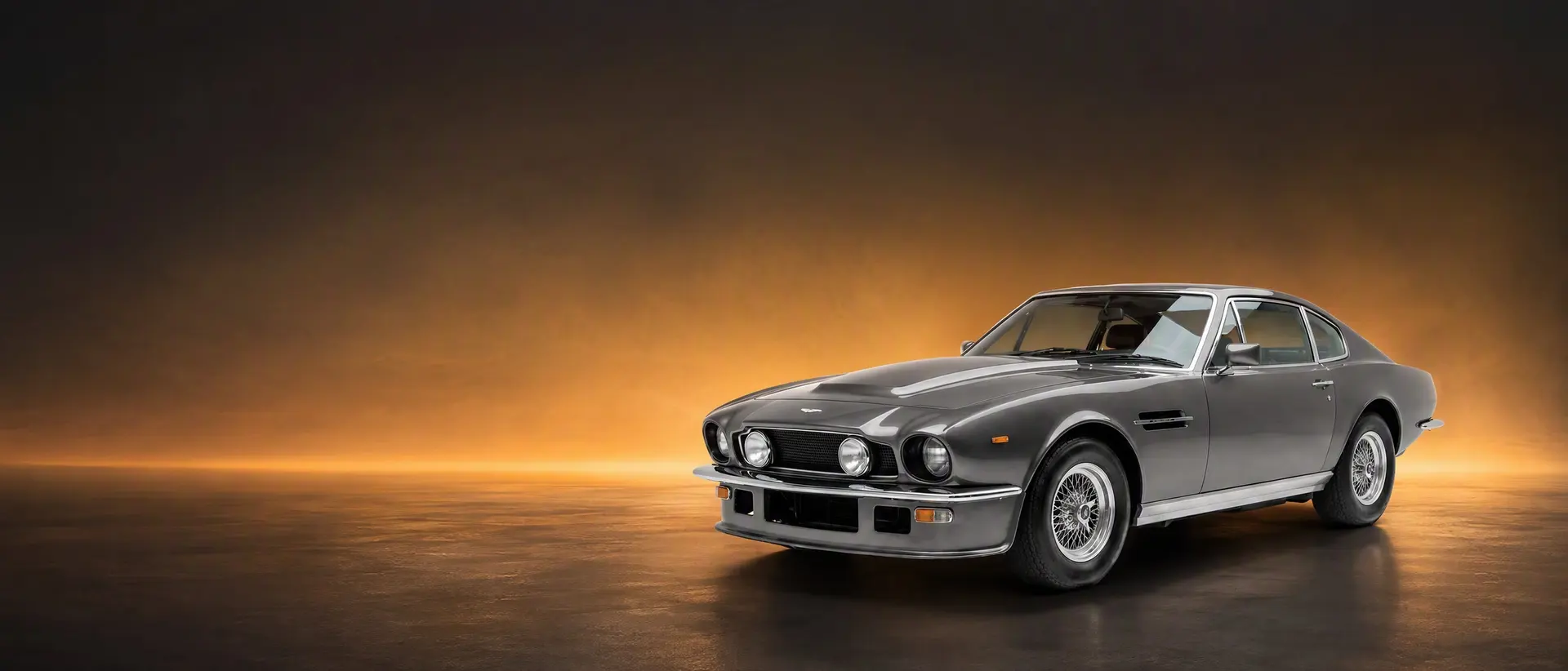
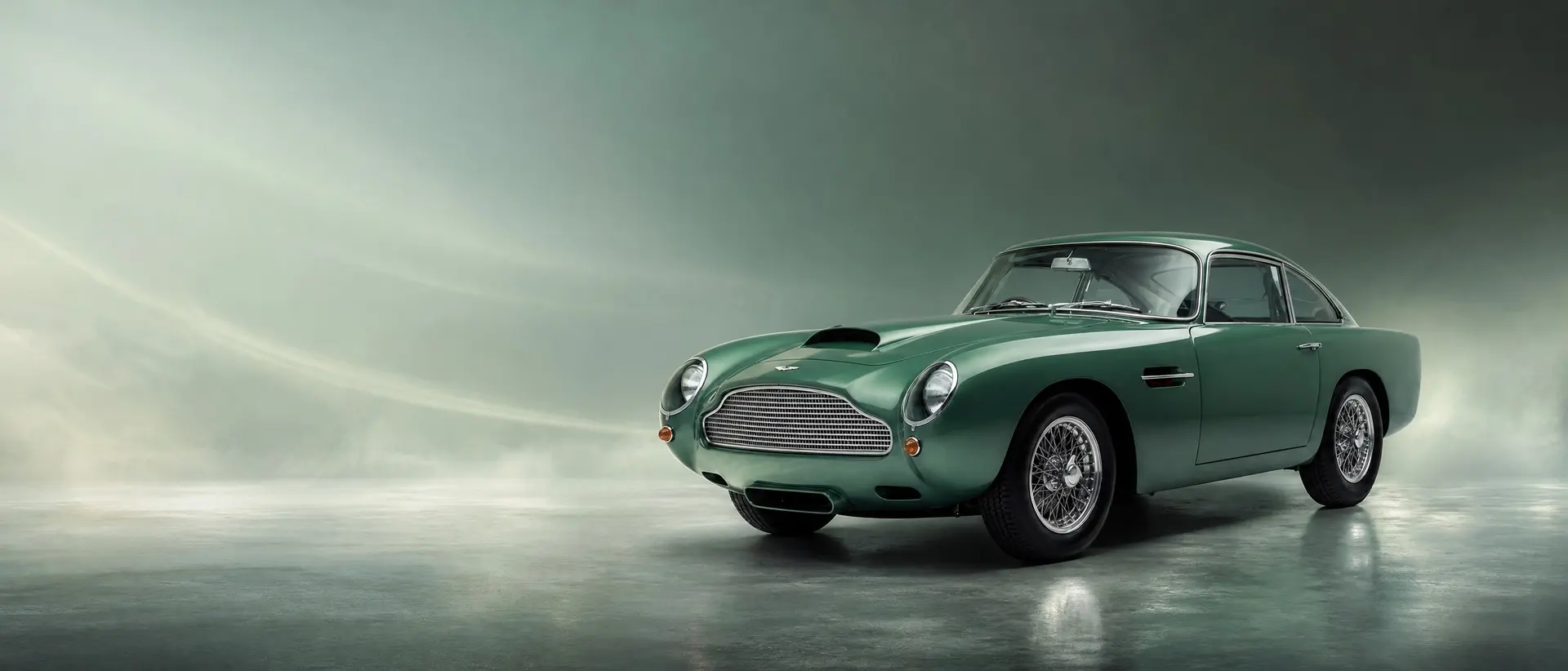
Kraków-born, Fiat- and GM-trained, a Monte Carlo rally driver before the war and a tank engineer during it, Marek reached Aston Martin in the mid-fifties and gave the company both of the engines its golden era ran on: the all-alloy twin-cam six of the DB4, DB5 and DB6, and the 5.3-litre quad-cam V8 that stayed in production until 2000.

He was reserved where the cars were loud — an émigré engineer who signed his work in capacity and camshafts rather than chrome. The record below is set the way he kept it: applications, engines, displacements. The five files in the register document where the record met the road.

The works record

Applications, engines, displacements

Engine record · T. Marek · Feltham & Newport Pagnell
YearApplicationEngineCapacityOutput
1958DB4DOHC straight-six · all-alloy3,670 cc240 bhp at 5,000 rpm
1963DB5DOHC straight-six · triple SU3,995 cc282 bhp at 5,500 rpm
1965DB6DOHC straight-six · cross-flow head3,995 cc282 bhp at 5,500 rpm
1969DBS V8 · V8 VantageDOHC V8 · all-alloy, quad-cam5,340 cc380 bhp at 6,000 rpm
2017DB4 GT ContinuationDOHC straight-six · twin-plug4.2 litres340 bhp

Figures per the HICONIUM vehicle files. The 1969 line records the 1977 V8 Vantage state of tune; the 2017 line is a posthumous application of the 1958 architecture.

The register

Five files, two engines

Engineering signatures

The alloy six, the twin-plug head, the quad-cam V8

The rework before the clean sheet

His first Aston job was the old Lagonda 2.9 six for the DB Mark III — stiffer crankcase and crankshaft, revised liner sealing, new head and manifolds. He earned the new engine by fixing the old one.

The all-alloy six

The DB4’s 3.7-litre twin-cam was drawn in aluminium with a seven-bearing crankshaft, wet liners and hemispherical chambers — a production engine specified like a competition one.

Capacity in reserve

The six grew from 3.7 to 4.0 litres without redesign, and the Continuation took the same architecture to 4.2. He drew the headroom in before anyone asked for it.

The twin-plug head

The DB4 GT’s competition engine fired two plugs per cylinder on his basic architecture — the version the 2017 Continuation returned to.

The quad-cam V8

His second all-new Aston engine: 5,340 cc, all-alloy, four camshafts. Introduced in the DBS V8 in 1969, the year after he retired.

The long service life

Aston Martin kept his V8 family in production from 1969 to 2000. Few engineers have had two architectures carry one company for four decades.

The archive

Prints from the drawer

Pre-war rally photographs from the Polish archives, and the V8 he left behind — choose a print and it pushes the others aside.

With the Chevrolet, Rally Poland, 1939. Polish National Archives, via Wikimedia Commons.

Beyond the register

From Longbridge to the last V8

'49–'57

Austin C-Series

The 2.6-litre six from his Longbridge years — and a cancelled Austin V8 built from paired A40 units.

Aston Martin DB Mark III

The reworked Lagonda six: his apprenticeship piece at Feltham, reliability included.

'59–'63

Aston Martin DB4 GT

The competition evolution of his six, twin-plug head and all.

DB4 GT Zagato

The same engine under the lightest body the six ever wore.

Lagonda Rapide

The 4.0-litre six in a four-door Lagonda — the quiet application.

Aston Martin DP215

A four-litre twin-plug development in the 1963 Le Mans project car.

'65–'72

The V8 testbed DB5

A development mule with the new V8 where the six belonged.

Lola T70 Mk III

The Aston V8 raced before it was released — a bruising public shakedown in 1967.

Aston Martin AM V8

The DBS V8 engine family carried on under the post-David Brown badge.

'89–'00

Aston Martin Virage

A revised descendant of the V8 architecture, twenty years on.

V8 Vantage Le Mans

The final derivatives of his V8, built until 2000. He had been gone eighteen years.

The road

Kraków, Longbridge, Newport Pagnell

Pre-war

Fiat & General Motors, Poland

Engineering posts in Poland and Turin — and a parallel life rallying: Monte Carlo in a Fiat 508, a class win at the 1939 Rally Poland.

1941–’45

British wartime engineering

Tank engine work in Britain after the escape from occupied Poland.

1949–’53

Austin, Longbridge

Production engine work at scale — the C-Series six and the V8 that never was.

1954–’68

Aston Martin

Feltham, then Newport Pagnell. Two all-new engines in fourteen years; he retired to Italy in 1968, before his V8 reached the road.

In his words

“I think it is better to hear good brakes squeaking than no brakes not squeaking!”

Tadek Marek · AM Quarterly, 1967