Stratos HF Stradale

Five hundred was the target

Marcello Gandini drew the wedge, Bertone built its shells and Lancia placed Ferrari's 2.4-litre Dino V6 across the middle. The road car existed to make the rally car legal. The file contains no uncontested count.

Market value · road

€590K€815K

Typical €703K · 7 sales · +90% vs ’19–’20

€336K€864K
Open Market & Price

Market value · road

€590K€815K

Typical €703K · 7 sales · +90% vs ’19–’20

€336K€864K
’07’26
Market history · in the terminal
Open Market & Price
Power
190 bhp (at 7'400 rpm)
0 to 100
6.8 s (factory-era claim)
Engine
2'418 cc (Ferrari Dino V6)
Layout
Mid-engine (transverse)
Weight
980 kg (kerb / dry reference)
Production
≈492 (500 homologation target)
Gearbox
5-speed (manual transaxle)
Fuel
3 Webers (40 IDF)

Market & Price

The price and the proof

A terminal for one car: the model curve over the documented record, the benchmarks it is measured against, and the instruments that read it.

Records: Stratos HF Stradale · 001932 · 2,000 km — €815,000 · Gooding Christie's, Paris · 2026; Period Group 4 conversion · 001581 — €625,000 · Broad Arrow, Knokke-Heist · 2025. 8 documented road sales on file · 2007–2026.

HCN:STRATOSHLive model
€693'433-1.3% · 12M
€500K€750K€1M€1.3M20182020202220242026CovidRate shockS&P 500
Model curve · anchored to 8 documented salesnot investment advice
The readouts · model figures against the benchmarks8 documented anchors · last sale 6 mo ago

Compound annual growth

WindowThis car*S&P 500Gold
1Y-1.3%+18.8%+21.9%
5Y+12.6%+11.4%+17.6%
10Y+6.7%+13.3%+11.8%

*Modeled price CAGR · S&P is a price index, no dividends

Deepest drawdown · model window

This car*-18.8%Jul 2015Apr 2018 · recovered Jun 2020
S&P 500-50.8%Oct 2007Mar 2009 · recovered Mar 2013
Gold-39.3%Sep 2011Dec 2015 · recovered Jul 2020

Forecast ladder · model quantiles

HorizonP10P50P90
+6M€658K€722K€791K
+12M€669K€751K€843K
+24M€693K€814K€955K

Median path with the 10th and 90th percentile · not investment advice

Transaction ledger · documented sales

8 of 8 recorded sales · shown in EUR · recorded currency in each record

The ledger begins with an early publicity car at £249,200 in 2012 and ends with a 2,000-km Celeste time capsule at €815,000 in 2026. The stations are different cars in different currencies; only 001832 repeats.

Price range · road · openConfidence · mediumA thin public road-car reference band: the 2024 Monaco sale of 001832 and the 2026 Paris record for 001932. It is not a generic appraisal, and Group 4 cars need a defined works or conversion status before comparison. Period list-price accounts disagree between ITL 8.5M and ITL 10.725M; other currencies and dates are not directly comparable.

Floor

€590K

Typical

€703K

Ceiling

€815K

Estimate band for good road cars. 7 documented sales since 2019 plotted below.

€329K€590K€703K€815K€880K
Hover the spectrum to read a value, or a dot for the sale behind it.

Band and axis shown in EUR. Sale positions use indicative fixed-rate conversion to EUR; sale readouts retain recorded currencies. As-sold public results with buyer's premium where the auctioneer reported a sold total. No currency normalisation.

Road record

815,000

Stratos HF Stradale · 001932 · 2,000 km

Gooding Christie's, Paris · 2026

Road record

625,000

Period Group 4 conversion · 001581

Broad Arrow, Knokke-Heist · 2025

The wider market · Lancia at auction · median per year · modeled between anchors298 lots · 2003–2026 · exact yearly anchors · modeled line

Instrument calibration for this file is in progress — the terminal above reads the documented record directly.

The ex-Jolly Club 001754 was estimated at €750,000–900,000 in Monaco in 2026 but did not sell; an estimate is not entered as a transaction.

Overview

A race car for the road.

Power
190 bhp
0 to 100
6.8 s claim
Completed
≈492
Layout
Transverse mid-V6
Homologated
1 October 1974

Reference

Technical specifications

Powertrain

Engine
2'418 cc Ferrari Dino V6transverse, mid-mounted
Induction
Triple Weber 40 IDF carburettors
Stradale output
190 bhp @ 7'400 rpm
Transmission
5-speed manual transaxle
Group 4 output
270 hp / 300 hpspecification-family claims; not one universal works tune

Performance

0 to 100 km/h
6.8 sfactory-era road-car claim; protocol and surface unspecified
Conflicting sprint
5.2 sreproduced comparison; no comparable protocol

Chassis & dimensions

Brakes
Four-wheel Girling discs
Length
3'710 mm
Width
1'750 mmUltimatecarpage gives 1'760 mm
Stradale weight
980 kgkerb / dry reference wording differs by source
Group 4 weight
790 kg dryNew Stratos comparison-sheet figure

Production & identity

Homologation target
500 in 24 monthslater Group 4 rules used 400
Accepted
1 October 1974on shells and components sufficient to finish the run
Completed
≈492sources range 491–498; another account says 457 on wheels
Official racing versions
26period conversions and later competition cars sit outside this count
Body / assembly
Bertone, Grugliasco / Lancia, Via San Paolo–Chivasso
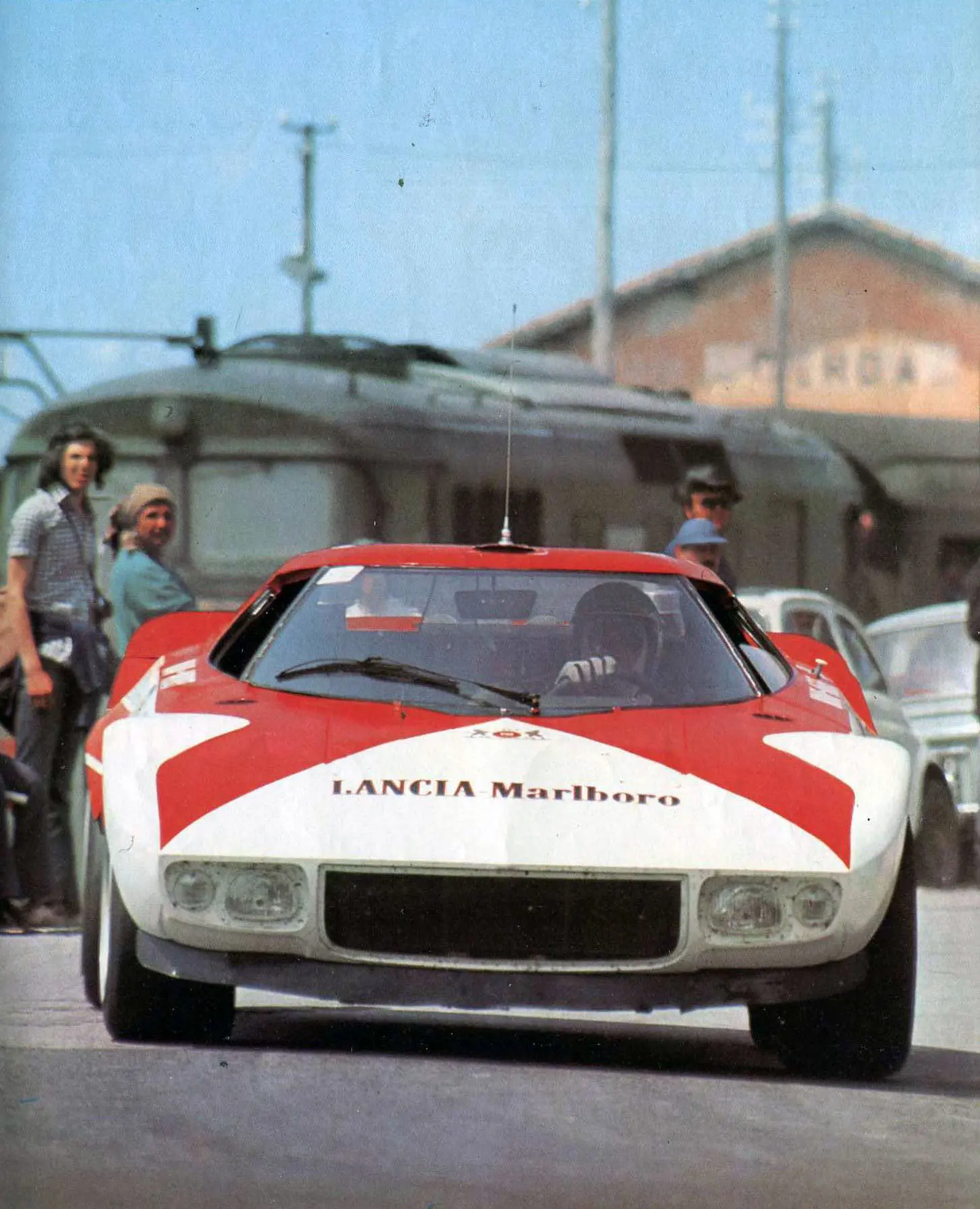
Munari's Marlboro-liveried Stratos prototype at the 1973 Targa Florio
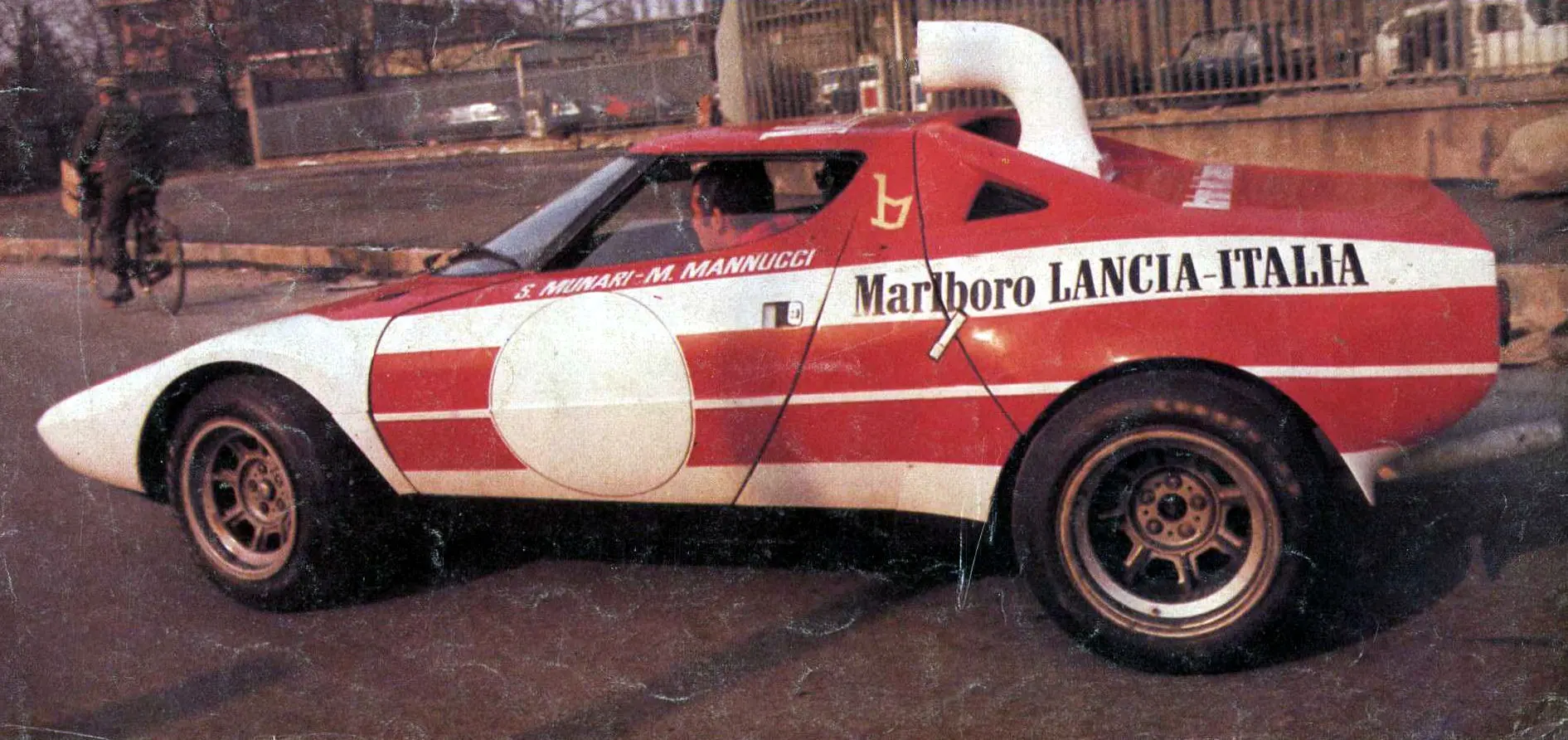
Marlboro-liveried Stratos prototype in side profile, with a driver visible through the window
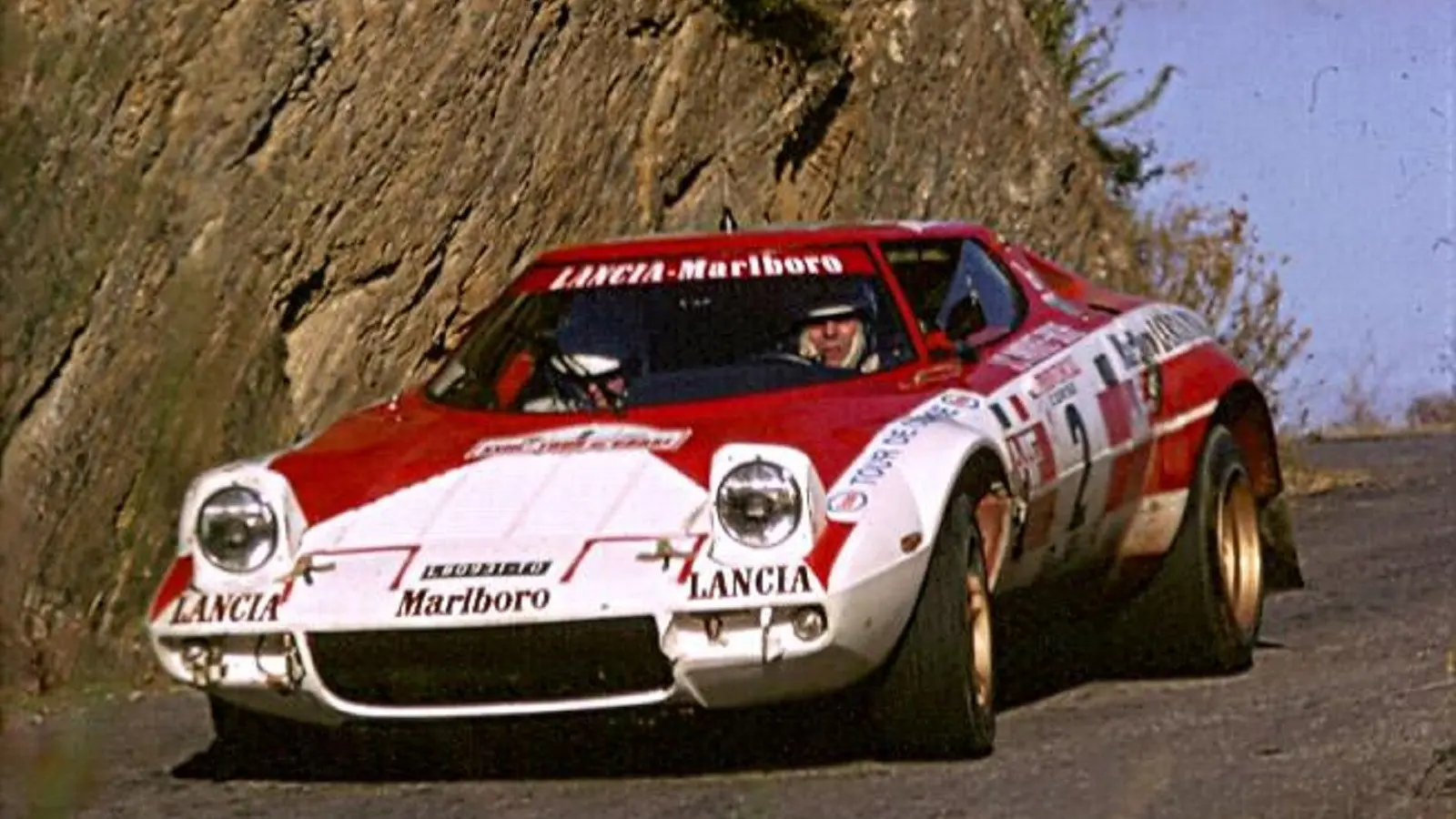
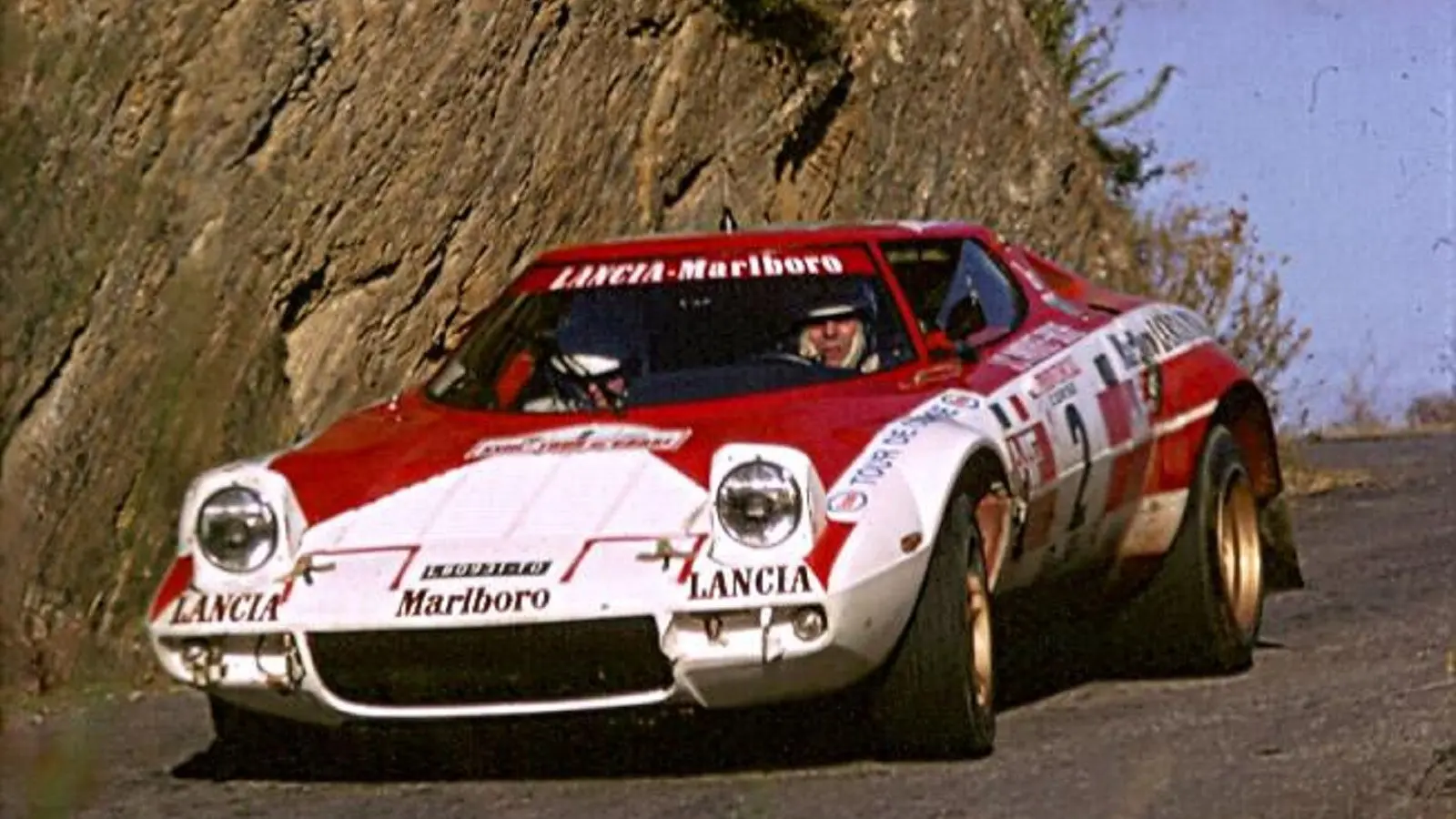
Marlboro-liveried Stratos during the 1973 Tour de France Auto

The records

0

The homologation target

enough shells and components counted; complete-car totals conflict

0bhp

Stradale

2'418 cc Dino V6 at 7'400 rpm

0

Official racing versions

period conversions remain a separate category

0

Lancia's 1974 points

the manufacturers' crown; Alpine fell to 29

The handover

Stratos versus Alpine A110

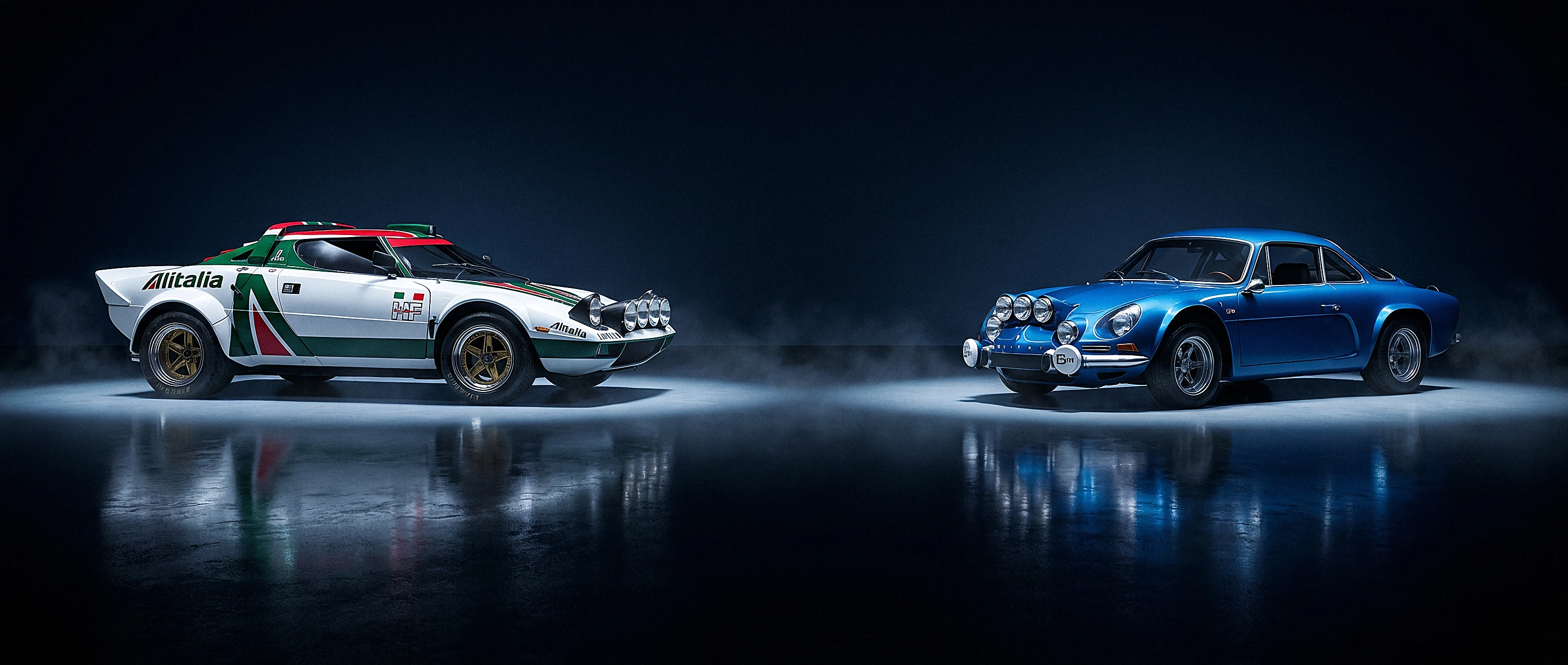
The inaugural WRC champion against Lancia's purpose-built successor: Alpine held the 1973 crown; in 1974 the points table turned over.

Lancia Stratos HF and Alpine A110 nose to nose across a dark rally stage

Lancia Stratos HF

Transverse mid-mounted Dino V6; still a prototype programme when Alpine won the first WRC makes' title.

Alpine A110

The rear-engined blue coupé that entered 1974 as the reigning manufacturers' champion.

Prototype programme1973 WRCChampion · 147 points
Firestone + Tour de France wins1973 record6 WRC wins · 15 podiums
1 October1974 homologationAlready established
Lancia 94 · champion1974 makes' pointsAlpine 29 · fifth
Transverse mid-engineEngine positionRear-engine

World Rally Championship · 1973

Alpine-Renault wins the inaugural manufacturers' championship with 147 points, six wins and fifteen podiums. The Stratos is still proving itself outside its later Group 4 breakthrough.

World Rally Championship · 1974

FIA homologates the Stratos on 1 October. Lancia finishes champion on 94 points to Fiat's 69; Alpine falls to fifth on 29.

No Drivers' World Championship existed in either season. These are manufacturers' results, not driver titles.

The silhouettes

One wedge, two ledgers

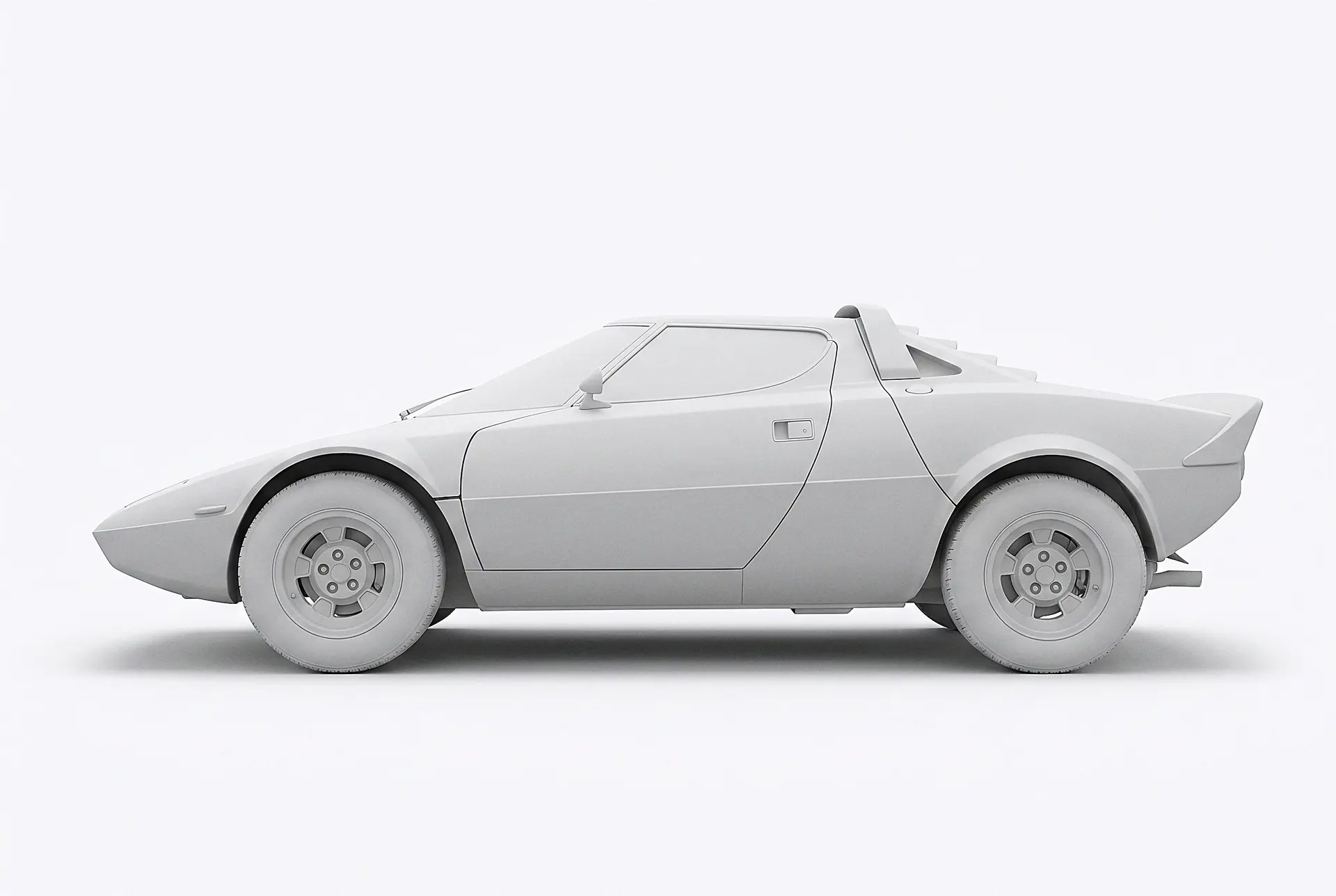
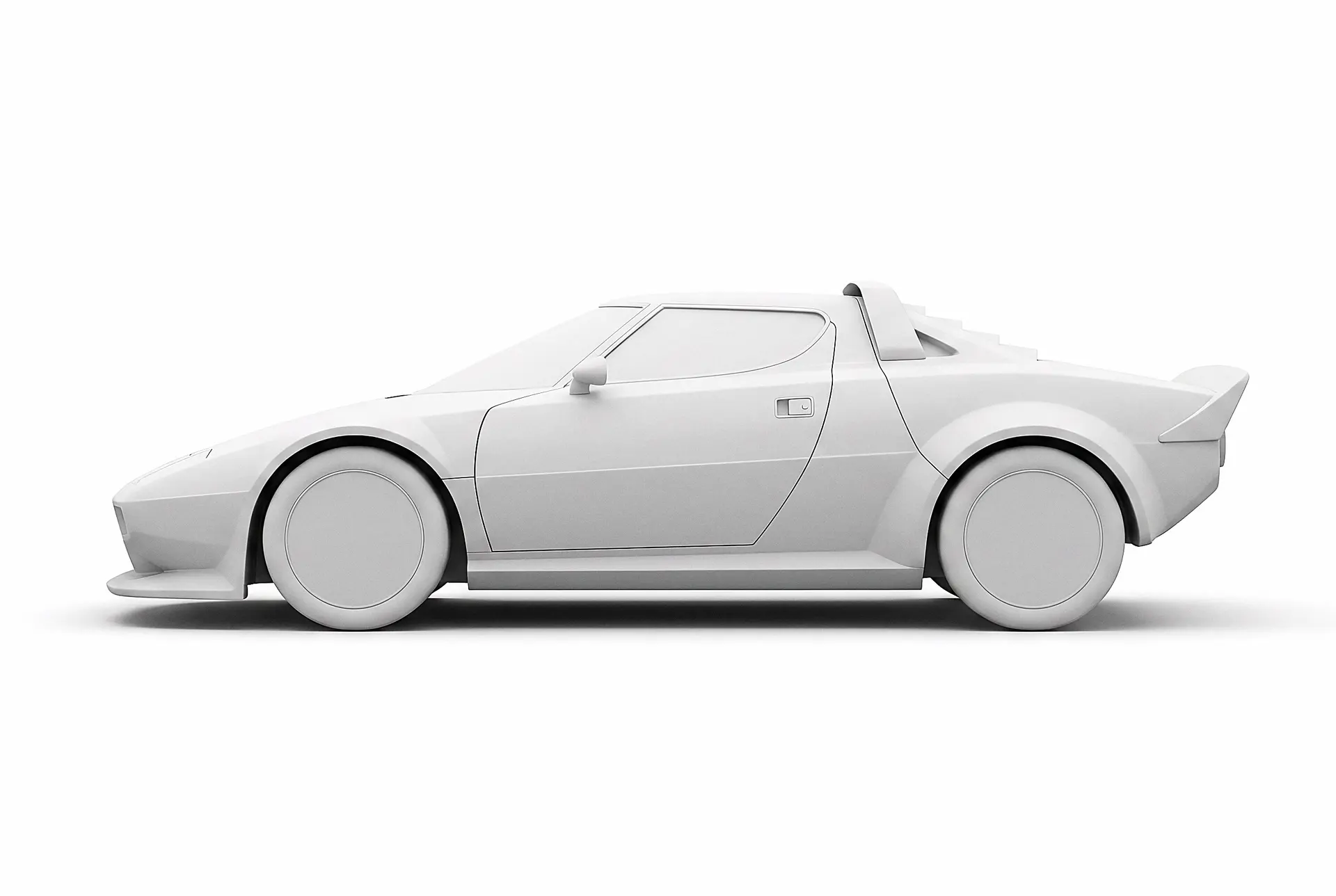
The road car and competition car share Gandini's outline, but the register must keep a homologation Stradale separate from a factory works car, a period conversion and a later recreation.

White styling model of the Lancia Stratos HF Stradale

Production / assembly 1972–1975

Stradale

The homologation road car

A transverse 2,418 cc Dino V6, triple Weber carburettors, a five-speed transaxle and four Girling discs sat beneath the road body. The catalogue working count is roughly 492, never an exact factory-ledger claim.

The 500-car target explains the car; the surviving file explains its value. Original specification, continuity and papers made the 2,000-km chassis 001932 the public record car.

  • 190 bhp @ 7'400 rpm
  • 980 kg · 3'710 mm long
  • ≈492 completed · count disputed
White styling model of the Lancia Stratos Gruppo 4 rally car

Homologated 1974

Gruppo 4

Works cars and period conversions, kept distinct

The works specification evolved from 12 to 24 valves. Sources give 270 hp and 300 hp for different specification-family claims, with 790 kg dry listed in the New Stratos comparison.

Twenty-six means official racing versions. Factory-approved period conversions and the wider roughly fifty-car Group 4 family cannot be folded into that works count.

  • 26 official racing versions
  • 270 / 300 hp family claims
  • 790 kg dry reference

True scale

3.71 metres long, 1.11 metres high

The Stratos HF’s sourced length is 3'710 millimetres. FIA Homologation Form no. 640 closes the missing vertical datum: 1'110 millimetres overall for the base homologated Stratos HF body.

Lancia Stratos HF Stradale

3.71 m · 1.11 m high

Ferrari F40

4.36 m · 1.12 m high

Porsche 911 Carrera

4.52 m · 1.30 m high

1.80 m
0m1m2m3m4m5m6m7m8m9m10m11m12m13m

Length: 3'710 mm, consistent between the New Stratos comparison document and the Stratos club data. Height: 1'110 mm overall, FIA Homologation Form no. 640, row 6, for the base Stratos HF body. The outline is traced from the catalogue cut-out, so perspective is approximate.

The road claim

0km/h

Stellantis publishes 6.8 seconds to 100 km/h. At constant acceleration that is about 94 metres—illustrative only; surface and protocol were not stated.

Stradale · factory-era claim · surface unspecified

0 m10 m20 m30 m40 m50 m60 m70 m80 m90 m0–100 km/h · 6.8 s · surface unspecified

The variants

One wedge, three visible coats

The Stradale made the homologation case; Group 4 made the rally reputation. The Group 5 Turbo was a separate closed-course prototype line; the visible coats remain the road car, Marlboro prototype and Alitalia works car.

Stratos HF Stradale

1972–1975 assembly · Works / very rare · 492 built

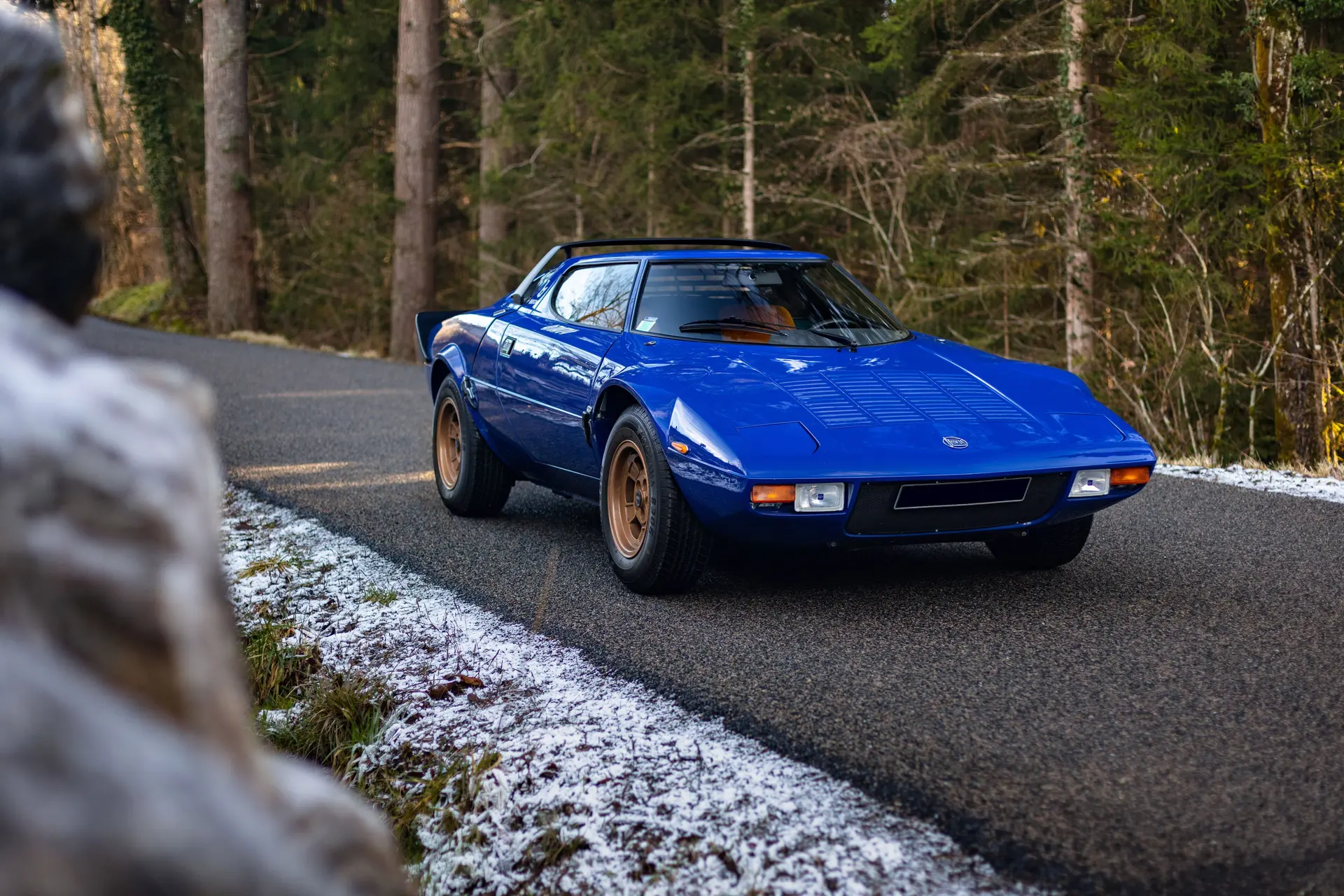
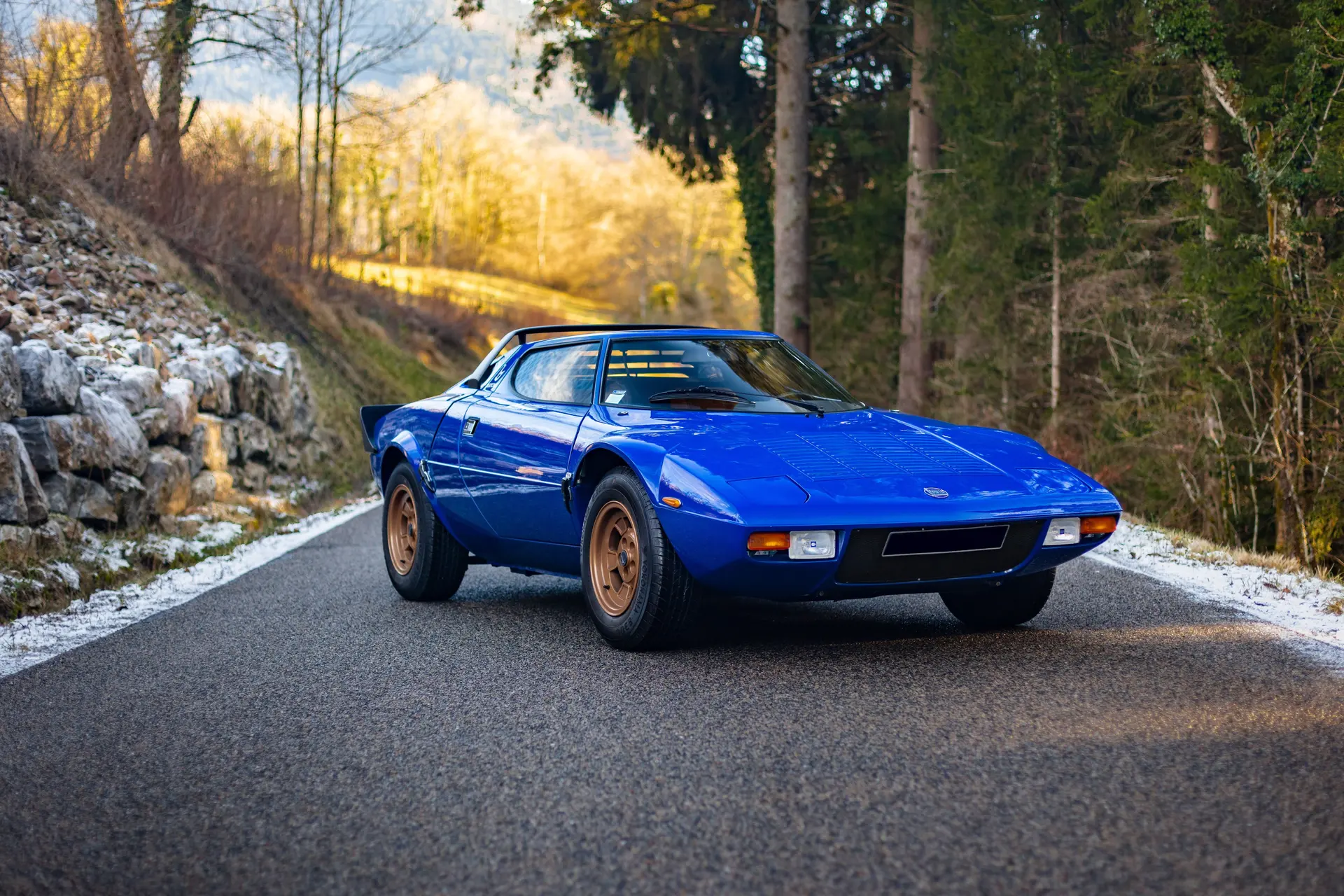
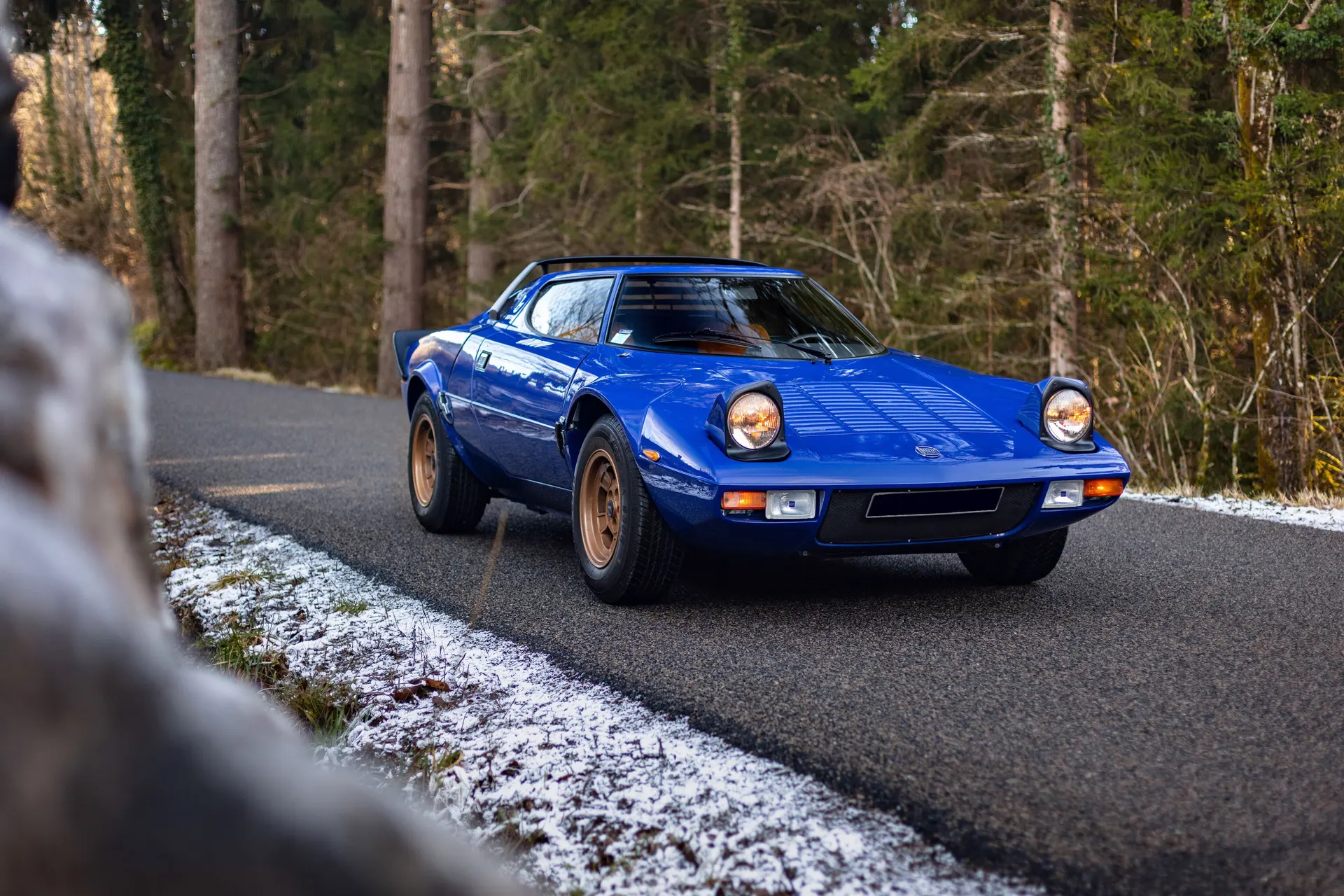
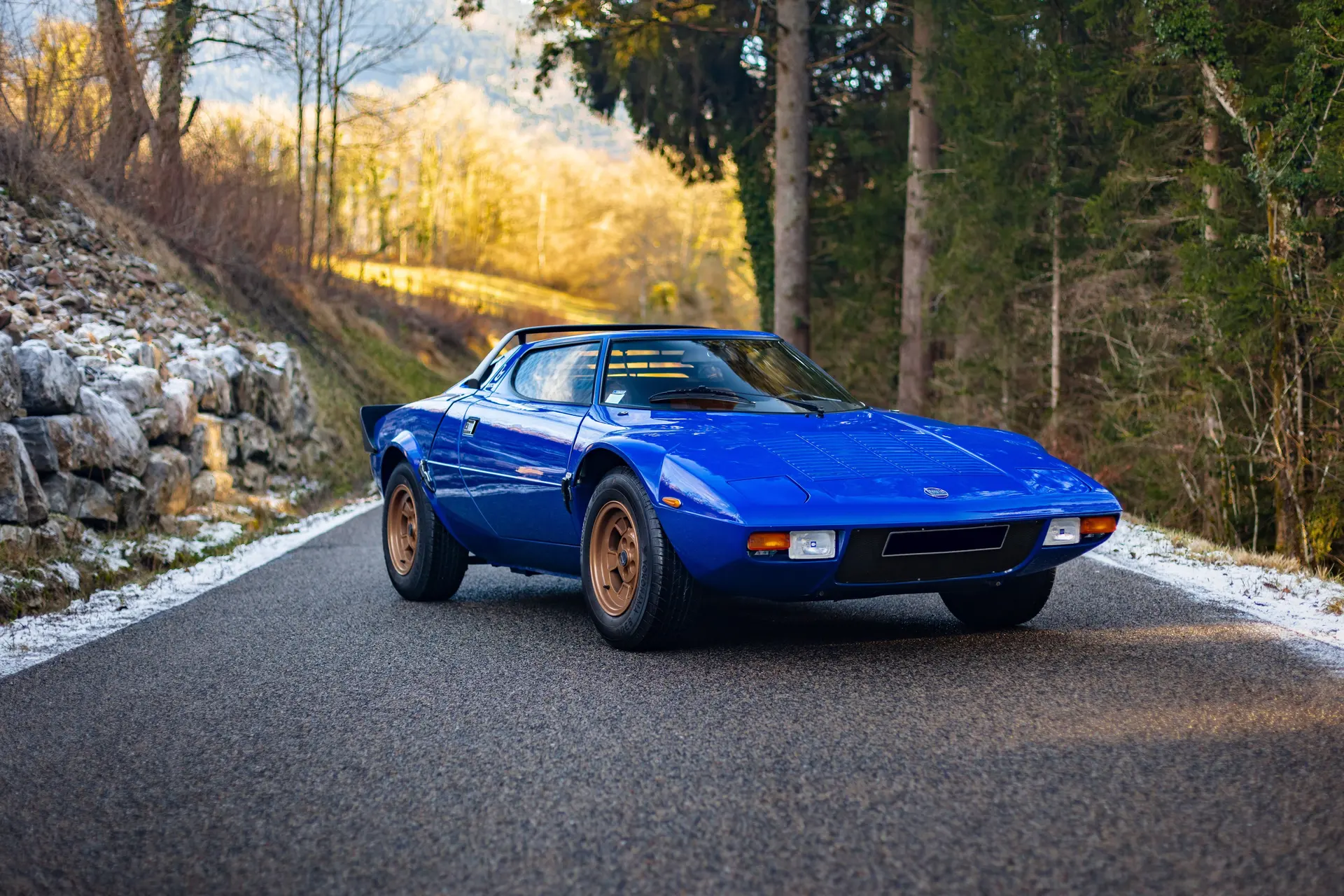
Blue Lancia Stratos HF Stradale, front three-quarter on a mountain road

Stradale

Bertone shell · Lancia assembly · 1972–1975

≈492 completed; 500 was the homologation target

The homologation road car: a transverse 2.4-litre Dino V6, triple Webers and a five-speed transaxle inside Gandini's Bertone wedge.

Roughly 492 is the working catalogue count, not a settled factory ledger. Sources range from 491 to 498 completed cars; another account says 457 were on wheels when assembly stopped. The original homologation bid targeted 500 within 24 months.

Open as its own file →
  • 190 bhp at 7'400 rpm
  • Group 4 confirmation: 1 October 1974
  • ≈492 completed; 500 was the cited homologation target
  • Public road-car references: €590'000–815'000, 2024–2026
Engine
2'418 cc Ferrari Dino V6 · triple Weber 40 IDF
Power
190 bhp
Weight
980 kg kerb / dry reference
0–100 km/h
6.8 s claim

Typical value · Stradale

Never publicly traded

€0.2M€1.0M

The paper trail · Stradale

Documented cars
11 of 492 built
Top public sale
€0.81M
Gooding Christie's · 2026 — Chassis 001932
Never traded publicly
3 of 11 documented
museum and long-hold cars
Latest movement
Gooding Christie's · 2026
Chassis 001932
Open the register

The counts are not additive: about 492 road cars, 26 official Group 4 versions, two Group 5 Turbo prototypes, and a wider family of period conversions and later competition cars.

The cars

The Stratos HF Stradale register

Documented individual cars — chassis, colour, ownership and sale history. Open one for its full provenance. Public records only; members see the complete registry.

11 documented · public records

The build register

Five hundred in parts, fewer in cars

The homologation bid targeted 500 examples within 24 months. FIA accepted that enough shells and components existed; contemporary counts of completed cars do not agree. The tags index explicitly documented chassis.

The counts are not additive. Sources range from 491 to 498 completed cars, with another account giving 457 on wheels; 26 means official racing versions, not every Stratos later built or converted to competition specification. Tags index documented chassis; other sourced transactions, including 001581, remain in the market ledger.

HICON BID

Buying interest, silently.

A HICON Bid is a confidential expression of buying interest on the Lancia Stratos HF Stradale file — never public, never shown to other members. It is not a binding purchase, and HICONIUM holds no funds.

Sign in

HICON Bids are a member instrument. Sign in to place one.

The vault

Open a file on yours.

You keep one? The record starts in your garage — identity, papers, photography, and the market evidence this file already carries, bound to your chassis.

The x-ray

Anatomy of €815,000

Chassis 001932 set the public model auction record in Paris in 2026. It did not carry works race provenance: the price sat in preservation, continuity and original specification, with the competition story belonging to the model rather than this chassis.

Blue Lancia Stratos HF Stradale in side profile, used as a reference view for the record-car x-ray
€815'000Gooding Christie's · Paris 2026 · chassis 001932

Editorial weighting for reading, not measured attribution. Gooding called the result a world record for the model.

The identity files

Numbers that moved

A Stratos file begins with four distinct questions: the homologation target, cars complete at approval, total production and the boundary between official works cars and the wider competition family.

500400 later

The homologation rule

RM records 500 examples within 24 months as the target for the 1974 bid. Stellantis cites at least 400, and a later RM account says the rule was subsequently lowered. The page keeps 500 as the original target and does not project the later 400 rule backwards.

147 / ≈140183 / 200

Cars complete at homologation

One source gives 147 completed before 1 October 1974; another says the factory reported 200 but about 140 were widely believed to exist; RM Essen gives 183 by the end of 1974. FIA accepted shell and component sufficiency. No reviewed source settles the completed-car count at confirmation.

≈492491–498 / 457

Total production

RM and Gooding use 492, while RM Monaco gives a 491–498 range. Auto Italia says 457 were on wheels when assembly stopped, with remaining chassis used as spares or finished by specialists. Overview copy therefore says roughly 492 completed, not exactly 492.

26 official≈50 Gr.4 family

The competition ledger

Stellantis and Broad Arrow count 26 factory or official racing versions. Ultimatecarpage gives around 50 for the wider Group 4 family. Works cars, factory-approved period conversions and later competition-spec cars remain separate categories.

Heritage · Lancia Stratos HF Stradale

Exceptional Time Capsule Example

Gooding Christie's · chassis 001932 · Paris 2026

The proposition

A concept with no settled engine

Bertone unveiled the running Stratos Zero on 28 October 1970. A year later Lancia and Bertone returned to Turin with the production-shaped Stratos HF: Marcello Gandini's hard wedge, wraparound screen and a transverse Ferrari Dino V6 placed amidships — although the November 1971 press release still left the final engine open.

Ferrari worried the new car would eclipse the Dino 246. A promise of 500 engines stalled; ten prototypes arrived in late May 1972, and the full allocation was not agreed until 14 December. Between those dates the Stratos had already made a premature Tour de Corse start and retired with rear-suspension trouble.

The hands

Three men, one impossible programme

A designer, a political operator and the driver who proved the car before the paperwork caught up.

No free period portrait on record

Cesare Fiorio

Sporting director · programme architect

Fiorio drove the negotiations, secured Ferrari's engine agreement and convinced Gobbato to make the Stratos programme real.

No free period portrait on record

Marcello Gandini

Designer · Bertone

Gandini shaped the production Stratos for Bertone: the hard wedge and wraparound windscreen that made the purpose-built rally car visually unmistakable.

Sandro Munari

Works driver · project advocate

The driver most closely linked to the Stratos and its most successful works advocate. Munari carried the prototype wins into the homologated car and won Monte-Carlo in 1975.
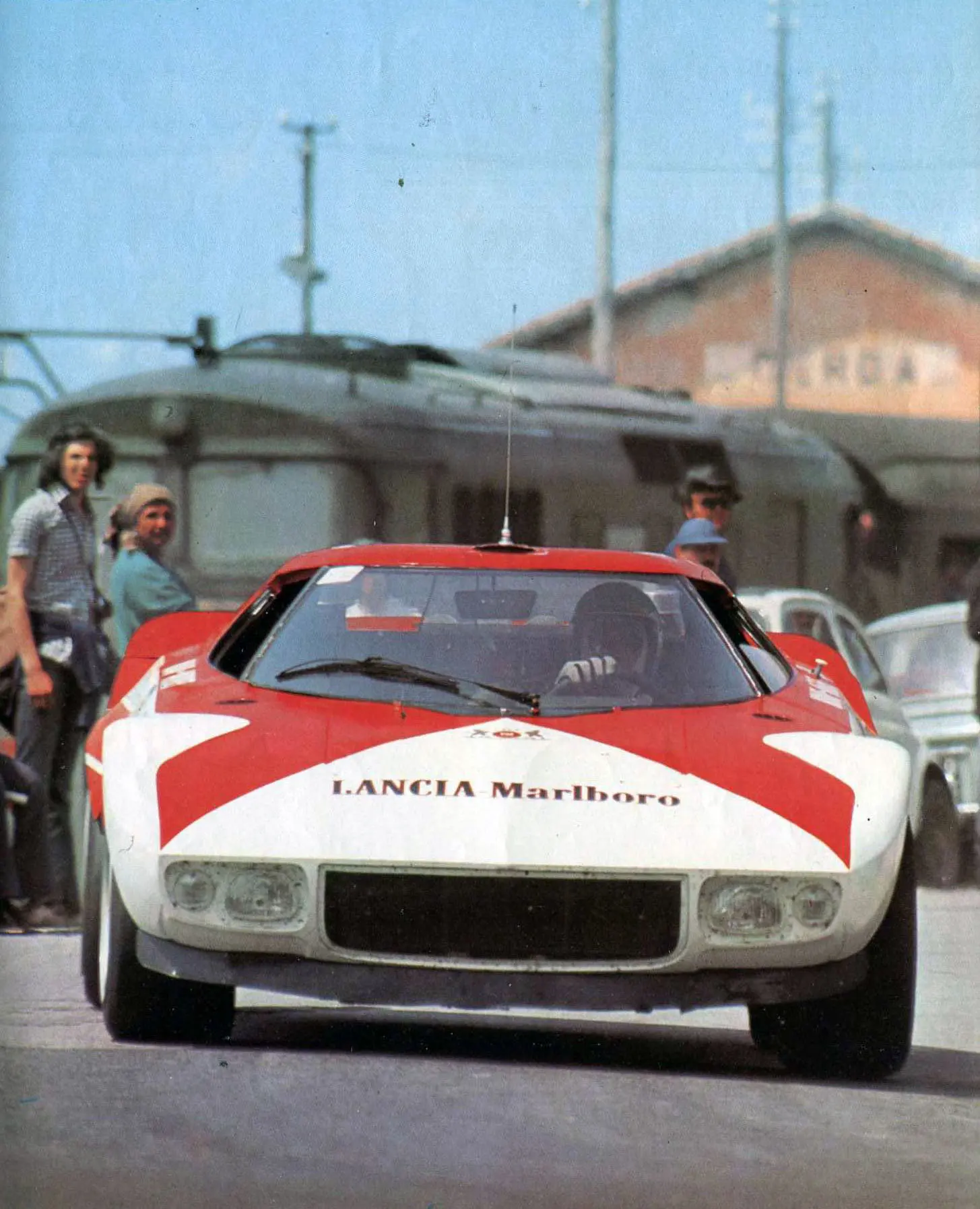
Munari's Marlboro-liveried Stratos prototype at the 1973 Targa Florio
Marlboro-liveried Stratos during the 1973 Tour de France Auto

The prototype

Winning before legality

From 8 April to 23 September 1973, Munari's prototype won the Firestone Rally, finished second at the Targa Florio and won the Tour de France Auto. The Marlboro-liveried car was proving the proposition before Group 4 homologation existed.

The results did not erase the production problem. The target remained 500 within 24 months, and the file still carries incompatible counts for complete cars when FIA approval arrived.

2026

Milestone

The public record

The 2,000-km Celeste chassis 001932 sells in Paris for €815,000.
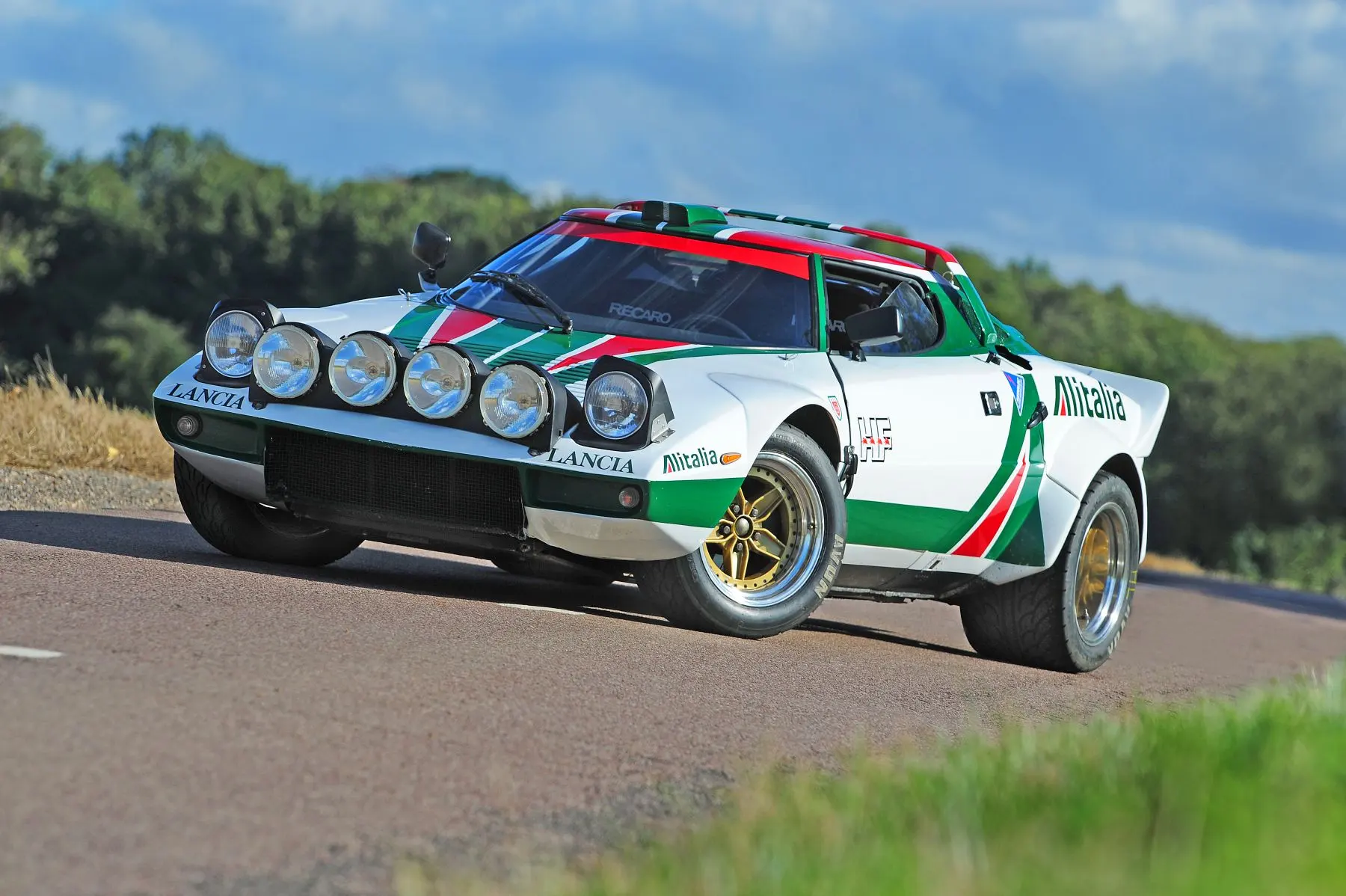
Alitalia-liveried Stratos Gruppo 4 in side profile

The papers

Five hundred without five hundred cars

Group 4 confirmation came on 1 October 1974. FIA accepted that enough shells and components existed to complete 500; it did not require five hundred finished cars to stand together. Accounts say 147 before approval, about 140 against a factory report of 200, or 183 by year-end. The durable fact is sufficiency of parts, not one settled completed-car count.

The sporting answer was less ambiguous. Alpine had won the inaugural 1973 manufacturers' championship with 147 points. In 1974 it fell to fifth on 29 while Lancia took the crown on 94, the homologated Stratos delivering the handover after its late-season surge.

On the record

Milestones, on a line

The moments that set the Stratos HF Stradale's standing. Use the arrows, and hover a point to read what happened.
1970Stratos ZeroThe name arrives
1971Stratos HF prototype
1972Five hundred engines
1973Tour de France Auto
1974Group 4 confirmed
1975Monte-Carlo
2026The public record

28 October 1970

Stratos Zero

Bertone unveils the running Fulvia-V4 concept at the Turin Salon.

November 1971

Stratos HF prototype

The Gandini production shape appears with a Dino V6, while the final engine supply remains unresolved.

14 December 1972

Five hundred engines

Ferrari finally agrees to the production allocation after supplying ten prototype engines in May.

23 September 1973

Tour de France Auto

Munari's prototype completes its run of pre-homologation proof with victory.

1 October 1974

Group 4 confirmed

FIA accepts shell and component sufficiency for the 500-car target.

23 January 1975

Monte-Carlo

Munari and Mannucci win by 3:06 after twenty-two special stages.

2026

The public record

The 2,000-km Celeste chassis 001932 sells in Paris for €815,000.

Jan 15–18After ES10Before ES22Jan 23
96 cars started

The signature rally

Monte-Carlo 1975 — one car left

Five concentration routes fed a 22-stage common rally, 15–23 January 1975. Ninety-six crews started; forty-three finished. Munari and Mannucci took nine stage wins, led after ES10 and stayed clear to the end — Alén took the final stage, Munari took the rally.

Jan 15–18Five roads to one rally

Five concentration routes, each 3,831–3,900 km, brought the field to the common competitive route. The timed contest then ran from ES1 to ES22 on asphalt and snow.

43 of 96

Classified

472.0 km planned / 538.5 km also reported

Distance

Not documented in the reviewed sources

Average

22 special stages

Course

Munari / Mannucci · #14 · TO L 65176 · registry identifies chassis 1524

Blue Stratos HF Stradale, front three-quarter
Blue Stratos HF Stradale in side profile
Blue Stratos HF Stradale, rear three-quarter

The ascent

Chassis Public ledger · 0003 → 001556 → 001832 → 001581 → 001932

Six public stations

The road-car ledger does not follow one chassis. It maps five Stradale transactions across four cars, plus one factory-sanctioned period conversion, with every amount left in the currency in which it sold.

£249’200

The early publicity car

Chassis 0003 at RM Sotheby's — restored to its early configuration.

London, United Kingdom

201220132019202420252026

These are as-sold results, not a currency-normalised index or an appraisal.