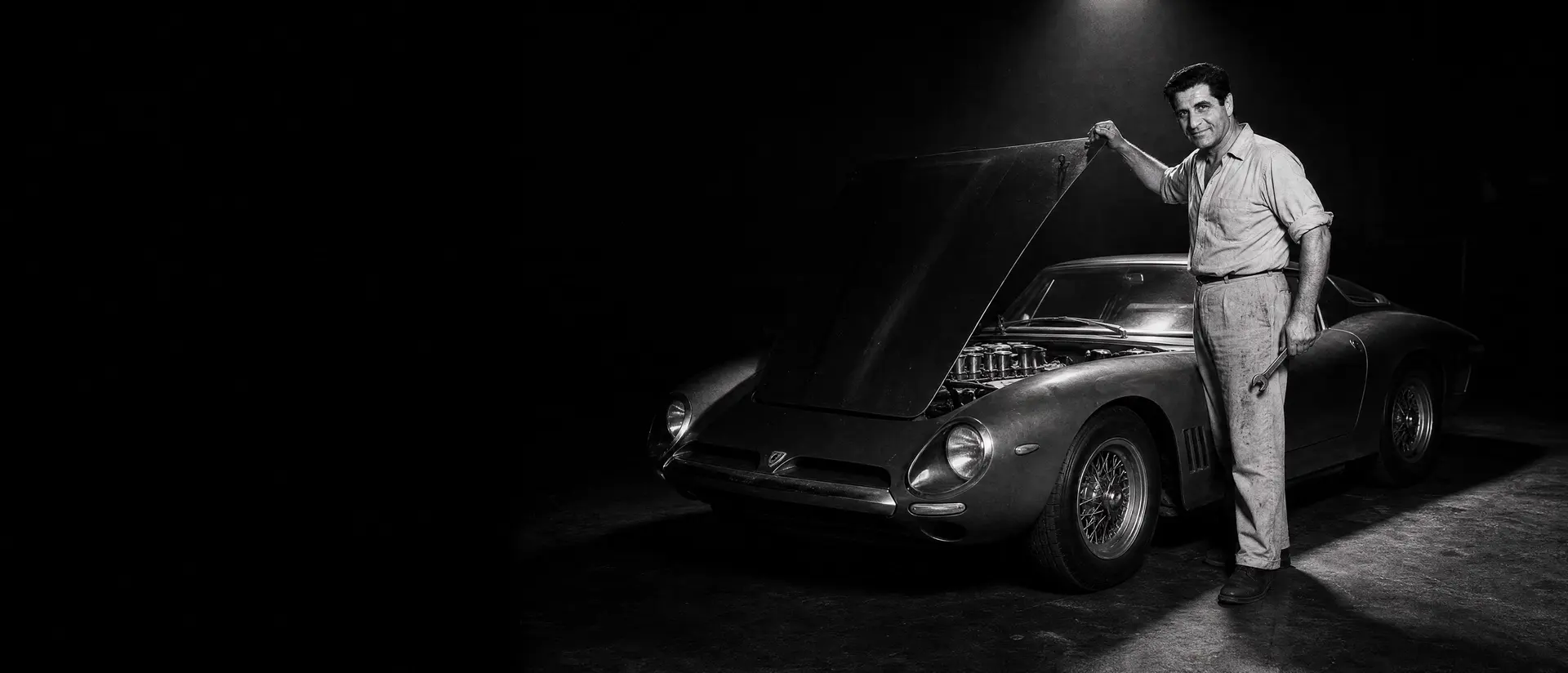
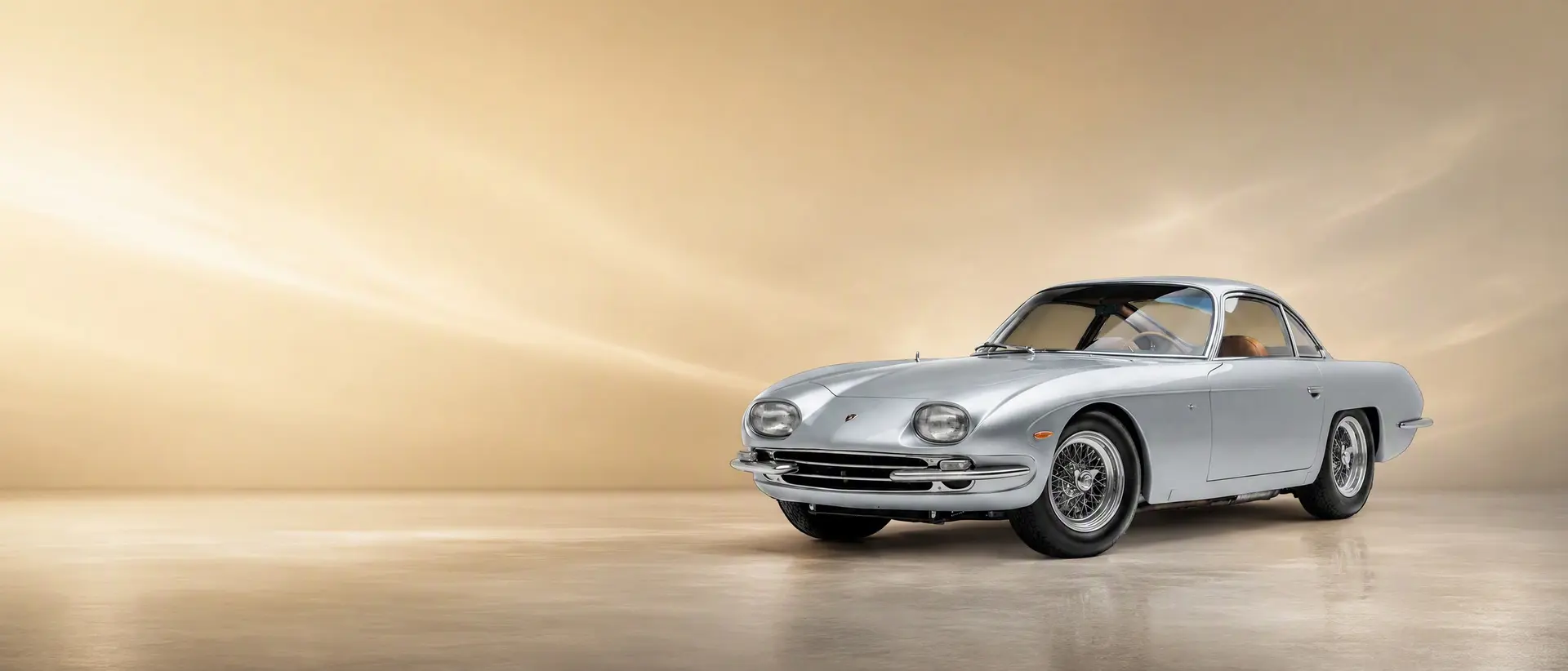
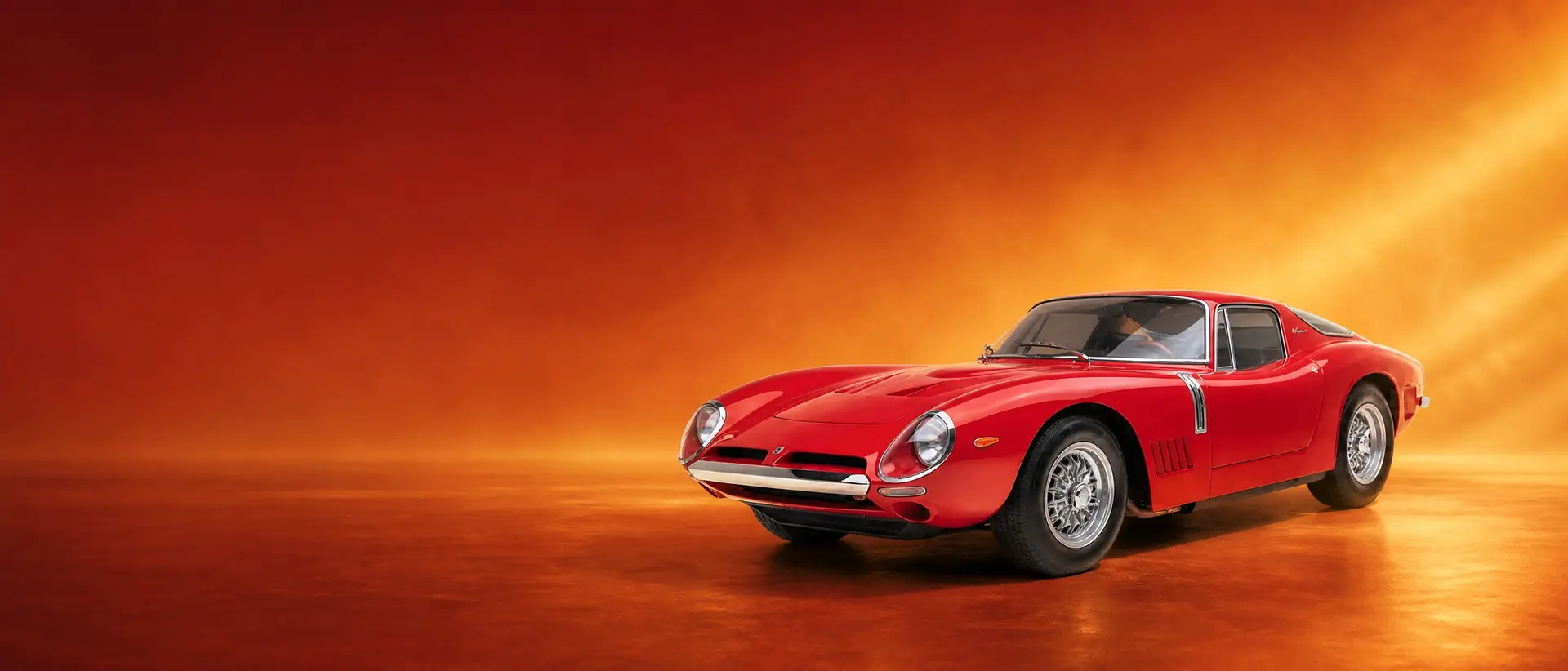
Giotto Bizzarrini leaning over the open engine bay of a Bizzarrini 5300 GT Strada under a single spotlightAI-generated

People · Engineer · 1926–2023

Giotto

il pilota collaudatore

Born
Quercianella, Livorno, 1926
Died
2023
House
Prototipi Bizzarrini, Livorno, 1964–1969
In the register
Three files

The test seat

Bizzarrini is the direct link between the test track and the race-bred road car: the 250 GTO shaped lap by lap on his own SWB mule, the V12 that founded Lamborghini, and the A3/C he carried into a car wearing his own name. Not a stylist — a technical author who moved between aerodynamics, chassis and engines as one discipline.

His verdicts came from the stopwatch, not the sketchpad — frontal area cut until the lift went away, the V8 set behind the front axle, the chassis pared to what structure could justify. Four houses employed the same mind; the register below holds the three files where the work is documented.

From the test track at Monza to the workshop in Livorno

The register

The GTO, the V12, the Strada

Engineering signatures

The low nose, the mid-set V8, the V12

The test seat

Experimental work and test driving were one job to him — he called himself a pilota collaudatore first, after his master Sanesi at Alfa Romeo. The stopwatch wrote the specification.

The low nose

On the GTO mule he cut frontal area and lengthened the bonnet until drag and front lift gave in. The shape was never styled; it was measured.

The engine behind the axle

From his student Topolino to the A3/C and 5300 GT, he moved mass toward the middle. The Chevrolet V8 sat fully behind the front axle line.

The race programme first

The GTO grew out of the SWB, the 5300 GT out of the competition A3/C. The road car was what remained when the racing was done.

The light chassis

A steel semi-monocoque with bolted extensions for the A3/C; a tubular frame under the little ASA 1000 GT. Structure earned its weight or lost it.

The ambitious first spec

His Lamborghini V12 was drawn as a competition engine. Making it civil was somebody else’s job — Stanzani’s, as it turned out.

The archive

Prints from the drawer

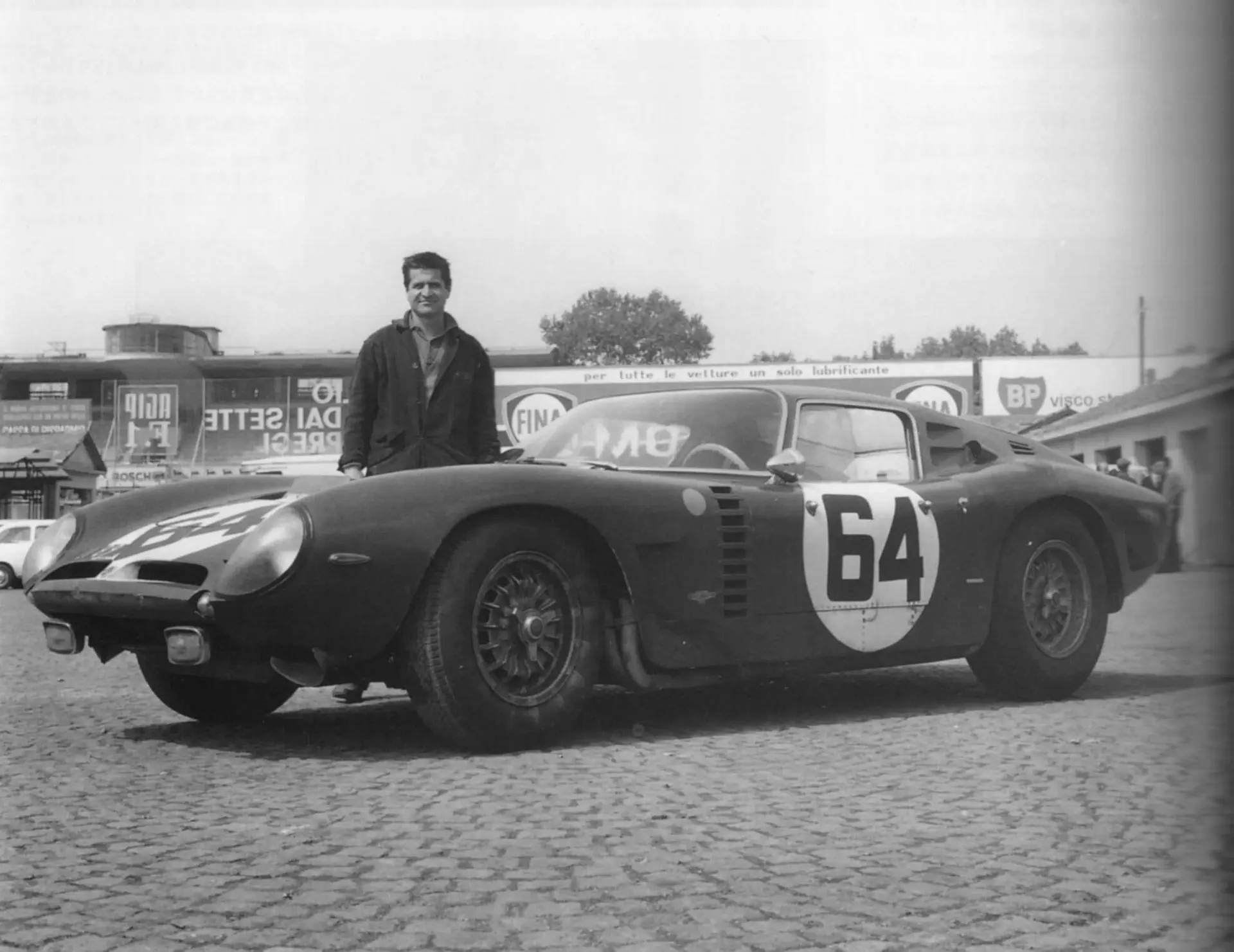
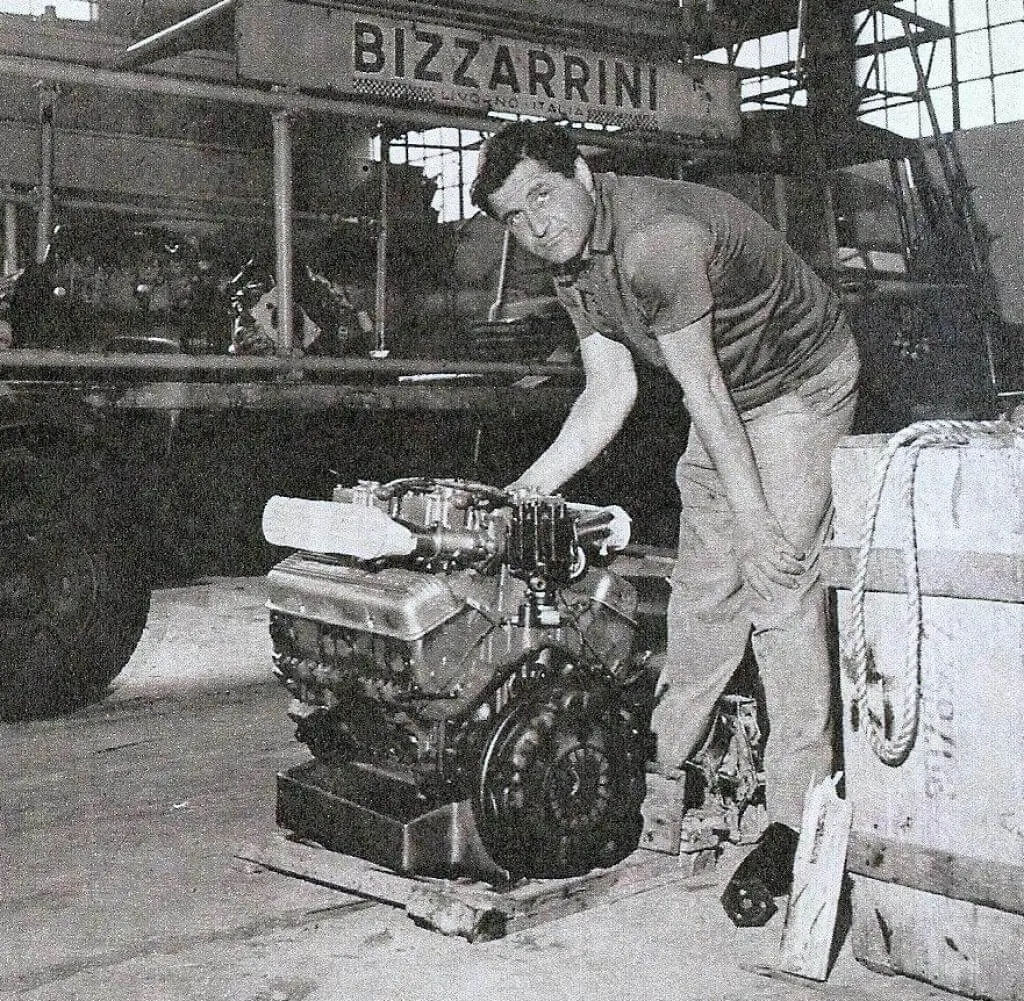
Period photographs from Monza, Sant’Agata and Livorno, and one editorial reconstruction — choose a print and it pushes the others aside.

The GTO prototype at Monza, 1961. Wikimedia Commons.

Beyond the register

From the Testa Rossa to the Picchio

'58–'62

Ferrari 250 Testa Rossa

Developed with Carlo Chiti; the car won Le Mans in 1958.

Ferrari 250 GT SWB

His own chassis 2643 GT became the rolling laboratory for everything the GTO would be.

ASA 1000 GT

Chassis and engine work beneath Giugiaro’s Bertone body — the small Ferrari that wasn’t.

250 GT SWB “Breadvan”

Count Volpi’s commission: make an SWB beat the new GTO. He nearly did.

'62–'65

Iso Rivolta IR 300

The first Iso commission after Ferrari — a grand tourer engineered from a clean sheet.

Iso Grifo A3/L

The road-going Lusso half of the Turin 1963 pair.

Iso Grifo A3/C

The competition half — his Livorno consultancy built it low, and raced it through 1965.

'66–'89

Bizzarrini P538

A rear-engined 5.3-litre V8 open racer, bodied by Giugiaro, entered for Le Mans.

Bizzarrini 1900 GT Europa

The entry ticket — two Opel litres under a fibreglass body.

AMC AMX/3

He shepherded the chassis and built the first six prototypes for the American mid-engined coupé.

Picchio

At sixty-three he drew the first Picchio racing car with founder Francesco Di Pietrantonio.

The houses

From Portello to his own front gate

1953–1957

Alfa Romeo

The experimental department, then the test seat — where engineering and driving became the same discipline.

1957–1961

Ferrari

Engineer and test driver for the road and sports-prototype cars; by the end he led testing and experimental development.

1961–1964

Società Autostar

After the Ferrari walkout — and a brief ATS interlude — he opened his own consultancy: Iso, ASA and Lamborghini all bought the same mind.

1964–1969

Bizzarrini

The marque with his name on it, built in Livorno until the money ran out in 1969. The consultancy work never stopped.

In his words

“Io mi sono sempre considerato un pilota collaudatore, come il mio maestro Sanesi.”

I have always considered myself a test driver, like my master Sanesi.

Giotto Bizzarrini · Quattroruote, 2012