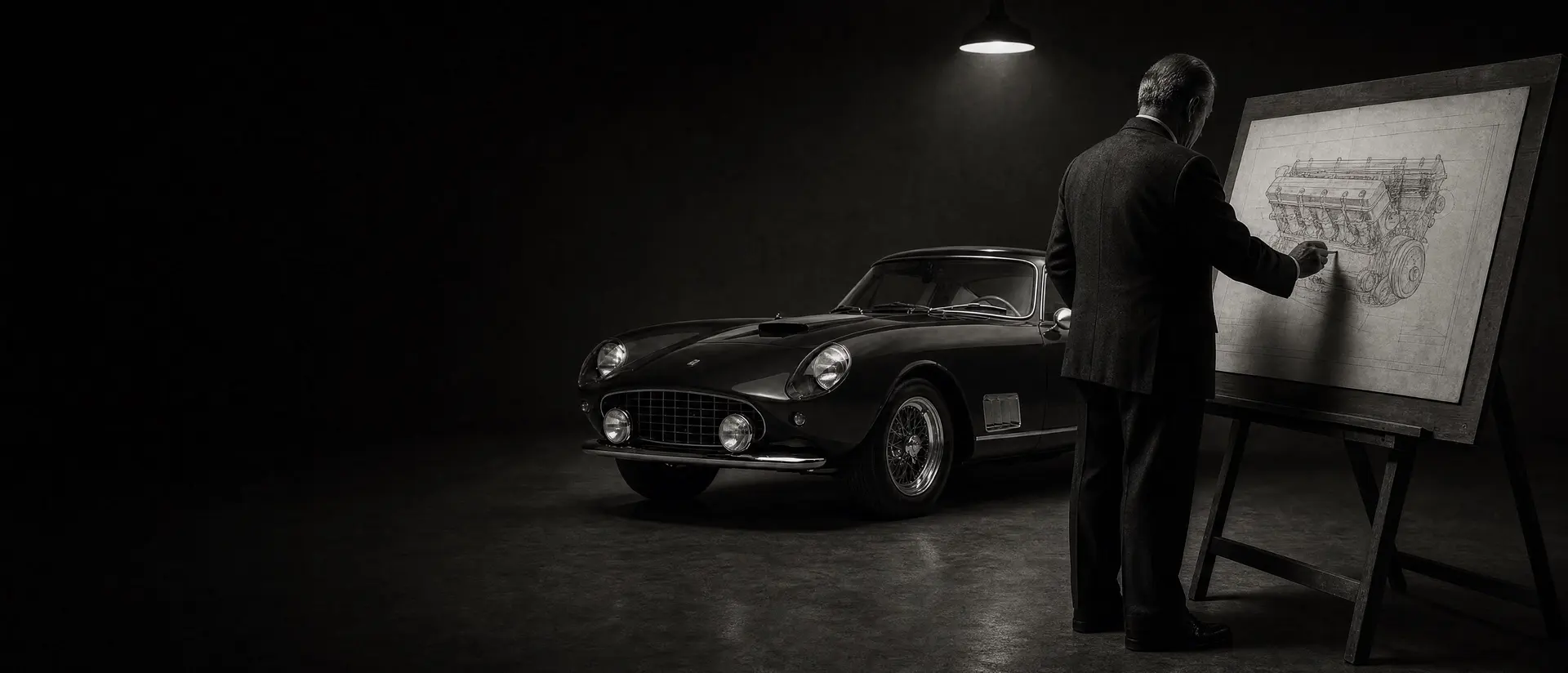
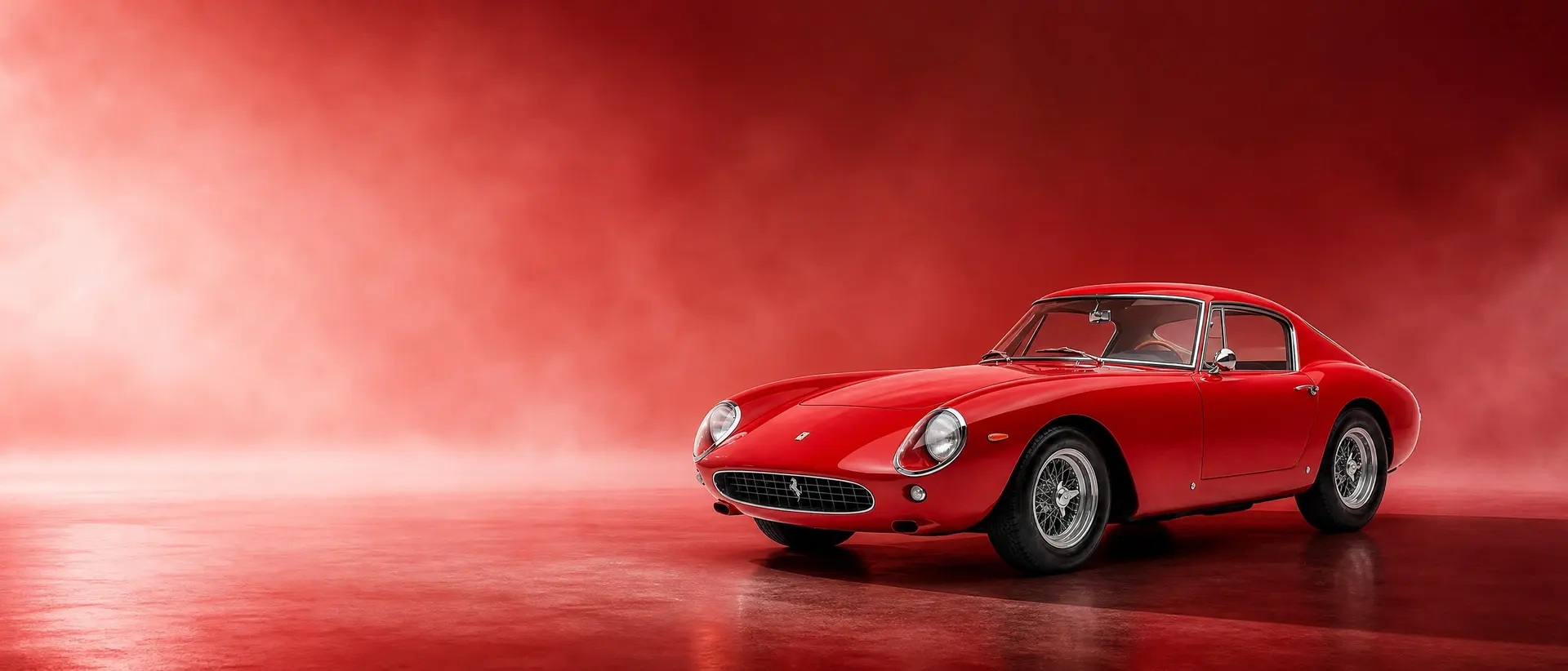
Gioacchino Colombo at a drafting board with a V12 elevation drawing, a Ferrari 250 GT berlinetta behind him under a single spotlightAI-generated

People · Engineer · 1903–1987

Gioacchino

l’ingegnere del dodici cilindri

Born
Legnano, 1903
Died
1987
Houses
Alfa Romeo · Ferrari · Maserati · Bugatti
In the register
Four files

The architect beneath

Colombo linked Alfa Romeo’s pre-war racing engineering, Ferrari’s first V12 and Maserati’s early-fifties racing programme. In 1945 Enzo Ferrari asked him what to build; his answer was a compact 1.5-litre twelve with one camshaft per bank — an architecture drawn small so it could grow.

His register significance is architectural, not sculptural. The berlinettas that carry his credit were bodied by Pinin Farina and Scaglietti; the Grand Prix car he conceived was finished by other hands. What is documented under each file is the mechanism — and the mechanism, for two decades of Ferraris and Maseratis, was his.

One engine

From the 125 S to the Daytona

The 1.5-litre V12 of 1947, enlarged across two decades. Read the displacement — it is the biography.

Ferrari 125 S

1947

1.5 LThe original Colombo V12 — compact, one overhead camshaft per bank, drawn to be enlarged.

The 250 line

1956–63

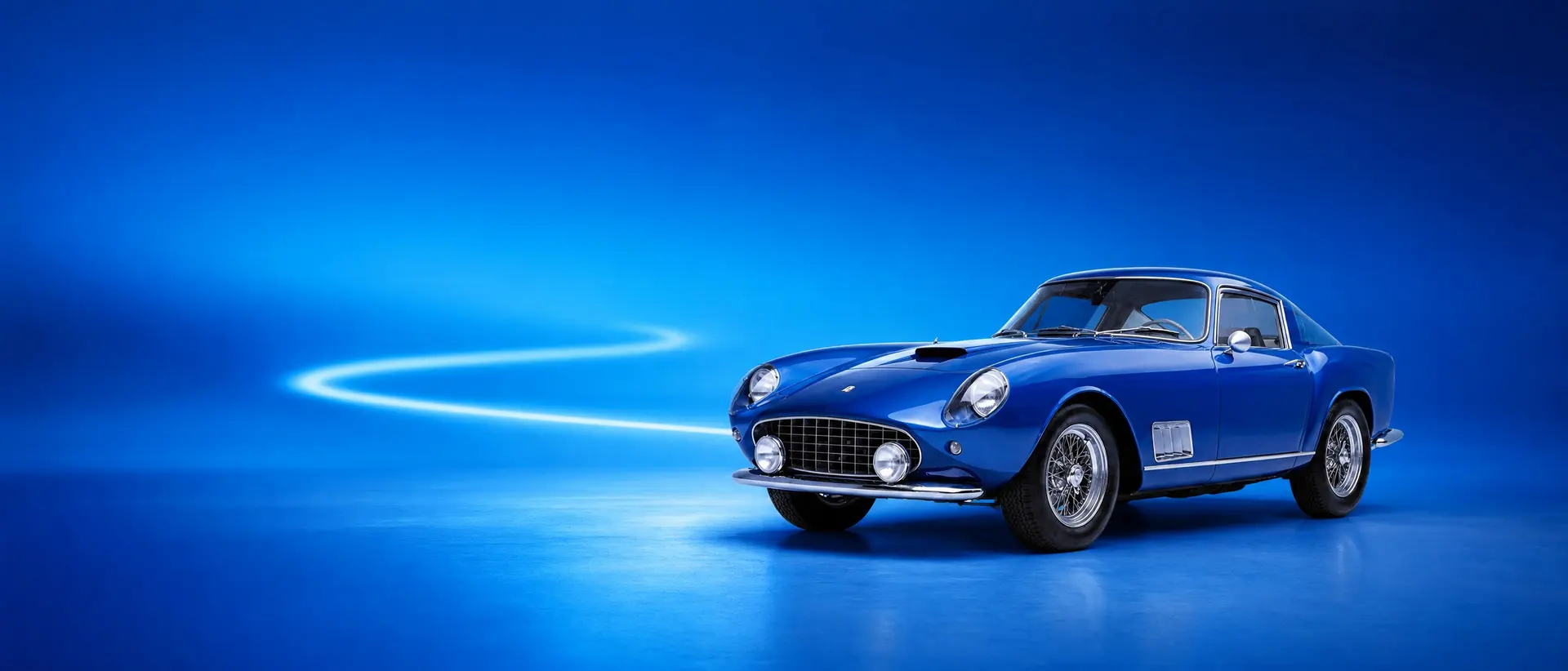
2,953 ccThe architecture enlarged for the 250 family. The Tour de France and SWB berlinettas hold the register credits.

Ferrari 250 GTO

1962

3.0 LFerrari identifies the GTO’s three-litre V12 as a Colombo design — an engine credit, never whole-car authorship.

365 GTB/4 “Daytona”

1968

V12A Colombo-family application, two decades after the first drawing. The seed outlived its seasons.

Signature mechanisms

The block, the cam, the blower

The compact twelve

A 1.5-litre V12 where others drew big fours and sixes. It debuted in the 125 S in 1947 and was enlarged through two decades of Ferrari applications.

One cam per bank

His original Ferrari architecture used a single overhead camshaft per cylinder bank — simple to build, light to spin, room left to grow.

The Elektron straight-eight

The Alfa Romeo 158 Alfetta: a 1.5-litre supercharged eight with an Elektron magnesium block, twin-cam head and Roots supercharger.

The short-stroke six

For the A6GCS/53 he shortened the stroke, added a twin-cam head with twin ignition and gear-driven cams, and widened a monoposto-derived frame around it.

The concept handed over

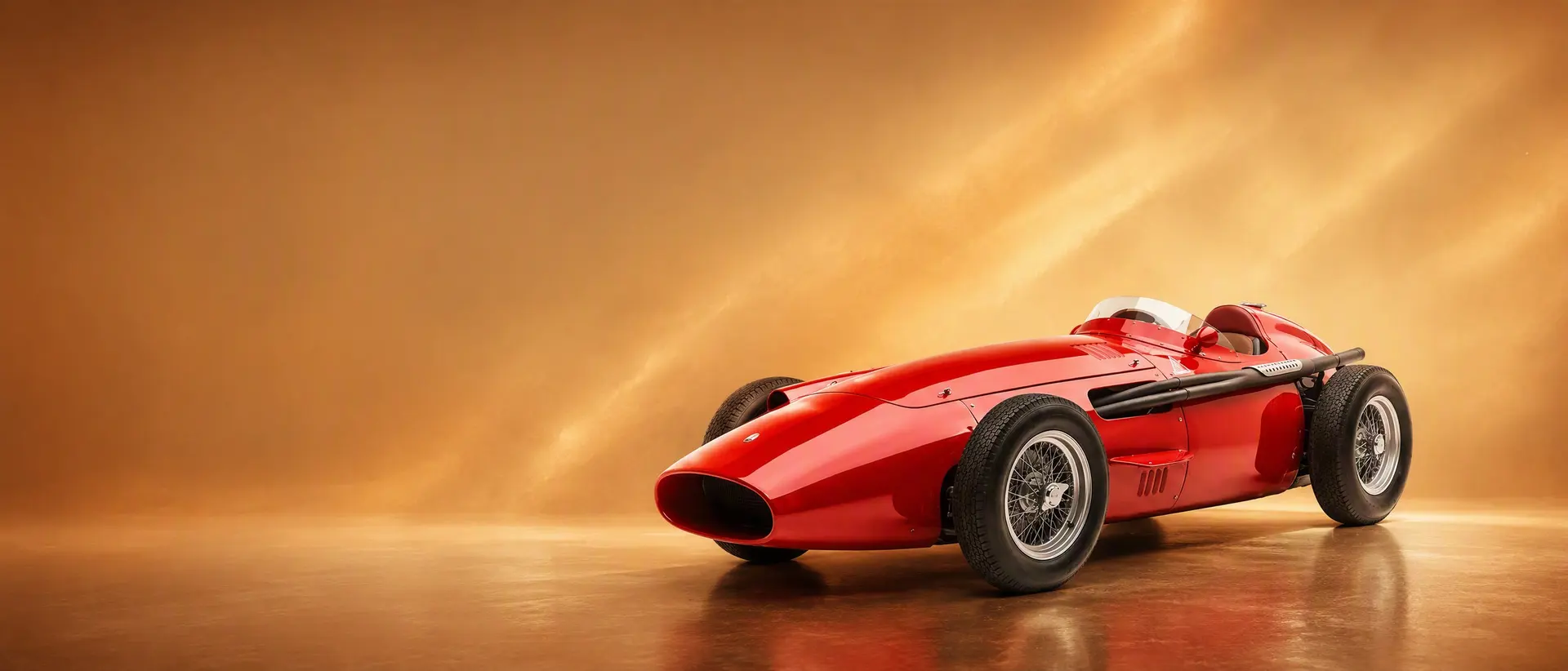
The 250F was his concept and someone else’s triumph — he left Maserati before the prototype ran, and Alfieri’s team carried it to Fangio.

The archive

Prints from the drawer

No verified portrait of Colombo survives in the open archives. These prints hold the machines and the rooms his engines lived in — choose one and it pushes the others aside.

Circuito di Modena, 1947 — the 125 S among the Maseratis. Wikimedia Commons.

Beyond the register

From the P2 to MV Agusta

'24–'52

Alfa Romeo P2

A young draughtsman in Vittorio Jano’s design team — the apprenticeship of a school.

Alfa Romeo 158 Alfetta

The 1.5-litre supercharged straight-eight of 1937–38, the voiturette that came to own Grand Prix racing.

Alfa Romeo 312 · 316 · 512

Alfa Corse design-department work in the last seasons before the war.

Alfa Romeo 159

He took part in redeveloping the 158 into the 159 for the 1951 championship seasons.

'53–'70

Bugatti Type 251

The 2.5-litre eight-cylinder Formula 1 programme, 1955–56 — Molsheim’s last period Grand Prix effort.

Abarth 750 twin-cam

A Fiat 600-derived twin-cam engine project, 1956. The architecture instinct at any scale.

MV Agusta 500cc programme

From 1957, engineering work in the motorcycle racing programme — the last long association.

His answer, 1945

“Lei, a mio parere, dovrebbe costruire un dodici cilindri!”

In my view, you should build a twelve-cylinder.

Gioacchino Colombo to Enzo Ferrari · Le origini del mito, 1985