
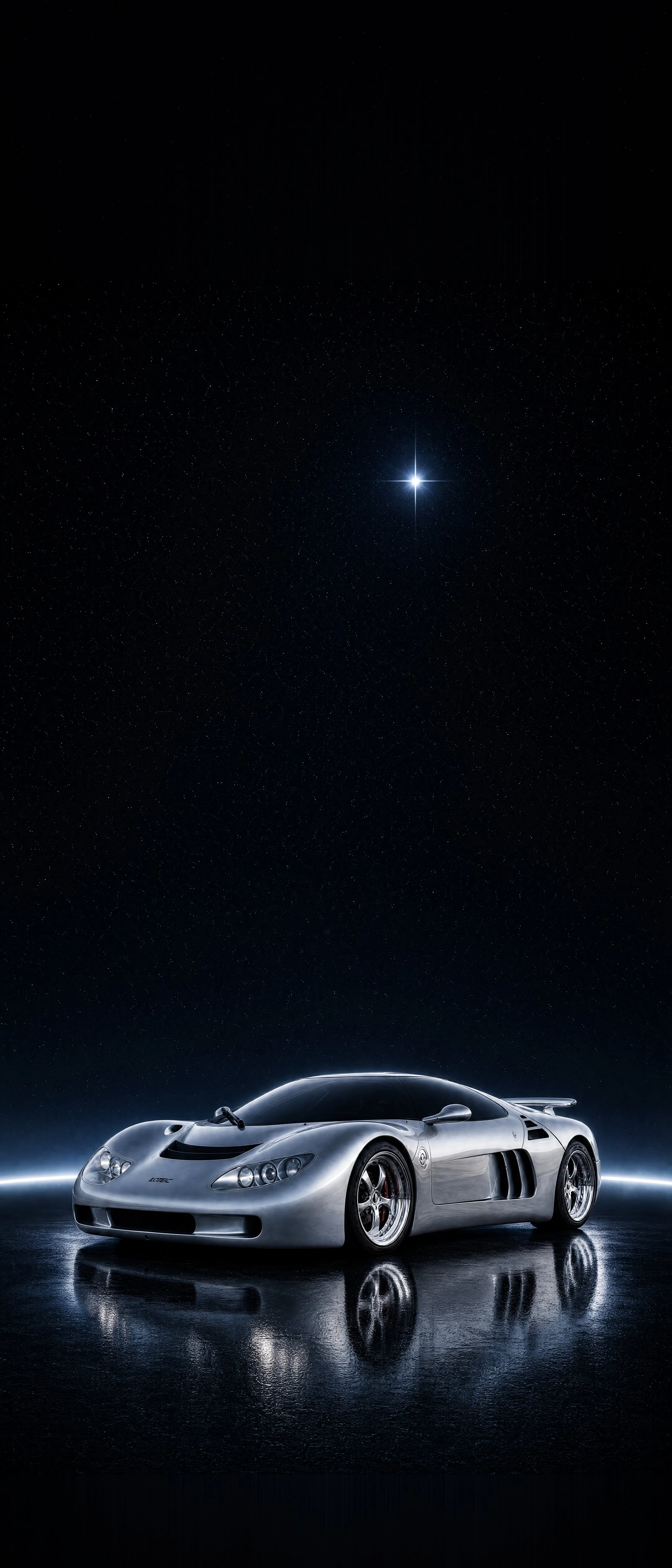
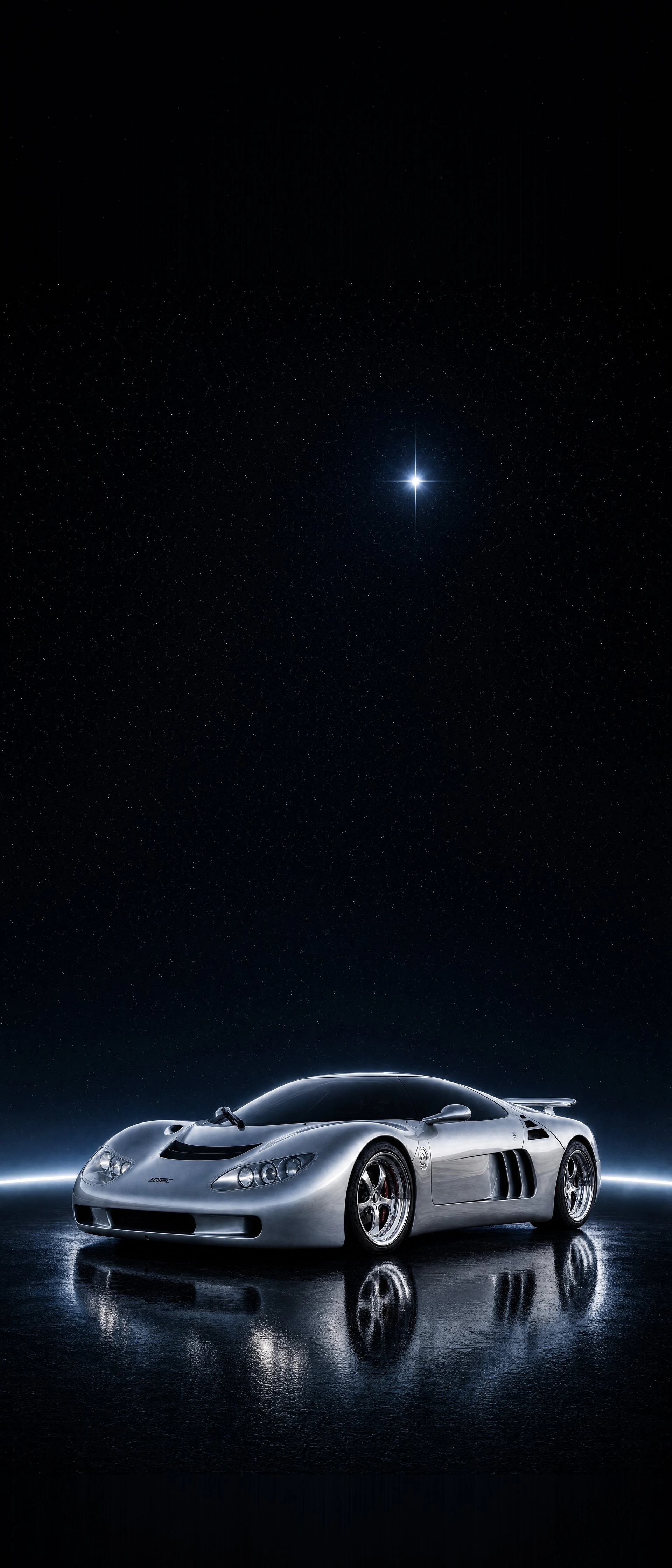
Heritage · Lotec Sirius
“A car that was entirely his own, from the first sketch to the final bolt.”
1992–2000
Eight years, three men
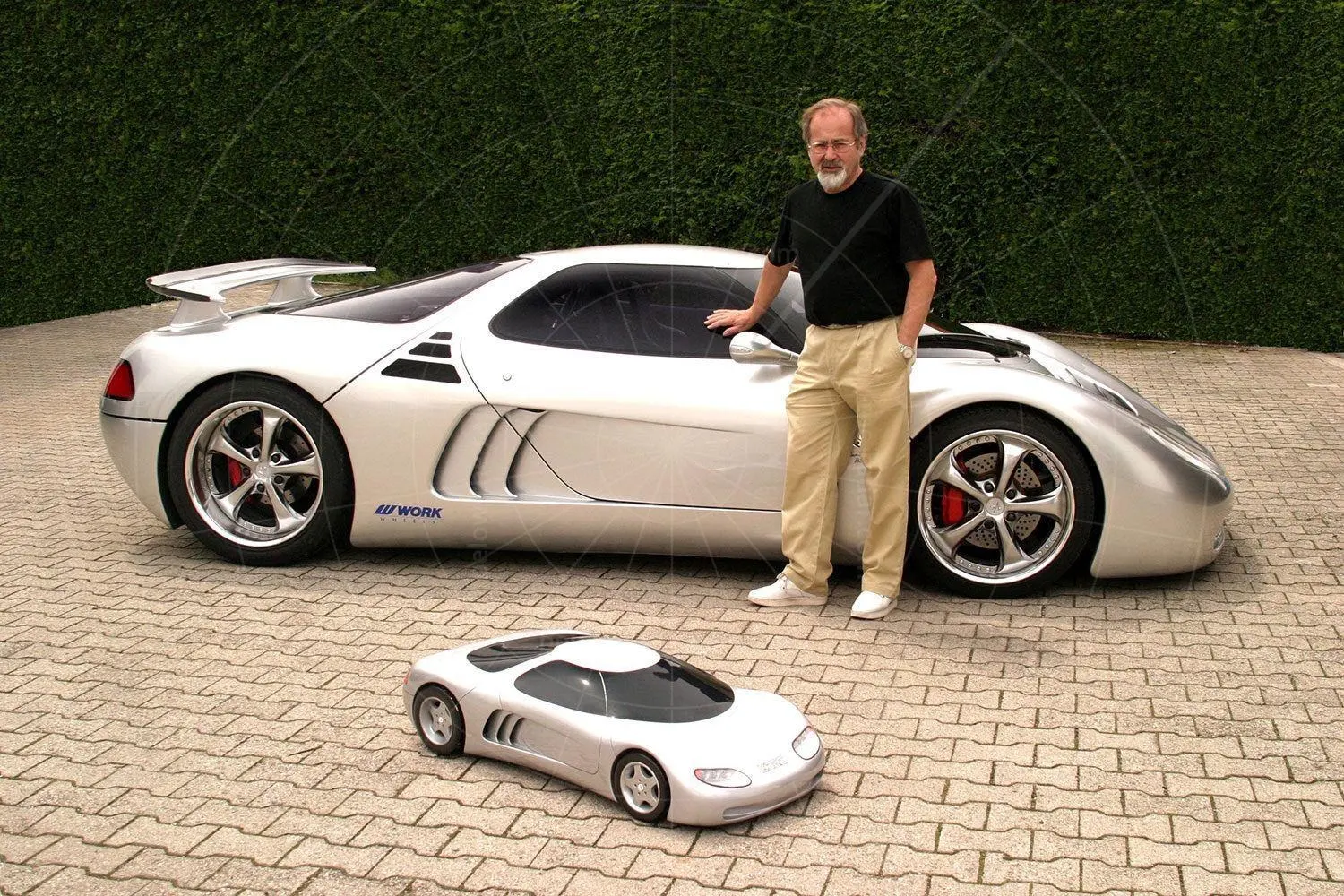
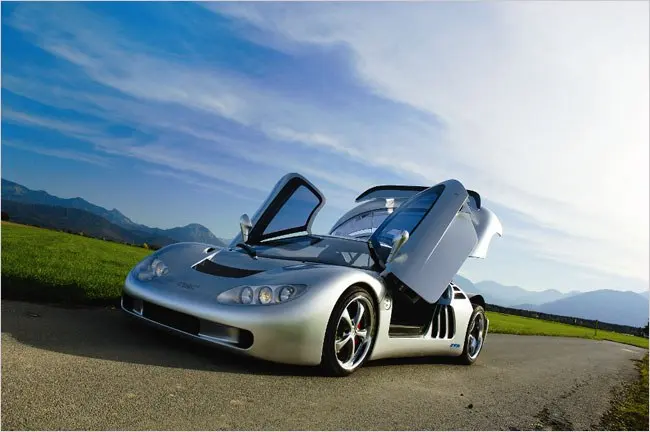
The Sirius was never a company project with a design department behind it. Lotterschmid shaped the 1:4 model himself from glued chipboard, freehand, with an angle grinder — two evenings' work that fixed the silhouette for good. Scaling it up took eight years, most of them nights and weekends around the paying work of the Kolbermoor shop.
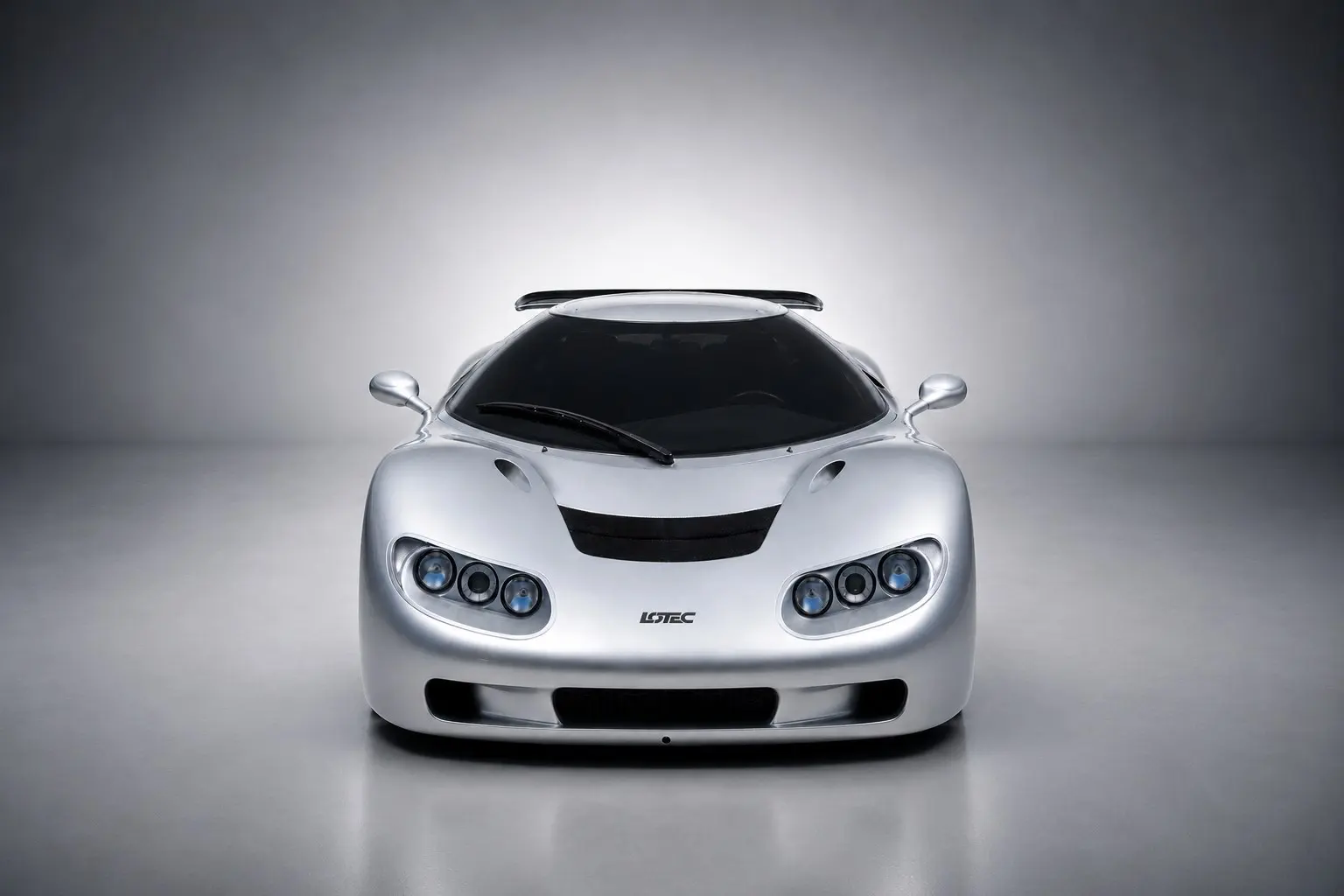
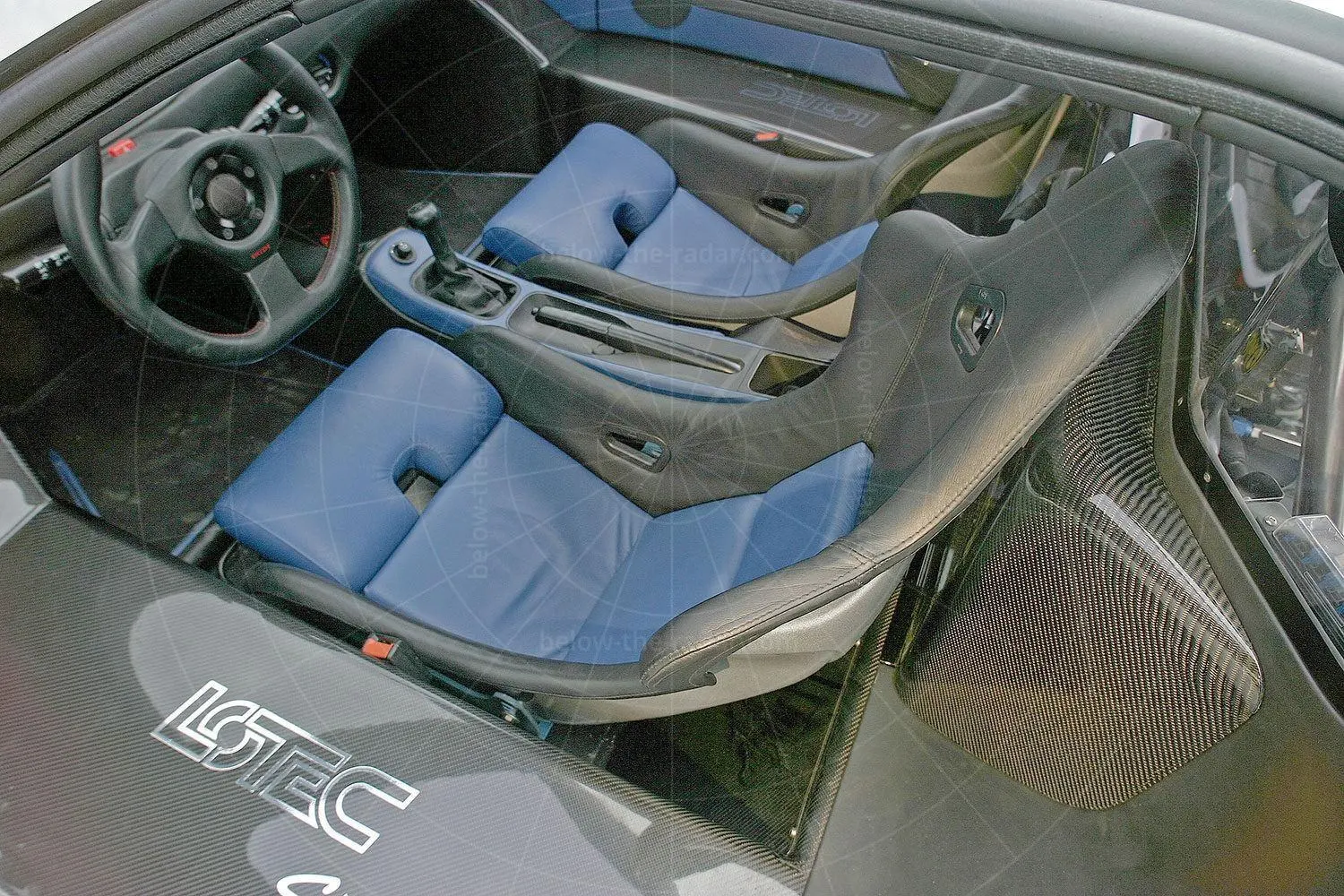
The goal was stated plainly: the first road car past 400 km/h. Development consumed six to seven million Deutschmarks, and when the car finally rolled out in 2000 its speedometer was rescaled to 400 — with instruments and dashboard architecture borrowed, pragmatically, from a Porsche 944.
The hands
The people behind the car
The people whose work shaped the Lotec Sirius.
Kurt Lotterschmid
Founder, designer and builder
Master mechanic, racer and tuner from Kolbermoor. Founded Lotec in 1962, won the Interserie outright in 1979 and 1980 and the German C2 championship in 1983, then built turbo Mercedes and Ferraris before the C1000 and the Sirius. He shaped the Sirius himself and built it with two mechanics over eight years.

LENZ Elektronik GmbH
Engine management partner — TurboTronic
The local electronics house that co-developed Lotec's TurboTronic engine management, the system that lets the twin-turbo M120 V12 run its boost-dependent 1000 to 1200 PS.
The powertrain
Twelve cylinders, two turbochargers
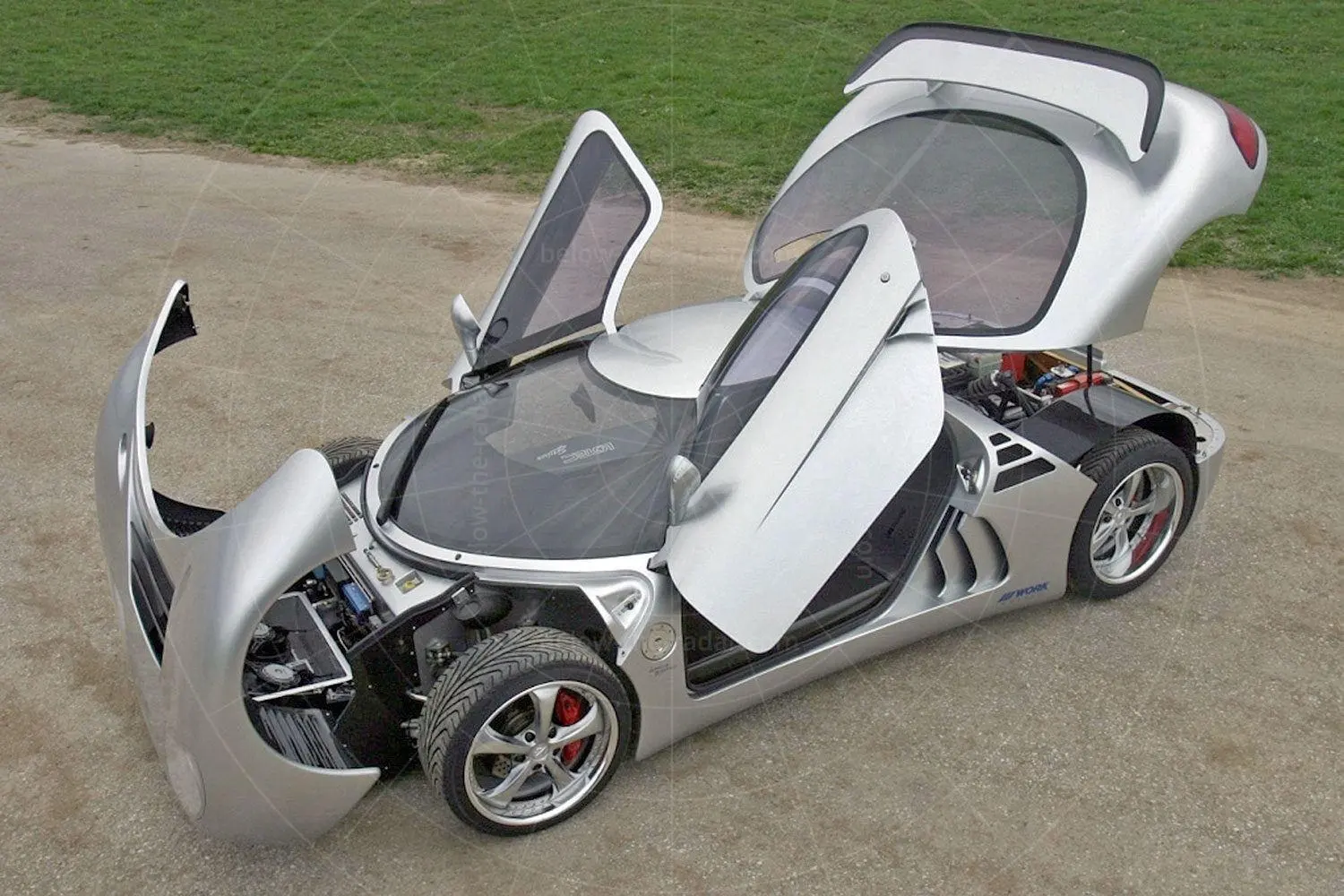
The starting point is the Mercedes M120 — the 6.0-litre V12 from the W140 S-Class, the same base engine Pagani chose for the Zonda. Lotec added two KKK K27 turbochargers, two intercoolers and a dry sump, and wrote its own engine management: the TurboTronic system, developed with LENZ Elektronik in Kolbermoor.
Output depends on how far the driver turns the boost: roughly 1000 PS at 0.85 bar, up to 1200 PS and 1320 Nm at 1.2 bar — manufacturer figures, stated with the confidence of a man who built every part of the installation himself. The CIMA six-speed transaxle that takes the torque is the same Modenese gearbox the Zonda and early Koenigseggs relied on.
2024–2026
Un-mothballed
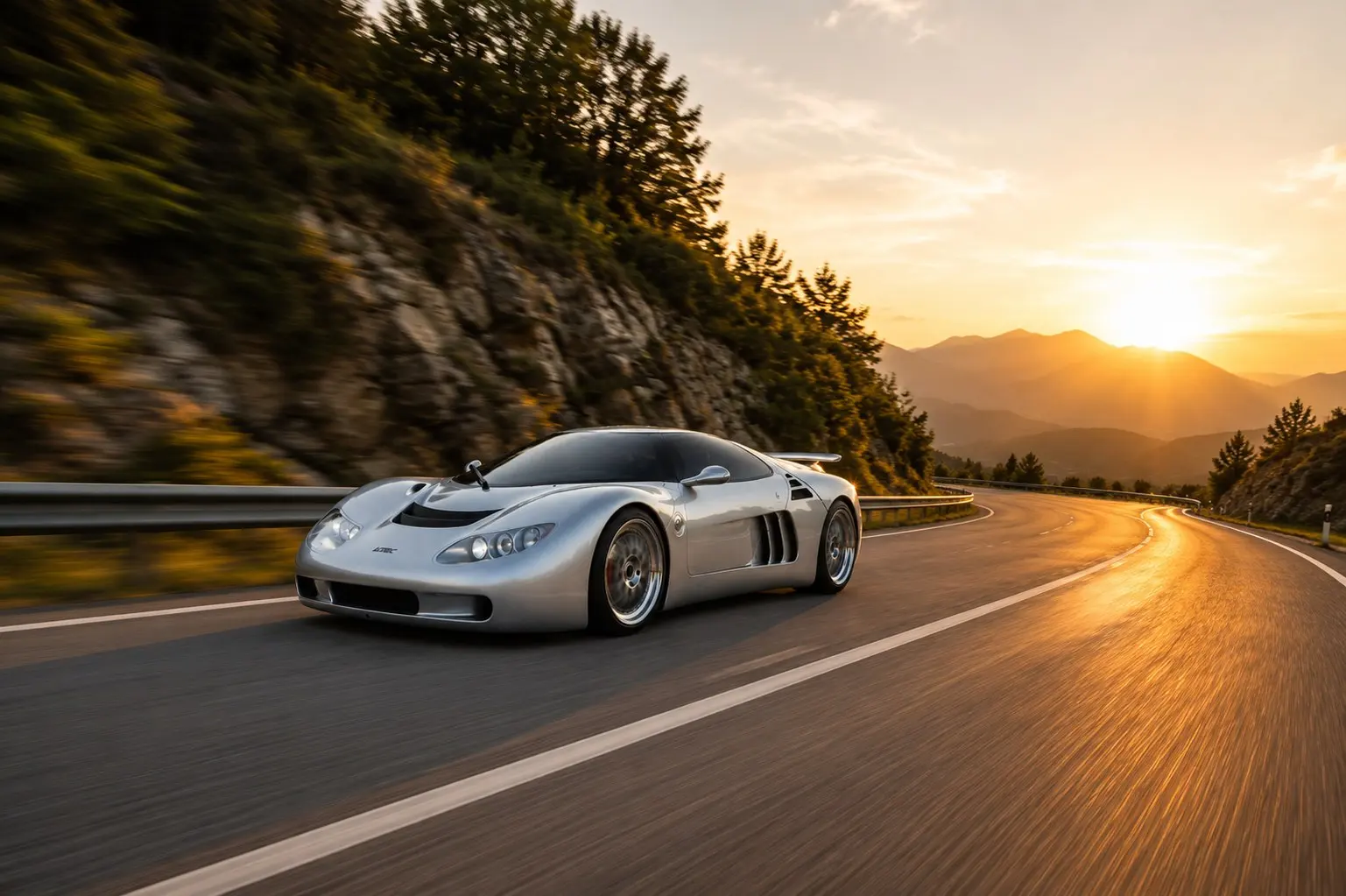
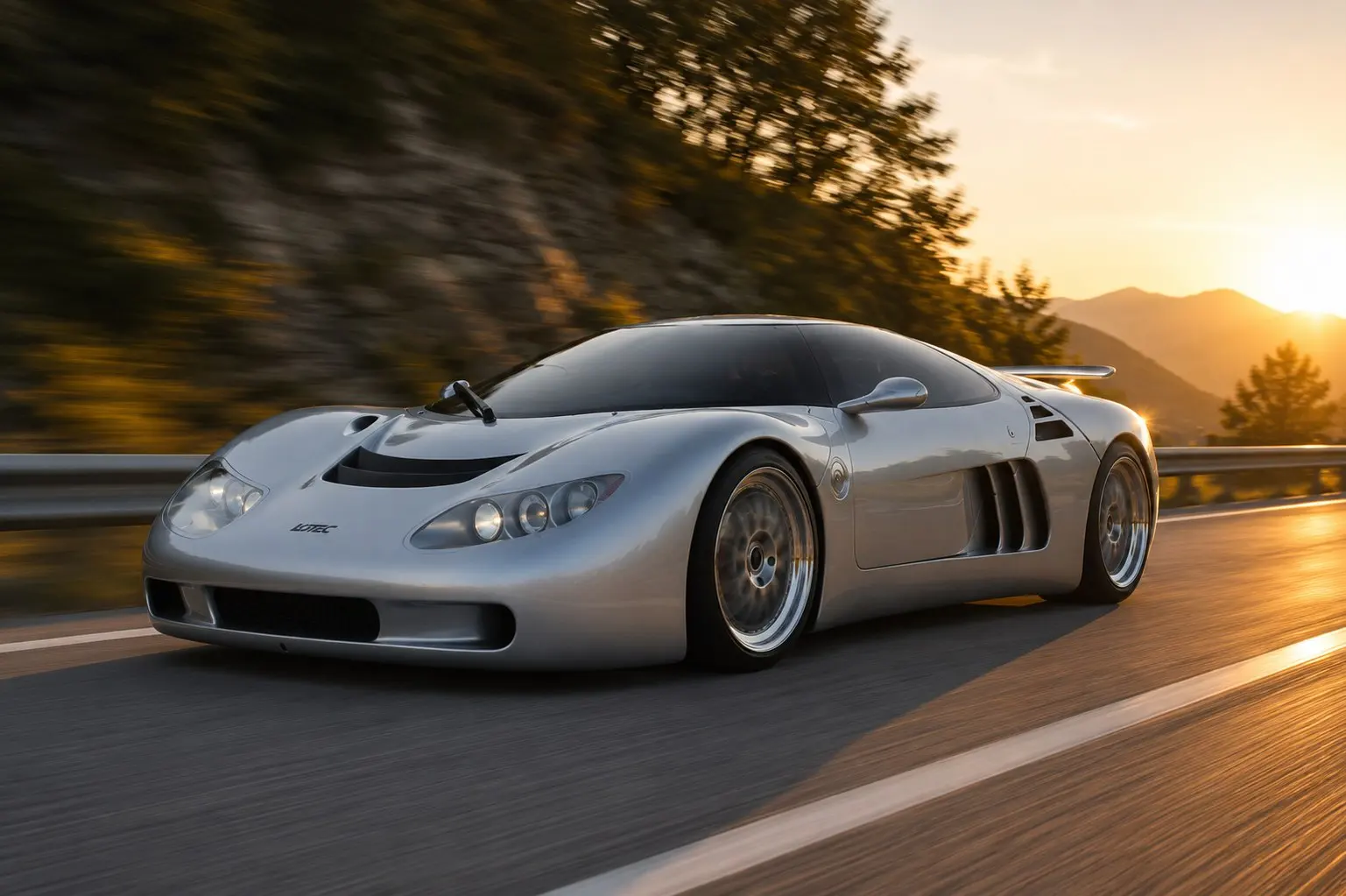
For two decades the Sirius mostly sat in Kolbermoor — a rumour with number plates. In 2024 it was recommissioned, and the revival gathered pace fast: a research feature, start-up videos from Lake Tegernsee, a period on Work wheels before the original three-piece BBS set went back on.
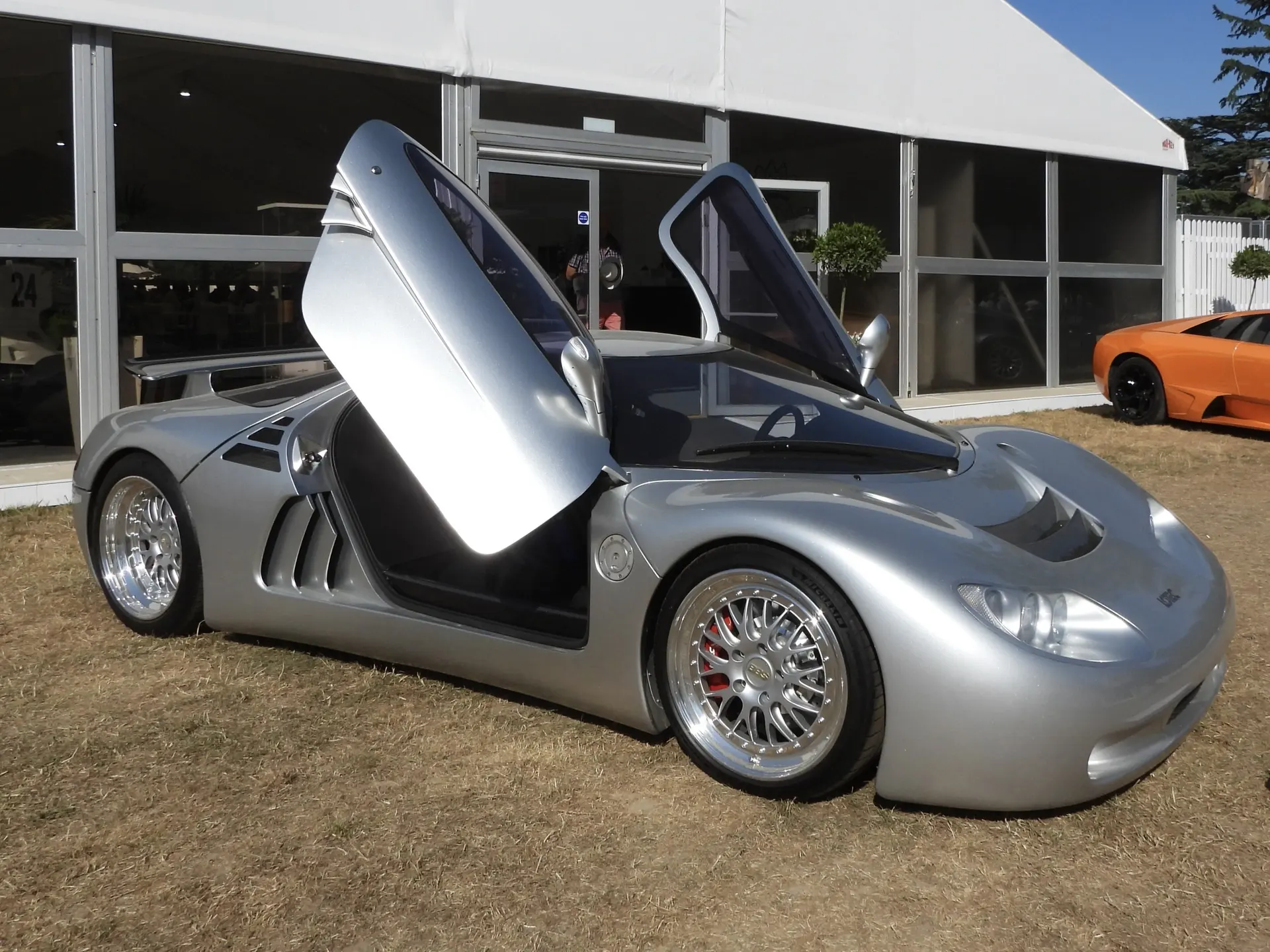
In June 2026 the Sirius and the C1000 stood together for the first time, at Ultrace in Wrocław. A month later the Sirius ran the hill at the Goodwood Festival of Speed — the first Lotec ever to appear there, campaigned by the family's Lotec Legacy operation. The one-off that nobody bought has become the centrepiece of the brand's second life.
On the record
Milestones, on a line
The moments that set the Sirius's standing. Use the arrows, and hover a point to read what happened.
1992
The chipboard model
Lotterschmid begins planning his own 400 km/h car and cuts the 1:4 styling model from glued chipboard with an angle grinder — no designer, no CAD.
2000
Geneva debut
The finished Sirius appears at the Geneva Motor Show: twin-turbo M120 V12, scissor doors, a speedometer rescaled to 400 km/h.
2009
The successor that never was
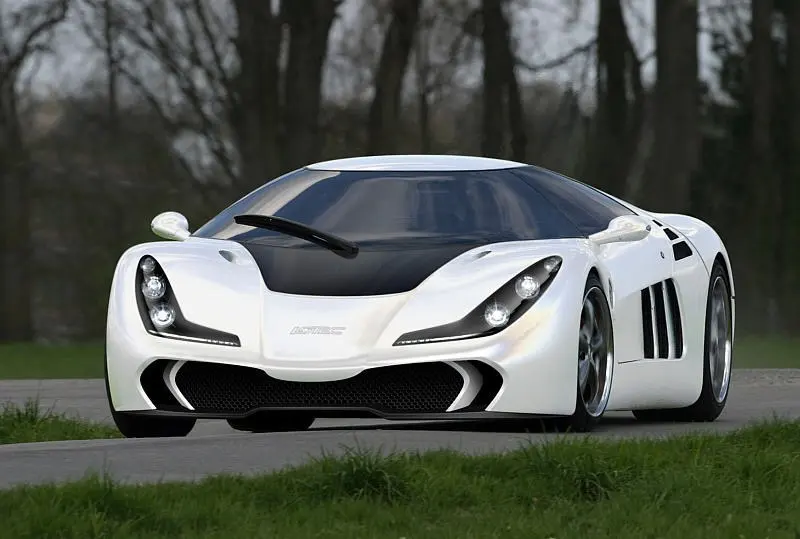
Lotec sketches an updated Sirius aimed at the Veyron and CCX era. It is never built; the original stays a one-off.
July 2026
First Lotec at Goodwood
A month after meeting the C1000 at Ultrace in Wrocław, the Sirius runs the Goodwood hill on its original BBS wheels — the model's biggest public stage in a quarter century.