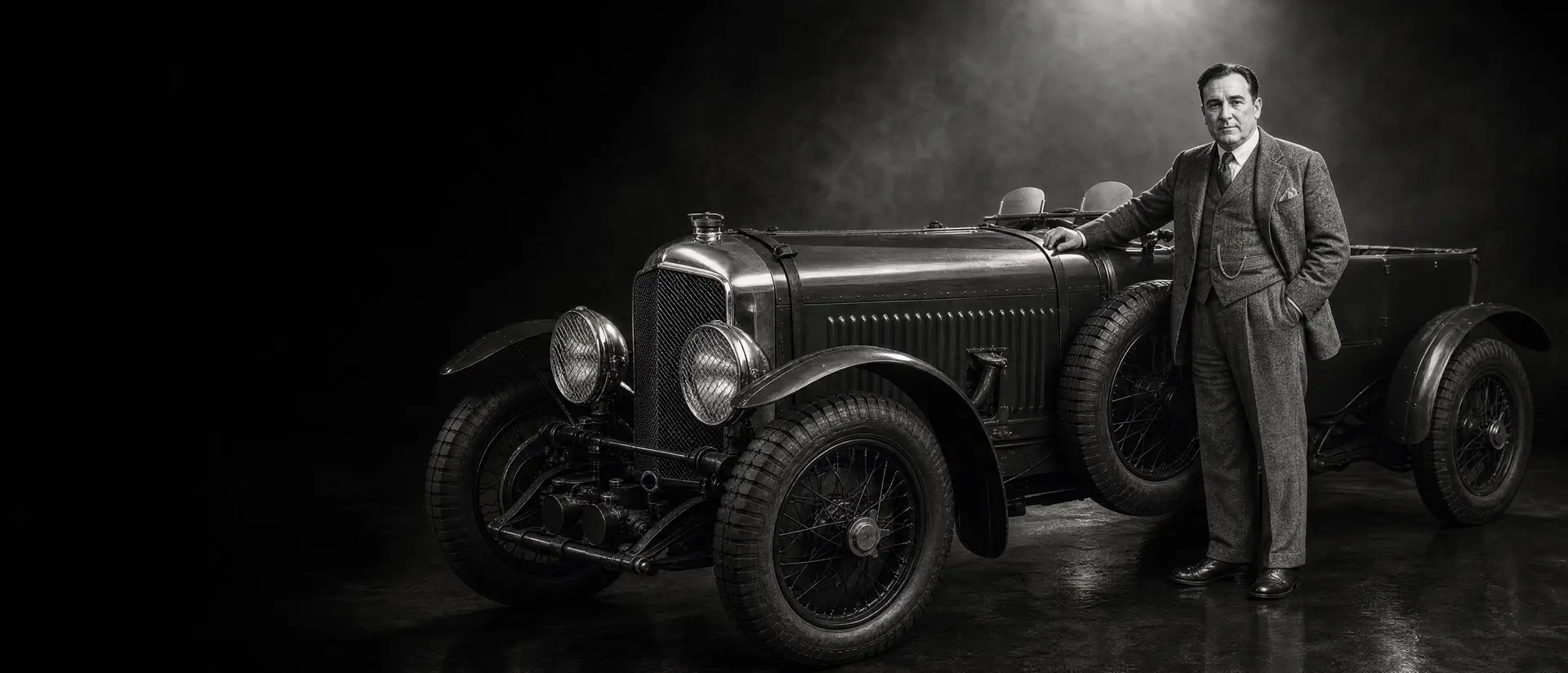
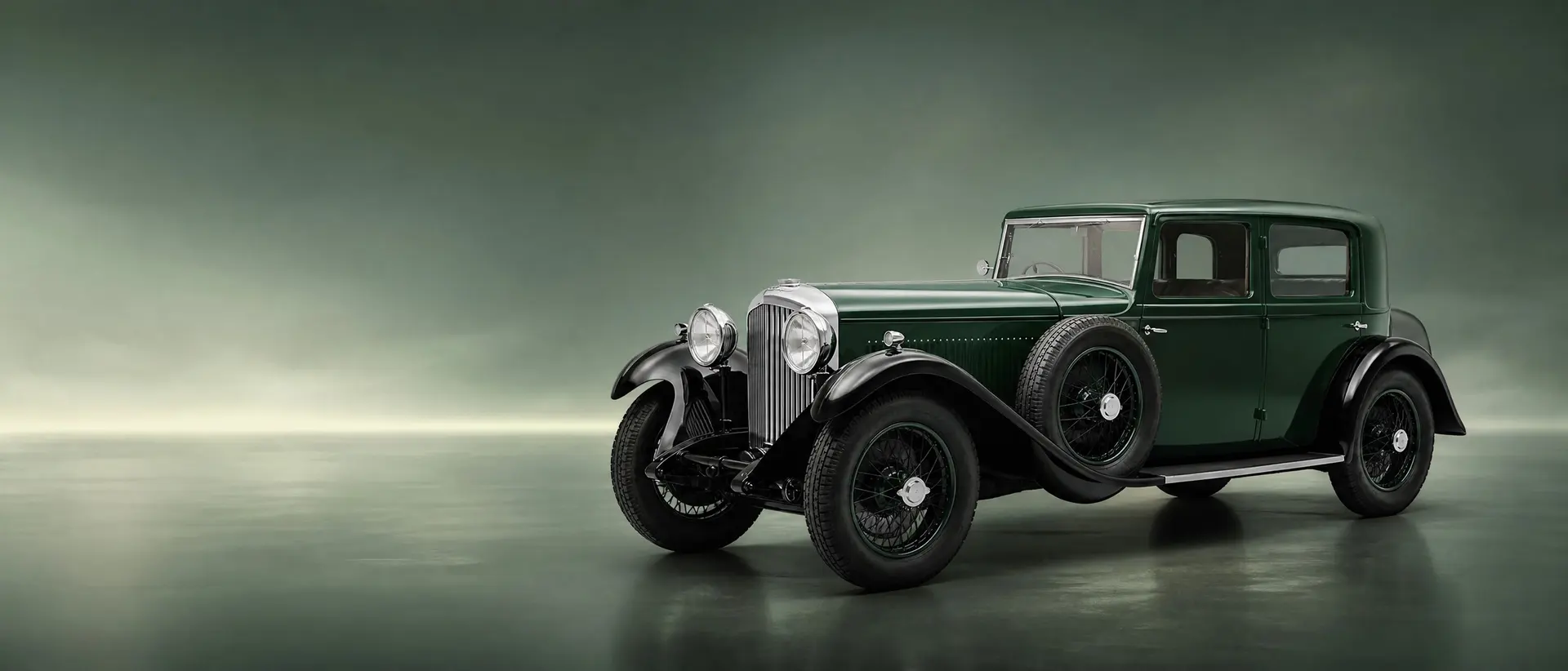
W.O. Bentley in a tweed three-piece suit standing beside a Bentley Speed Six under a single spotlightAI-generated

People · Engineer · 1888–1971

Walter Owen

a fast car, a good car, the best in its class

Born
Hampstead, 1888
Died
Woking, 1971
Company
Bentley Motors, 1919–1931
In the register
Four files

The constructor

A railway apprenticeship, aluminium pistons proved at Brooklands, two rotary aero engines for the war — by 1919 Bentley had a method before he had a company. The cars that followed were engineered for strength, capacity and sustained speed; the racing record only confirmed what the road cars already were.

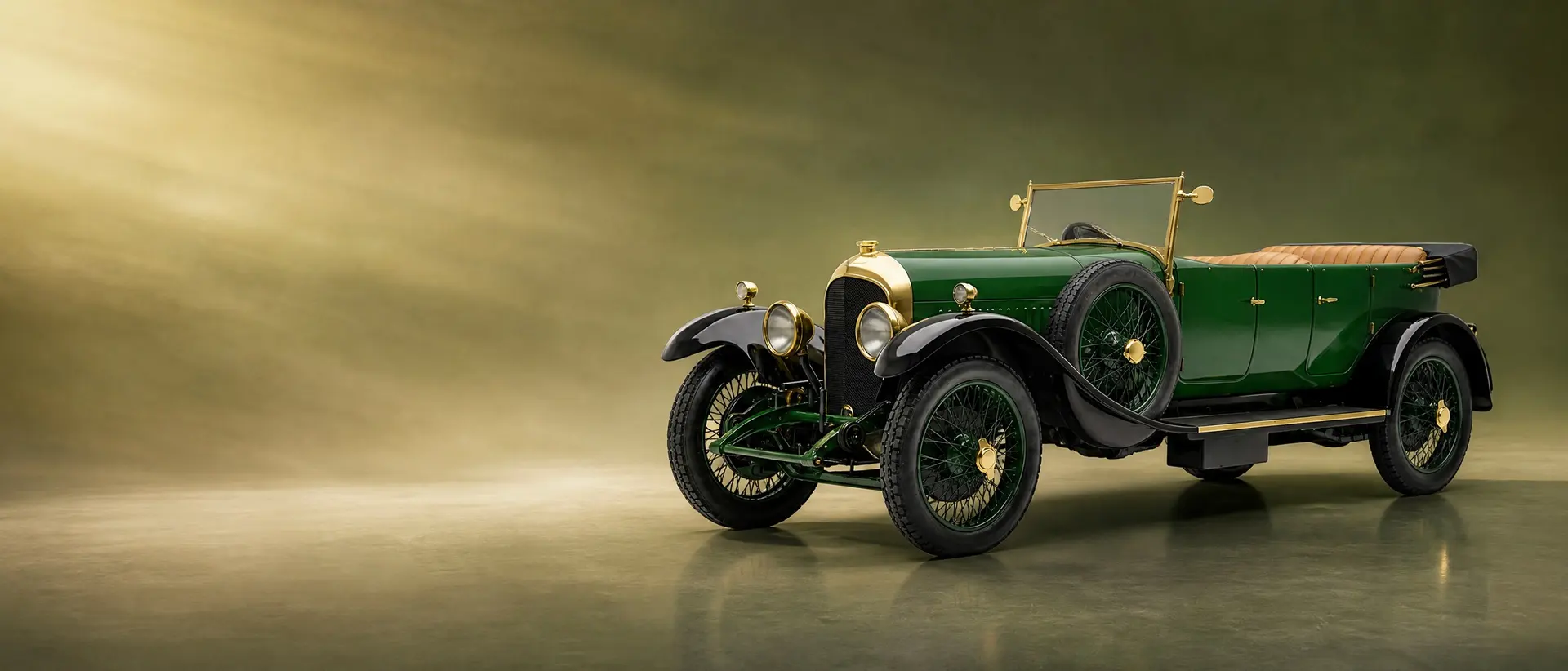
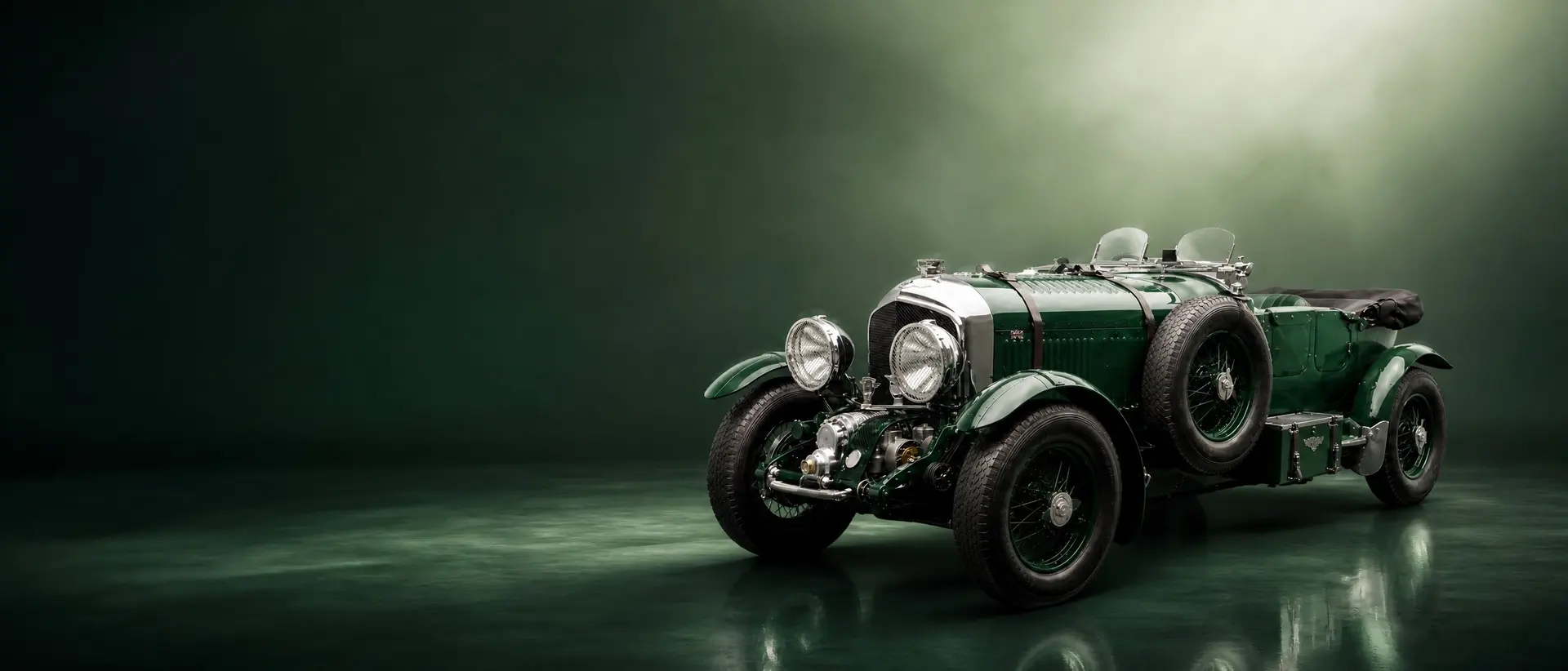
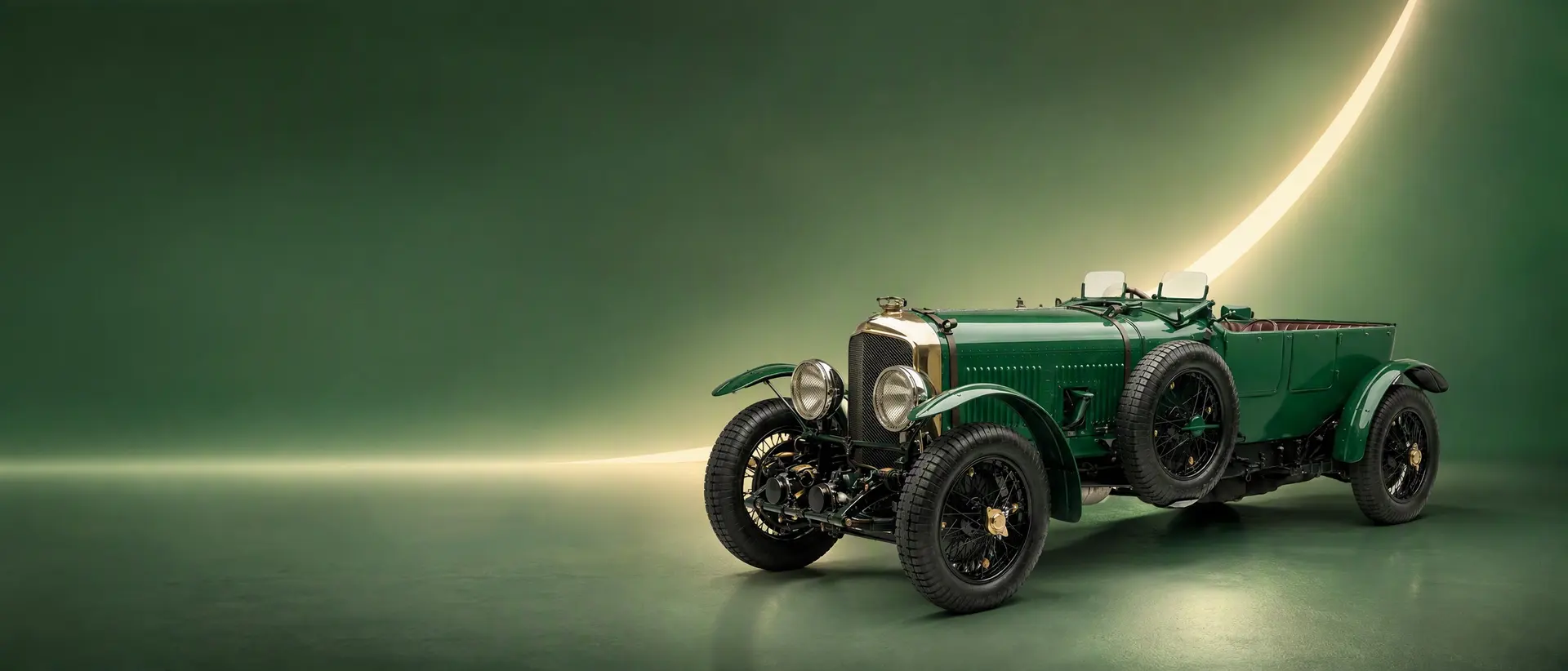
Bentley Motors was his for twelve years, from the 3 Litre to the 8 Litre. After the 1931 collapse he served Rolls-Royce under the acquisition contract, then gave Lagonda a V12 and a post-war twin-cam six that outlived the company that commissioned it. The four files below hold the cars that carry his own name.

Grand Prix d’Endurance · Le Mans

The twenty-four hours

He came to Le Mans a sceptic and left it the measure of his cars. The results below belong to the four files in this register.

1924

3 Litre

John Duff and Frank Clement give the marque its first outright win.

Won outright

1928

4½ Litre

The naturally aspirated four takes the race — its defining result.

Won outright

1929

Speed Six

The Speed Six wins outright.

Won outright

1930

Speed Six

The Speed Six wins a second time.

Won outright

Signature moves

The piston, the head, the capacity

The aluminium piston

Developed for DFP competition engines before the war, proved by an 89.7 mph flying mile at Brooklands. The material lesson everything after was built on.

The rotary engines

The piston work applied to aero-engine reliability: the BR1 and BR2 rotaries, drawn for a war that needed engines to last, not merely to run.

The fixed head

The 3 Litre’s four-valve, overhead-camshaft four with its cylinder head integral to the block — an architecture stated once and kept through the 8 Litre.

Capacity over supercharging

When the cars needed more, he added litres, not a blower. The supercharged 4½ was built over his objection; it does not carry his credit.

Competition as proof

He opposed Le Mans at first, then made it the method: the race existed to confirm what the production chassis already was.

The quiet hundred

The 8 Litre closed the argument — a chassis for formal coachwork at a sustained 100 mph, engineered so the speed never announced itself.

The archive

Prints from the drawer

Two portraits, a prototype, an aero engine and a Lagonda — choose a print and it pushes the others aside.

W.O. Bentley, 1921. National Motor Museum, public domain.

Beyond the register

From the DFP to the Lagonda V12

'12–'19

DFP programme

Import, preparation and competition with his brother H.M. — the aluminium-piston laboratory.

Clerget 9J

Wartime improvement work on the French rotary, the commission that led to his own.

Bentley BR1 and BR2

The rotary aero engines of 1916–18, drawn for the Royal Naval Air Service.

EXP1 and EXP2

The 1919 prototypes of the 3 Litre — EXP2 survives as the oldest Bentley.

'26–'31

Bentley 6½ Litre

The Big Six of 1926, the chassis the Speed Six was developed from.

Bentley 4 Litre

The company’s 1931 model, launched under his leadership in the final season.

'35–'50

Lagonda LG45

The 4½-litre development line of his first Lagonda years as technical director.

Lagonda V12

The 1937–40 twelve-cylinder programme — his grandest pre-war engine.

Lagonda 2.6 litre

The post-war twin-cam straight-six, later carried into the Aston Martin DB2.

Armstrong Siddeley 3 litre

A twin-cam sports-car project, 1947–50; prototype and development work only.

In his words

“We were going to make a fast car, a good car, the best in its class.”

W.O. Bentley · on the founding, 1919