Composite construction
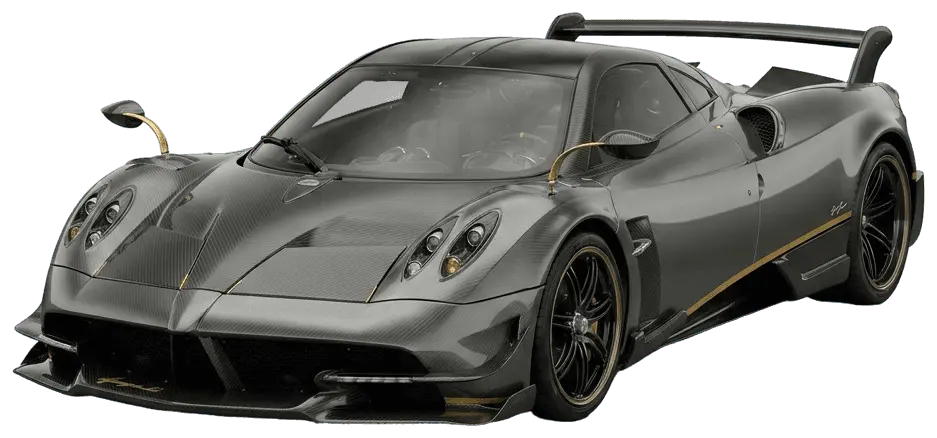
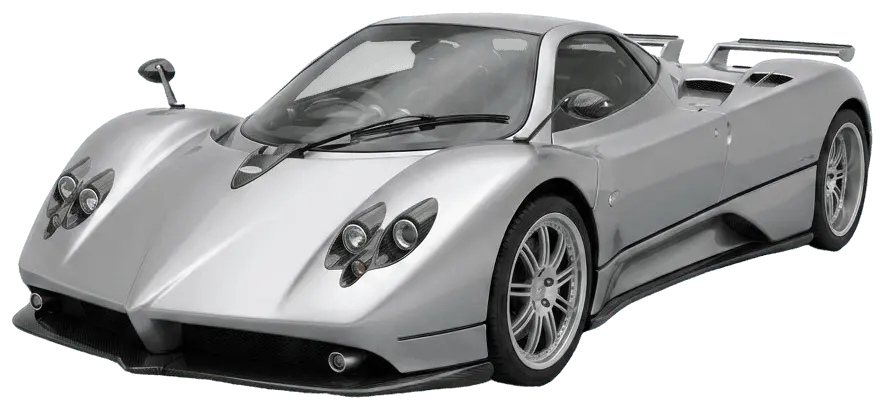
Pagani's carbon-fibre work began on the Countach Evoluzione at Lamborghini and became the structure of his own cars. On the Zonda the herringbone weave of the in-house hood ran as one pattern from the nose back.
People
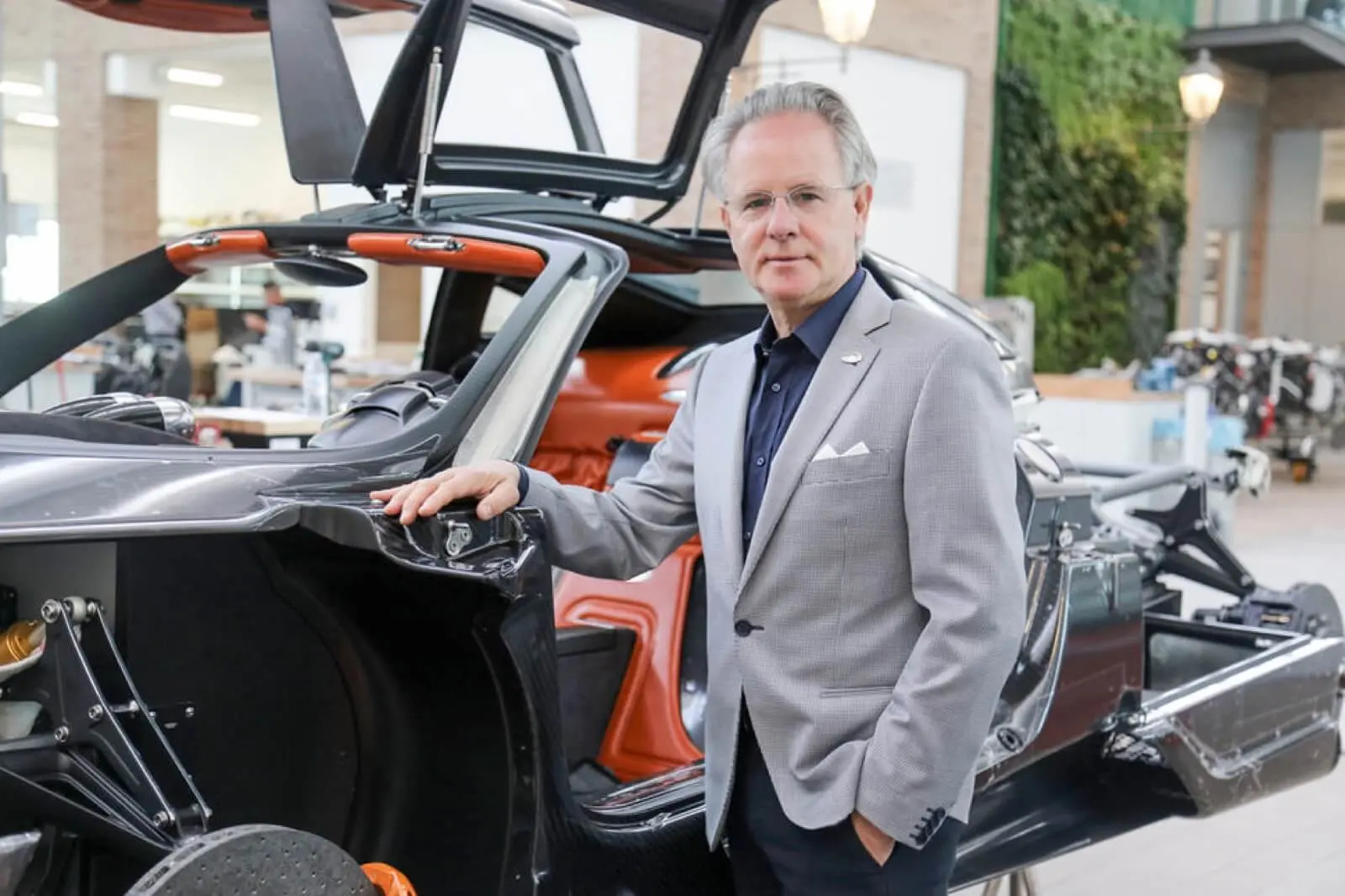
Founder and chief designer of Pagani Automobili
Wikimedia Commons
The record
Argentine-Italian founder and chief designer of Pagani Automobili, credited in the register for the Zonda and Huayra. After composites work at Lamborghini, including the Countach Evoluzione, he built the Zonda C12 for Geneva in 1999 and conceived the Huayra in 2003. He remains founder and chief designer.
Born in Casilda on 10 November 1955, the son of a baker and an artist, Pagani read car magazines and sketched Ferraris and Lamborghinis. In 1974 he entered industrial design at the National University of La Plata. By 1977 he ran the Tajer workshop and, in 1978, showed an Alpine caravan. A Formula 2 single-seater with a Renault engine, finished after five thousand hours, appeared in 1979 and drew Oreste Berta and Juan Manuel Fangio.
In December 1982 he and his wife Cristina left for Italy with letters from Fangio. After several months Lamborghini hired him as a mechanic in the bodywork department. In 1985 he took charge of the Composite Material department and took part in the Countach Evoluzione, built entirely of composites. When Lamborghini refused an autoclave he borrowed to buy his own. He left in 1991; that work informed the carbon-fibre structures of his own cars.
He founded Modena Design in 1991, making composites for Ferrari Formula 1, Dallara and Aprilia while working at night on the Fangio F1. In 1993 he showed Dieter Zetsche a prototype and later secured Mercedes-Benz's M120 V12. Pagani Automobili was officially established in 1998. After Fangio died the car was renamed Zonda, after an Andean wind. The Zonda C12 — C for Cristina, 12 for the cylinders — appeared at Geneva in March 1999.
He began work on its successor, the Huayra, in 2003 and presented it in 2011, named for Huayra Tata, a Quechua wind god. It brought an AMG twin-turbo V12 and active aerodynamics to a road car. Honorary master's degrees followed from the University of Modena and Reggio Emilia in 2018 and Politecnico di Milano in 2025. He remains founder and chief designer.
After the C12 the Zonda line continued through the Fangio tribute F, the track R and the HP Barchetta. In 2017 he opened the Museo Horacio Pagani and the production atelier at San Cesario. In July 2026 he presented the Huayra 70 Derecho at Goodwood.
Pagani's carbon-fibre work began on the Countach Evoluzione at Lamborghini and became the structure of his own cars. On the Zonda the herringbone weave of the in-house hood ran as one pattern from the nose back.
Pagani seeks a balance between form and function, intellect and craftsmanship. On the Zonda C12 that meant carbon panels whose weave was displayed, not hidden, and seats shaped as an inverted pyramid to wrap the shoulders.
On the Huayra he made air the design theme. Pagani presented its active aerodynamics, with an AMG twin-turbo V12, as a debut on a ground vehicle — the system he set in the C9 brief.
The stations
The house

Credited through Pagani Automobili.
In the register
The files above are the register's own record of this name. The people index holds everyone the register credits.
In their words
“Dreams and passion are the energy of our days. Since I was a child, in Argentina, I desired to come to Italy, to Modena where the most beautiful cars in the world were born.”
Horacio Pagani · Pagani Automobili, Museo Horacio Pagani inauguration press release, 13 December 2017