American V8, British Ace
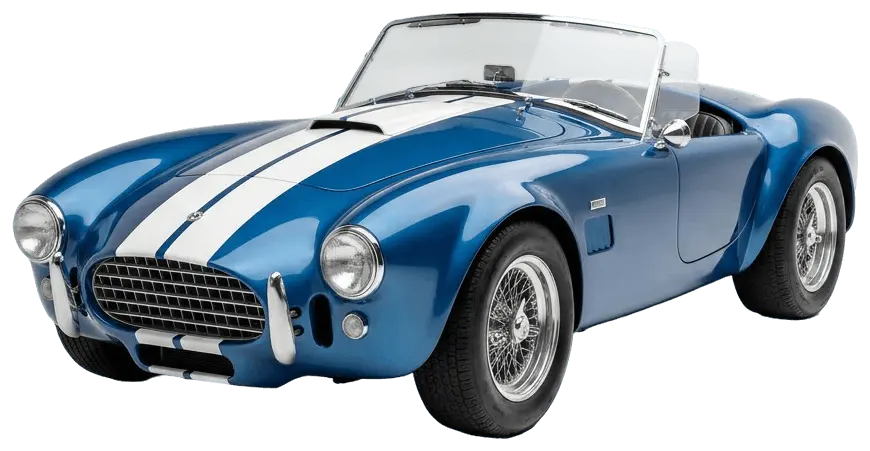
After AC lost its Bristol six, Shelby specified Ford's 260 then 289 Windsor for the Ace. AC formed the aluminium bodies at Thames Ditton; his California shop fitted the drivetrain.
People
Driver, constructor and founder of Shelby American
Wikimedia Commons
The record
American racing driver who won Le Mans in 1959, then founded Shelby American. He put Ford V8s into AC's Ace to create the Cobra and took operational control of Ford's GT40 programme.
Born on 11 January 1923 in Leesburg, Texas, Shelby entered Georgia Tech's aeronautical engineering programme but did not finish. He enlisted in the U.S. Army Air Corps on 11 April 1941, served as a flight instructor and test pilot, and left in August 1945. After a failed 1949 chicken farm he first raced in January 1952, in a friend's flathead Ford, then an MG TC.
John Wyer of Aston Martin noticed him at Buenos Aires in 1954. On 21 June 1959 he and Roy Salvadori won Le Mans in a DBR1, Aston Martin's only overall victory. Angina ended his driving after the 1960 season. He moved to California, opened a Goodyear racing-tyre distributorship and in 1961 a driving school with Pete Brock.
In 1962 he founded Shelby American in California. After AC Cars lost its Bristol engine he put Ford's 260, then 289, small-block into the Ace; CSX2000 appeared at the New York Auto Show that April. AC built chassis and aluminium bodies at Thames Ditton; his shop installed the drivetrain. With Peter Brock's Daytona Coupe the cars won the 1965 FIA GT manufacturers' title. The register credits him as creator and team principal for the Cobra 289.
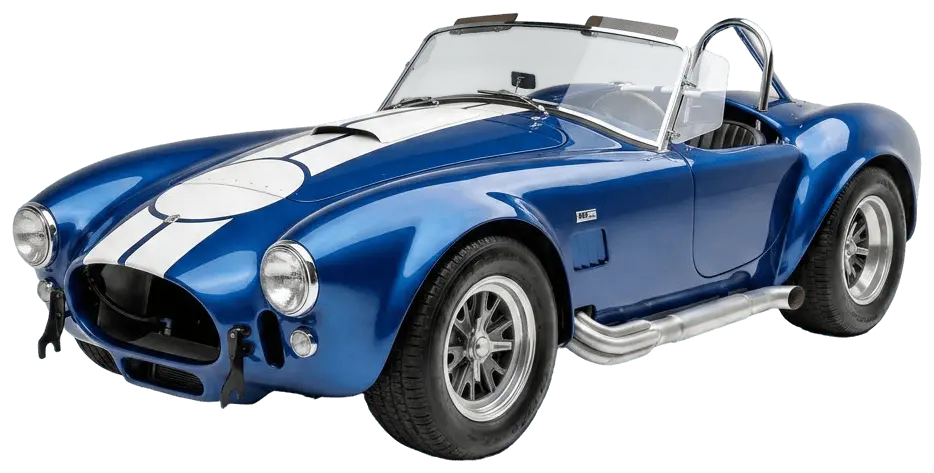
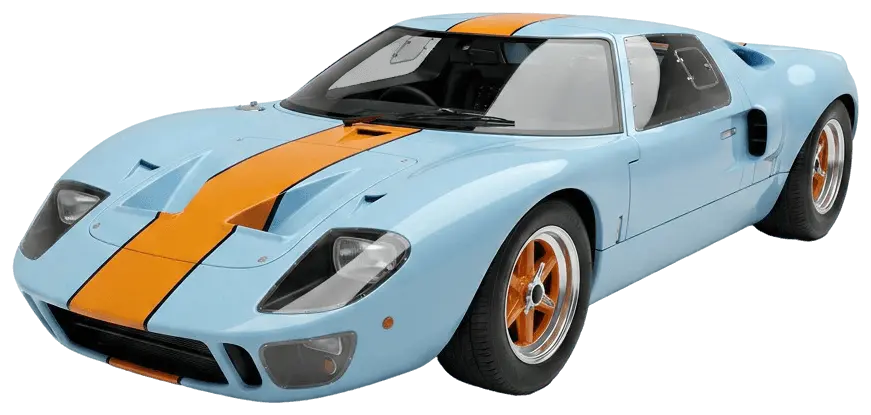
The leaf-spring 289 frame could not take Ford's FE big-block. With Ford and AC he launched the coil-spring Mk III Cobra 427; the register credits him as programme founder and team principal. After the GT40's 1964 failures Ford gave him operational control and Roy Lunn engineering control. Shelby American prepared the cars in Los Angeles and entered them at Daytona and Le Mans in 1966, where Ford swept both podiums. The register credits him as competition director.
Lee Iacocca asked him for Mustang race cars: the GT350 in 1965 and the GT500 in 1967. Ford ended the racing agreement in 1970. Iacocca brought him to Chrysler in 1982 for Dodge performance models; he began the first Viper before a heart transplant in June 1990. From 2003 he again partnered with Ford on Shelby Mustangs. He died in Dallas on 10 May 2012, aged 89.
After AC lost its Bristol six, Shelby specified Ford's 260 then 289 Windsor for the Ace. AC formed the aluminium bodies at Thames Ditton; his California shop fitted the drivetrain.
With Ford and AC he specified a wider Mk III Cobra 427: four-inch tubes, coil springs all round and a larger radiator opening, because the leaf-spring 289 chassis would not hold the FE big-block.
Ford did not ask him to design the GT40. After the 1964 failures Dearborn gave him operational control. Shelby American prepared the cars in Los Angeles; its Mk IIs finished first and second at Le Mans in 1966.
The stations
The houses
Credited through Shelby American.
In the register
The files above are the register's own record of this name. The people index holds everyone the register credits.
In their words
“My proudest moments are beating Ferrari for the World Championship in 1965, and working with Ford to win Le Mans in 1966 and 1967.”
Carroll Shelby · Road & Track