Sharp-edged proportion
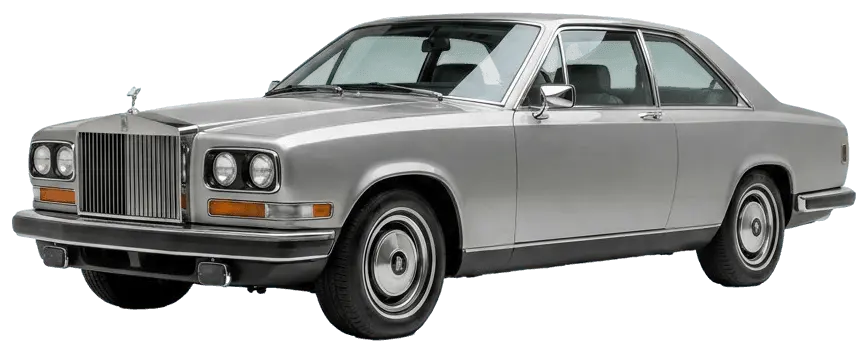
The Camargue brief combined a long-line form with sharp surfaces, reduced height, increased width and a large glazed area. Martin inclined the windscreen and used curved side glass, a first for Rolls-Royce.
People
Automotive designer and Pininfarina chief stylist
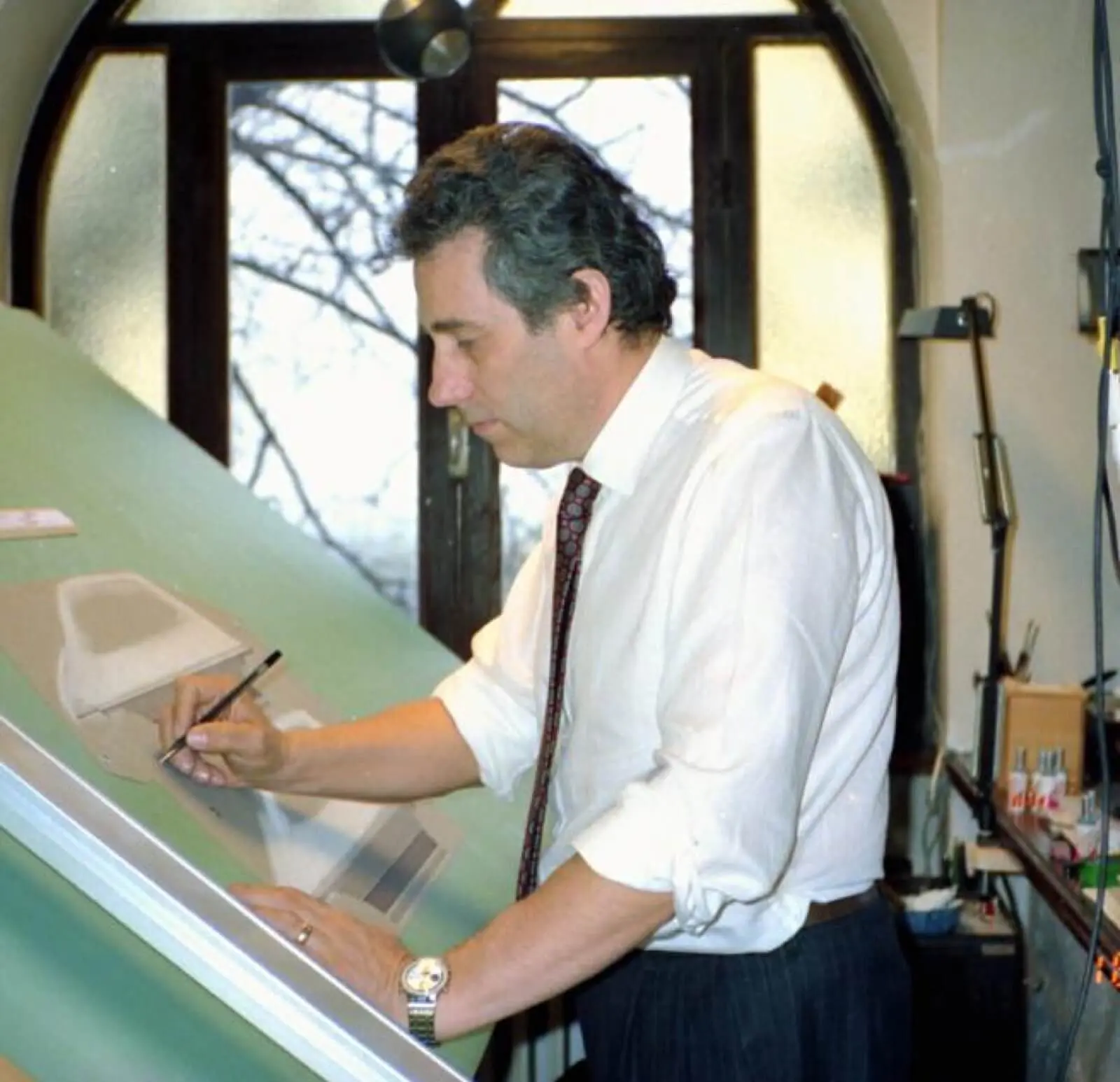
Paolo Martin, CC BY-SA 3.0, via Wikimedia Commons
The record
Italian automotive designer who became Pininfarina's chief stylist and is credited in the register for the Ferrari Modulo and the Rolls-Royce Camargue. After Michelotti and Bertone he led Pininfarina styling, directed Ghia under De Tomaso, and from 1976 worked independently from Turin.
Born in Turin on 7 May 1943, Martin started at sixteen, in 1959, at the Alfa Romeo dealer Dario & Vico, learning workshop work from cylinder heads to gearboxes. In 1960 he began a five-year apprenticeship at Studio Tecnico Michelotti, where he learned to draw at full scale. A brief period at Bertone followed in 1966–67 — he later called it grey — before the move that defined the career.
He joined Pininfarina in 1967. His first design there, the Dino Berlinetta Competizione, was drawn in his bedroom and modelled on the balcony; it appeared at the 1967 Frankfurt Motor Show. Franco Martinengo, then director of the Style Centre, told designers to do what they wanted. By October 1969, when Rolls-Royce sent a Mulliner Park Ward saloon to Turin, Sergio Pininfarina assigned the Camargue project to Martin as chief of styling.
Martin and his team worked to a preserved brief: a long-line form with sharp-edged surfaces, a lower roof, a wider body, a steeply inclined windscreen and, for the first time on a Rolls-Royce, curved side glass. They tilted the Pantheon grille four degrees forward. The model phase took about three months; the Delta prototype was on the road by July 1972. Camargue was presented in March 1975.
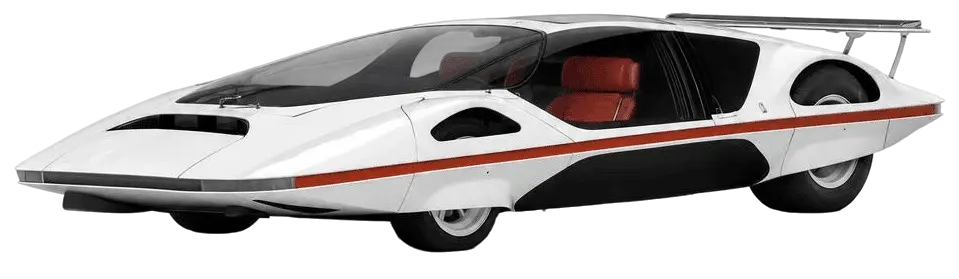
In 1968 Ferrari sent two unused 512 S chassis to Pininfarina. Martin's first sketch was set aside; Filippo Sapino's more conventional proposal was chosen. In August 1969 Martin cut a full-size polystyrene model of the rejected idea. After six months under a cloth it was built for the 1970 Geneva Motor Show as the Modulo. He left Pininfarina in 1972.
He directed the Ghia style centre for De Tomaso from 1973 to 1976, then opened a Turin consultancy whose clients included Fiat, Nissan, BMW, Subaru, Piaggio, Moto Guzzi, Gilera and Dassault Aviation. The work ranged from motorcycles and boats to industrial products. His book Visions in Design, written with Gautam Sen, appeared in 2022. FIVA inducted him into its Heritage Hall of Fame in 2024.
The Camargue brief combined a long-line form with sharp surfaces, reduced height, increased width and a large glazed area. Martin inclined the windscreen and used curved side glass, a first for Rolls-Royce.
Martin named the Modulo for a graphic modularity repeated inside and out: matching seats, side-mounted controls and specular parts. He translated an A3 sketch into a 1:1 polystyrene model, then a single-volume body with covered wheels and a forward-sliding canopy.
On the Modulo he oversaw the build himself, solving fittings in the shop. The spherical cabin controls were moulded from a bowling ball after turned spheres would not come out true.
The stations
The houses


Credited through Pininfarina.
In the register
The files above are the register's own record of this name. The people index holds everyone the register credits.
In their words
“The story of the Modulo is quite special, because it was the only car that Sergio Pininfarina didn't want to make, under any circumstances.”
Paolo Martin · Speedholics, 27 June 2022
Sources