People

Luigi Marmiroli

Lamborghini technical director and Diablo project manager

Born
Fiorano Modenese, undefined
Nationality
Italian

The record

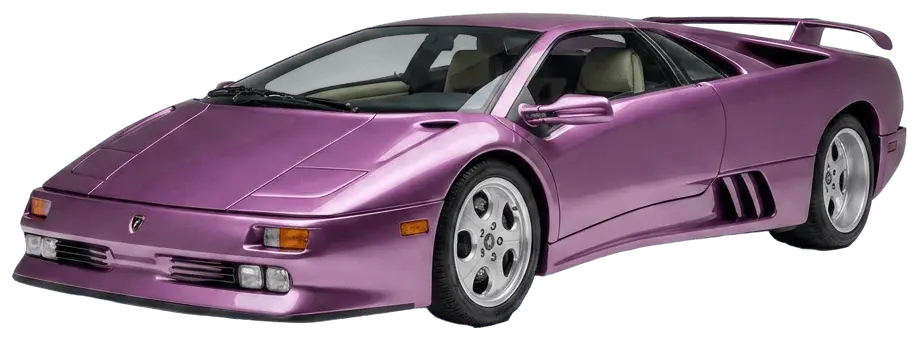
Mechanical engineer appointed technical director of Nuova Automobili Lamborghini in January 1985 and later described as the Diablo’s project manager. Road & Track’s March 1990 report assigned him the Diablo chassis work.

Born in Fiorano Modenese, Marmiroli recalls growing up on a farm close to the land on which Ferrari later built its Fiorano test track. After graduating from the University of Padua, he first worked at a factory making spare parts for tracked vehicles, then joined Ferrari’s Gestione Sportiva Studies Office. He later wrote that his time there lasted seven years.

With Giacomo Caliri, he established Fly Studio in 1976. Its work included Minardi Formula 2 cars and consultancy for Fittipaldi Copersucar, ATS and Autodelta. In 1983 he became technical director of Euroracing’s Alfa Romeo Formula 1 operation; Forix credits Marmiroli as technical director and Mario Tollentino as chief designer of the 1984 Alfa Romeo 184T.

In January 1985 the Mimran brothers appointed him technical director of Nuova Automobili Lamborghini, with a Countach successor as his first task. He sent mechanical layouts to Giorgetto Giugiaro and Marcello Gandini; Patrick Mimran chose Gandini’s proposal. Marmiroli later recalled a P132 prototype being rolled out in April 1987. The programme continued after Chrysler bought Lamborghini that year.

The Diablo was presented in Monte Carlo in January 1990. Road & Track’s March 1990 report called Marmiroli Lamborghini’s technical director and put him on the chassis. GrandPrix.com reports that he remained technical director until 1996, after Chrysler’s sale to Megatech. Ruoteclassiche reports that he relaunched Fly Studio as an engineering consultancy in 1997.

Computers into the drawing office

Marmiroli’s Ferrari account says he joined the Studies Office after graduating; a later interview says he was assigned to introduce electronic computing. By the Diablo period, Road & Track reported engineering development at Sant’Agata using CAD/CAM and finite-element computers.

New chassis, old layout

The Countach layout was retained as a starting point for the four-wheel-drive Diablo VT. Road & Track contrasted the Diablo’s square-section space frame with the older car’s round tubing, and described the 5.7-litre engine and injection as redesigned programme work.

In-house electronic injection

Marmiroli recalled that Magneti Marelli would not work with Lamborghini and Bosch rejected the low production volume. Lamborghini then developed its electronic injection in-house; in the same account, he linked the change to United States anti-pollution requirements.

The stations

  1. 1970–1976FerrariEngineer, Gestione Sportiva Studies Office
  2. 1976–Fly StudioCo-founder
  3. 1983–1984Euroracing / Alfa RomeoTechnical director
  4. 1985–1996Automobili LamborghiniTechnical director

The house

Lamborghini

Credited through Automobili Lamborghini.

In the register

One file carries this name

The files above are the register's own record of this name. The people index holds everyone the register credits.

In their words

We wanted to continue with the Lamborghini philosophy and to continue the Lamborghini history.

Luigi Marmiroli · Road & Track, March 1990