People

Harold Beach

Aston Martin engineer and designer

Born
Acton, London, England, 1913
Died
2010
Nationality
British

The record

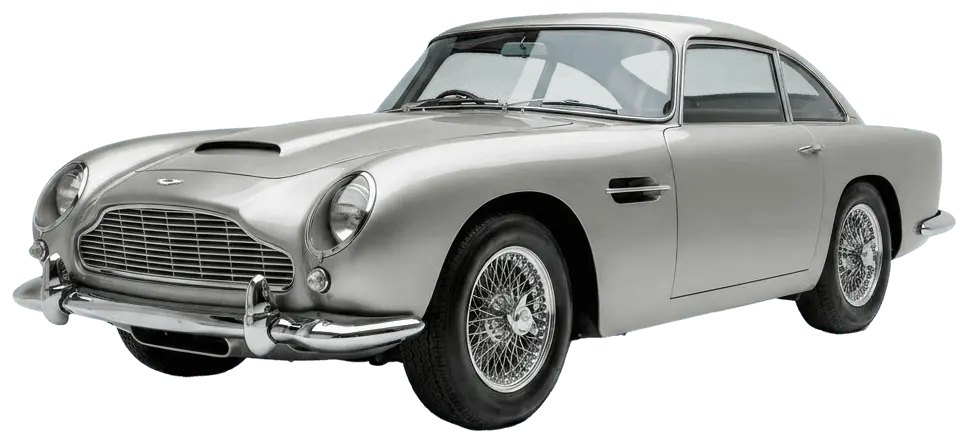
Aston Martin engineer who designed the DB4 platform chassis for Touring's Superleggera body and lengthened that structure for the DB6. He joined in 1950, became chief designer in 1956, and retired in 1978.

Born in Acton and trained as a draughtsman, Beach joined Barker, the London coachbuilders, in 1928. He assisted Viscount Curzon with racing cars, then after three years at Beardmore designed a lightweight aluminium body and a forty-eight-gallon tank for Eddie Hall's 4¼-litre Bentley, second in the 1936 Tourist Trophy. The war years were spent with Nicholas Straussler on military vehicles, including the floating tanks used on D-Day.

Beach joined Aston Martin Lagonda in September 1950 on £11 a week and became chief designer in 1956 after Robert Eberan von Eberhorst left. With Eberhorst he had already produced the DB2/4 and the DB Mk III. For the DB4 he developed the platform chassis needed for Touring's Superleggera body construction, working alongside John Wyer and engine designer Tadek Marek.

Project 114 began with Beach's perimeter frame and a rejected Frank Feeley body. Sent to Milan, he designed in six weeks the platform chassis Touring needed; Federico Formenti penned the body. In the summer of 1957 he took the prototype from Pinner to David Brown's farm. The 140 mph DB4 reached the London Motor Show in 1958 and established the structure for the later DB line.

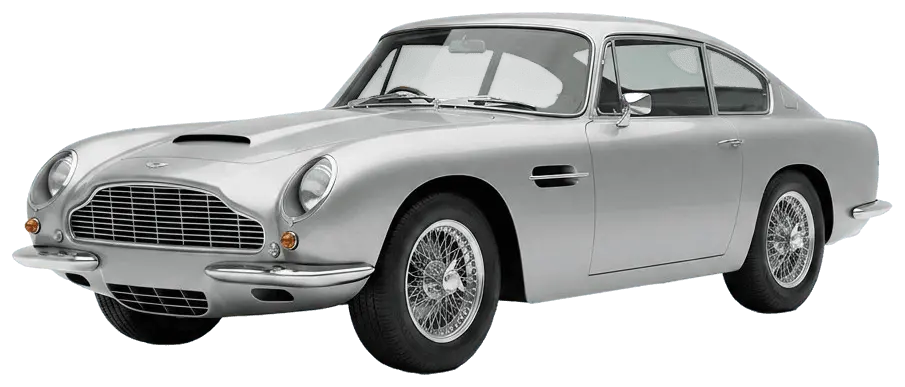
The DB4 evolved through five series into the DB5. When the Feltham design office closed, only Beach and Marek moved to Newport Pagnell. For the 1965 DB6 he lengthened the chassis by three and three-quarter inches and moved the rear axle, creating rear legroom. He later widened that platform for the DBS, which received the De Dion rear he had wanted on the DB4.

Beach remained with Aston Martin through changes of ownership. After David Brown sold the firm in 1972 he became director of engineering and briefed buyers during the 1974 collapse. His last task before retiring in 1978 was a power-operated hood for the V8 Volante. He was star guest at the DB4's 2008 anniversary and died on 24 January 2010.

Platform chassis

Beach replaced the DB4 prototype's perimeter-frame concept with a platform chassis after Touring rejected the first frame. He designed the new structure in six weeks so Superleggera tubes and alloy panels could sit on a rigid steel platform.

Wing heat vents

On the DB4 Beach cut side vents into the front wings to dump under-bonnet heat. Later accounts treat those vents as his contribution, and they remained an Aston Martin hallmark after the Superleggera years.

Lengthened DB6 chassis

For the 1965 DB6 Beach stretched his platform by three and three-quarter inches and moved the rear axle, creating usable rear seats. The Superleggera cage was dropped so the longer, Kamm-tailed body could sit on steel box-sections.

The stations

  1. 1928–1933Barker & CoApprentice draughtsman
  2. 1933–1936Beardmore MotorsDraughtsman
  3. 1936–1939JR EngineeringDraughtsman
  4. 1939–1950Garner-Straussler MechanisationEngineer
  5. 1950–1956Aston Martin LagondaDesign draughtsman
  6. 1956–1972Aston Martin LagondaChief designer
  7. 1972–1975Aston Martin LagondaDirector of engineering
  8. 1975–1978Aston Martin LagondaEngineer

The house

Aston Martin

Credited through Aston Martin.

In the register

2 files carry this name

The files above are the register's own record of this name. The people index holds everyone the register credits.

In their words

When David Brown had finished, he said to me, 'This is a very promising motor car,' and I said, 'Thank you, Mr David.'

Harold Beach · Aston Martin Driver, Issue 8, 2023