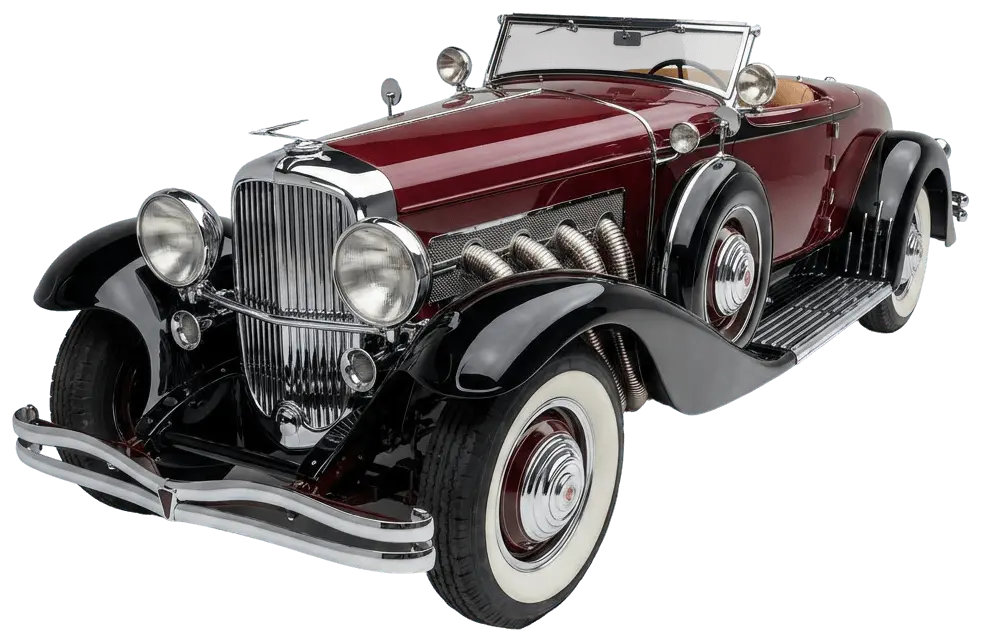
Two-tone rescue
He cleared Auburn's 1924 backlog by refinishing more than 700 unsold cars in two-tone paint with nickel-plated fittings and selling them. The cash funded a restyled line; the company was out of debt by 1 November 1925.
People
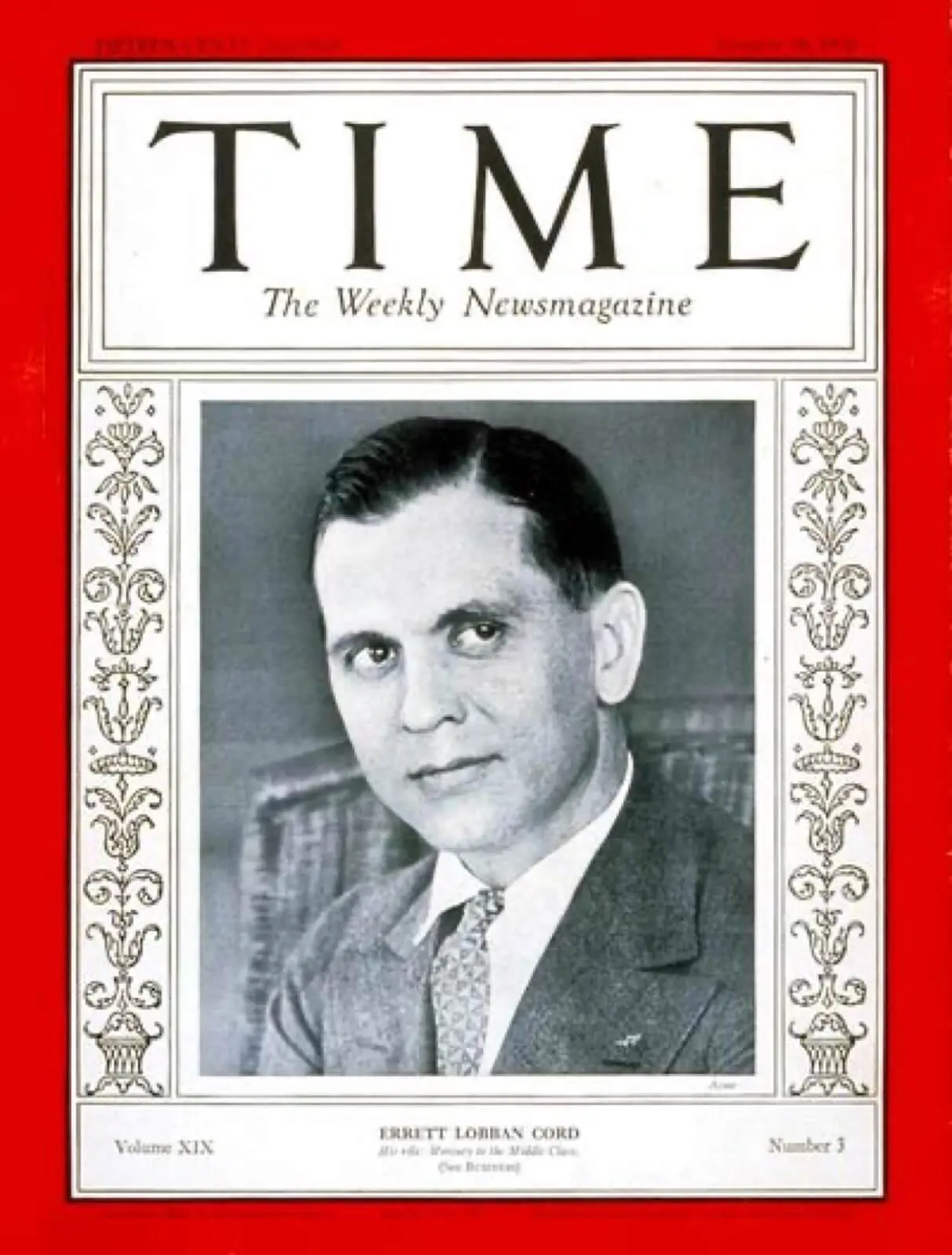
Auburn and Duesenberg industrialist; founder of the Cord Corporation
Wikimedia Commons
The record
American industrialist who took control of Auburn in 1924, acquired Duesenberg in 1926 and formed the Cord Corporation in 1929. He later rebuilt a fortune in real estate and sat in the Nevada Senate.
Errett Lobban Cord was born on 20 July 1894 in Warrensburg, Missouri. He built racing bodies for junked Fords in Los Angeles, raced on dirt tracks in Tacoma, worked in a garage and sold Moon cars in Chicago. He first examined Auburn in June 1924, took control that summer and sold the unsold stock after a two-tone refinish. Auburn elected him president on 2 February 1926.
In 1926 he acquired Duesenberg Motors Corporation out of bankruptcy. Duesenberg, Inc. was incorporated on 3 November, with Cord as president and Fred Duesenberg as vice-president of engineering; Auburn retained majority control of its shares. In September 1927 he bought Lycoming Manufacturing Company, which already supplied Auburn and later built the Model J engine. On 15 June 1929 he announced the Cord Corporation in Chicago as a holding and operating company for Auburn, Duesenberg, Lycoming, Checker Cab, Stinson and New York Shipbuilding.
The post-acquisition plan was to replace the Model A with a Duesenberg intended to surpass leading European cars in power and luxury. The Model J debuted at the New York Automobile Salon on 1 December 1928 and was in production by 1929 as a Lycoming twin-cam eight sold as a rolling chassis. He licensed Harry Miller's front-drive patents in 1927 for the Cord L-29, America's first front-wheel-drive production car, on sale in 1929 and off the line on 31 December 1931.
Cord became Auburn's chairman on 3 February 1931. He sold Century and Century Pacific to Aviation Corporation in April 1932, spent 1934–36 in England after kidnapping threats, then sold his Cord Corporation holdings in 1937 to Emanuel & Co. and Schroder, Rockefeller; the car lines ended that year. He moved to Nevada in 1939, served as Democratic state senator for Esmeralda County from 1956 until he resigned in 1958, and died in Reno on 2 January 1974, aged 79.
He cleared Auburn's 1924 backlog by refinishing more than 700 unsold cars in two-tone paint with nickel-plated fittings and selling them. The cash funded a restyled line; the company was out of debt by 1 November 1925.
He licensed Harry Miller's racing front-drive patents in 1927 and put them on a passenger car. The Cord L-29 of 1929 was the first American front-wheel-drive production automobile; Auburn built a dedicated hall to detail and ship it.
After the 1926 purchase he cancelled the Model A and set Fred Duesenberg to engineer a car meant to exceed European rivals in power and luxury. The Model J used a Lycoming twin-cam straight-eight; Cord sold the rolling chassis, not a factory body.
The stations
The house

Credited through Auburn-Cord-Duesenberg.
In the register
The files above are the register's own record of this name. The people index holds everyone the register credits.
In their words
“The capacity of the plant can be brought to 100 cars per day with slight additional capital expenditure.”
E. L. Cord · Auburn prospectus, 1925, quoted in the National Register of Historic Places nomination